


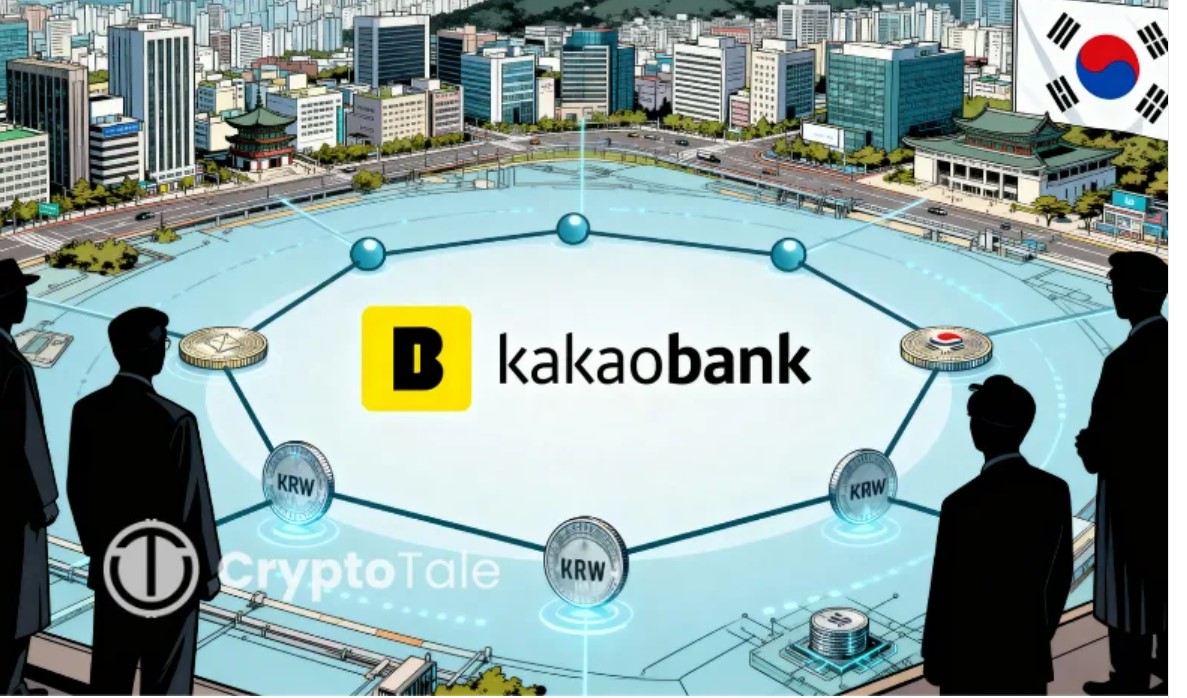
KakaoBank has begun active development of a KRW stablecoin, involving token preparation and infrastructure planning under Kakao Group leadership and regulatory oversight. This initiative supports sovereign-aligned payment rails, aims to counter dollar dominance, and strengthens domestic digital finance control.
From Research Talks to Real Blockchain Construction
KakaoBank has moved beyond research and commenced the construction of a working system for its KRW stablecoin. According to local media reports, the company has started hiring backend developers for its blockchain services. These roles require expertise in smart contracts, knowledge of token standards, and experience with full-node transaction management.
These job listings indicate structured preparation rather than mere conceptual exploration. Consequently, the bank is now transitioning from earlier strategy discussions to operational development programs. This shift follows statements made by CFO Kwon Tae-hoon during the August H1 2025 earnings session.
Kwon Tae-hoon had previously confirmed that KakaoBank was reviewing digital asset issuance and custody options as part of its entry into digital finance. However, he did not provide specific timelines for product launches. The current hiring process serves as concrete proof of execution.
In parallel, Kakao Group has strengthened its organizational structure by forming a unified KRW stablecoin task force. This team is responsible for coordinating efforts across the bank, payments, and technology divisions to establish unified token standards. These efforts suggest a structured groundwork for compliant, fiat-backed token issuance.
Earlier in June, KakaoPay filed six trademark applications for KRW-linked stablecoin tickers, including PKRW, KKRW, KRWP, KPKRW, KRWKP, and KRWK. These designations combine Kakao's identity markers with the Korean won.
These filings support preparations for interoperability between the banking and payment ecosystems. Furthermore, such planning aligns with the broader development of tokenized payment rails.
Competition Intensifies with Naver
Kakao is not alone in this emerging race. Naver is reportedly preparing a stablecoin wallet in conjunction with a Busan-based initiative. This project involves Hashed and the Busan Digital Asset Exchange, BDAN.
Naver Financial has also pursued a merger with Dunamu, the operator of Upbit, which is South Korea's largest crypto exchange by volume and infrastructure. This potential consolidation introduces significant competitive pressure in the digital payments space.
NaverPay serves approximately 30 million monthly users, while KakaoPay reaches 42 million members with 24 million monthly active users. Both companies possess national-scale user engagement that is well-suited for stablecoin adoption.
From Control to Sovereign-Aligned Structure
This competitive landscape emerged when President Lee Jae Myung prioritized KRW stablecoins as part of a national initiative. The objective was to limit reliance on U.S. dollar-based stablecoins in trade and business transactions, thereby promoting sovereign-aligned currency solutions.
However, regulatory progress has been slow. Despite several lawmakers proposing legal frameworks for stablecoin adoption, no significant advancements have been made. The Bank of Korea has restricted issuance rights exclusively to licensed banking institutions.
This regulatory stance has faced resistance from fintech platforms seeking broader participation. KakaoBank occupies a unique position as both a licensed bank and a technology-driven entity, bridging financial regulation with innovation execution. Its current activities align with Korea's shift towards private bank-led token issuance.
KakaoBank's strategy indicates coordinated planning rather than fragmented initiatives. The bank is integrating stablecoin design with token securities deployment architecture, suggesting a move towards structured digital asset integration within the financial ecosystem.
The expanding sector now includes banks issuing regulated digital tokens under government oversight, establishing clearer patterns for domestic token usage. Cross-platform settlements and compliant payment networks are gaining formal structure. The stablecoin race is active and structured, with KakaoBank, Naver, and regulators influencing market foundations through defined policies.
KakaoBank's early infrastructure development now defines its role in this phase. The bank is actively developing operational systems for KRW stablecoin use, demonstrating a framework that incorporates national, institutional, and regulatory coordination.
KakaoBank's KRW stablecoin build phase confirms active structural alignment with Korea's broader tokenized finance strategy. This effort integrates hiring, legal groundwork, trademarks, and banking authorization into unified progress. Coupled with Naver's entry and government priorities, the nation is advancing towards regulated, sovereign-aligned digital currency systems.