


Trump's Lawsuit and the Cryptocurrency Pivot
Donald Trump announced his intention to sue JPMorgan Chase within the next two weeks, alleging that the bank's decision to cease services following the Capitol riot was the catalyst for the Trump family's entry into the cryptocurrency market.
This lawsuit brings to light potential conflicts between traditional banking institutions and the rapidly evolving financial technology sector, especially in the context of accusations of "debanking" where political affiliations are suggested to influence market access and dynamics.
Donald Trump has stated his plans to initiate legal action against JPMorgan Chase within a two-week timeframe, citing the bank's termination of services subsequent to the 2021 Capitol riot as the event that propelled the Trump family into the realm of cryptocurrencies.
Trump's legal maneuver underscores the existing tensions between prominent financial institutions and the burgeoning cryptocurrency industry, and its subsequent impact on financial operations, which ultimately led the family to explore digital assets.
According to Jamie Dimon, the Chief Executive Officer of JPMorgan Chase, the decision to halt services was not influenced by political considerations. Nevertheless, this decision has elicited significant reactions and solidified Trump's resolve to confront what he perceives as an unjust action.
Historical Context and Market Implications
Donald Trump's legal challenge against JPMorgan Chase is not an isolated incident; it follows a pattern of disputes with major financial entities, highlighting ongoing friction over service refusals in the aftermath of the Capitol riot.
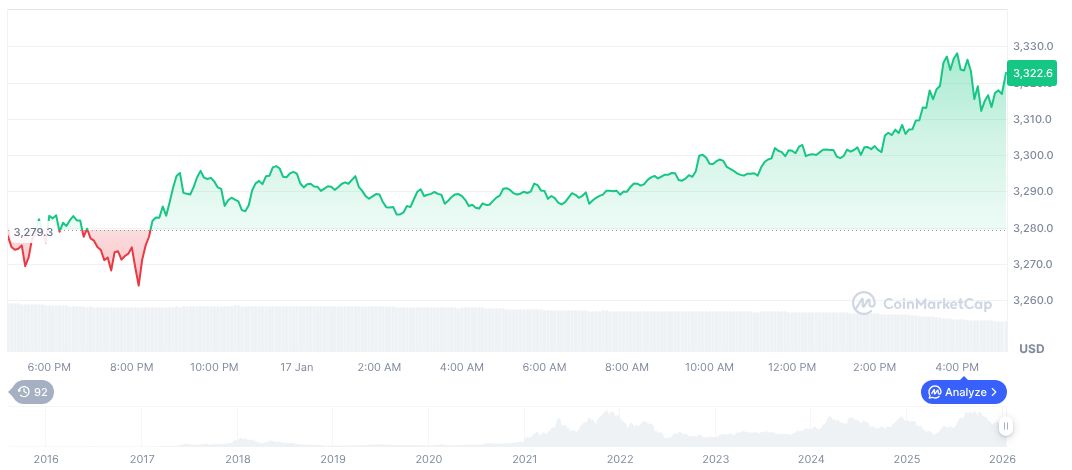
As of January 18, 2026, Ethereum (ETH) was trading at $3,302.53, according to data from CoinMarketCap. The cryptocurrency holds a substantial market capitalization of $398.60 billion, representing a 12.39% share of the overall market dominance. In the preceding ninety days, Ethereum's value experienced a decline of 15.89%.
The research team at Coincu anticipates that Trump's lawsuit could have significant financial repercussions, potentially affecting how regulatory bodies perceive banking practices. Such legal actions have the capacity to reshape the financial and technological sectors, leading to increased scrutiny of the service decisions made by major financial institutions.