



U.S. Senator Cynthia Lummis has voiced strong criticism against JPMorgan Chase for closing the personal bank account of Jack Mallers, the CEO of Bitcoin financial company Strike. The action, disclosed by Mallers on the X platform, has ignited renewed debate surrounding financial exclusion within the cryptocurrency sector and its potential repercussions on the industry's standing in the United States.
Lummis's public critique, shared via social media, underscores escalating concerns about the regulatory environment impacting cryptocurrency businesses. This incident raises questions about the potential for such banking practices to hinder U.S. competitiveness in the digital asset space and prompts closer examination of banking institutions' relationships with crypto firms.
JPMorgan's Action Stirs "Operation Chokepoint 2.0" Debate
JPMorgan Chase recently closed the personal account of Jack Mallers, the CEO of Bitcoin financial company Strike. Mallers disclosed the closure on the X platform, describing JPMorgan’s vague references to “concerning activity.” This incident prompts fresh debate regarding financial exclusion within the cryptocurrency landscape. The focus remains on how such actions influence global confidence in traditional banking.
There is rising concern about banking access for crypto entities in the U.S. JPMorgan’s actions may drive parts of the digital asset industry overseas. Lummis and other industry leaders underscore potential risks associated with “Operation Chokepoint 2.0,” often perceived as regulatory pressure on financial inclusion for crypto.
Cynthia Lummis, U.S. Senator, Wyoming, stated: "Operation Chokepoint 2.0 regrettably lives on. Policies like JP Morgan’s undermine confidence in traditional banks and send the digital asset industry overseas. It’s past time we put Operation Chokepoint 2.0 to rest to make America the digital asset capital of the world."
Historical Context and Market Data
The term "Operation Chokepoint" originated from a 2013 initiative aimed at limiting banking for certain businesses through regulatory pressure, sparking controversy and parallels with today's crypto challenges.
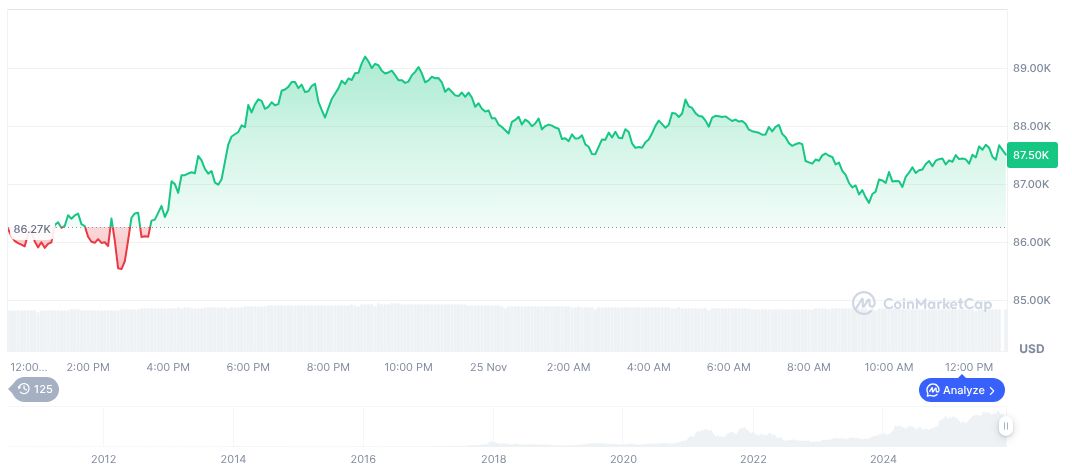
As per CoinMarketCap, Bitcoin (BTC) is currently priced at $87,845.22 with a market cap of $1.75 trillion, leading the market at 58.10% dominance. Its 24-hour trading volume is $67.15 billion, dropping -6.87%. Over the last 90 days, Bitcoin has seen a -21.82% price decline.
Insights from Coincu research highlight potential regulatory shifts. Continued financial exclusion might prompt industry migration out of the U.S., increasing reliance on decentralized finance solutions. Enhanced scrutiny could redefine crypto's intersection with traditional banking.