


Italy’s Economy Ministry has ordered a comprehensive review of the country's cryptocurrency safeguards following an official warning about "rising risks that could hit retail investors." This decision stems from a meeting of the Committee for Macroprudential Policies, which comprises key financial regulators including the head of the Bank of Italy, the chief of Consob, insurance and pension fund watchdogs, and the director general of the Treasury.
In a joint statement, the regulators announced that an "in-depth review has been launched to assess the adequacy of existing safeguards for direct and indirect investments in crypto-assets by retail investors." The committee also noted that while economic and financial conditions in Italy remain generally favorable, global uncertainty persists at a high level.
Europol Dismantles Major International Crypto Fraud Network
The Italian review coincides with Europol's announcement of the dismantling of an international crypto fraud network responsible for laundering over €700 million across multiple countries. According to an official statement, the operation began with a single fake website and evolved into an extensive network of fraudulent crypto-investment platforms.
Victims were reportedly lured in by advertisements promising high returns. After making initial deposits, they were presented with fabricated profits on simulated dashboards and encouraged to reinvest. The criminals then moved the funds through various blockchains and cryptocurrency exchanges to obscure their illicit origins.
Europol's Actions and Seizures
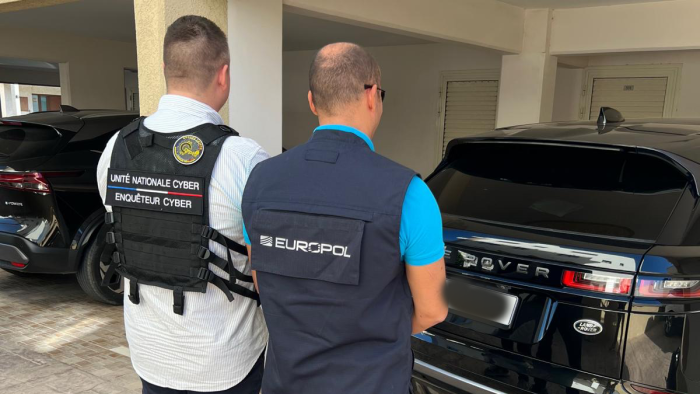
The first significant action by Europol occurred on October 27, when law enforcement agencies in Cyprus, Germany, and Spain, acting on requests from French and Belgian authorities, raided several sites. This operation led to the arrest of nine suspects. Authorities seized €800,000 in bank accounts, €415,000 in cryptocurrency, €300,000 in cash, along with high-end watches, electronics, and documents linked to the scheme.
A second phase of the operation, conducted on November 25 and 26, targeted marketing firms associated with the network in Germany, Belgium, Bulgaria, and Israel. These firms are accused of using deepfakes, fabricated media clips, and fake celebrity endorsements in their advertisements to deceive investors.
Europol described the case as one of the largest crypto laundering operations in Europe, stating, "The investigation revealed that more than €700 million was laundered through a complex network of cryptocurrency exchanges, using digital anonymity to conceal illicit flows of funds." Officials highlighted that these findings demonstrate the sophistication of organized fraud groups in creating realistic fake platforms capable of deceiving investors.
EU Leaders Consider New Powers for ESMA Over Crypto Firms
In parallel, the European Commission unveiled new proposals aimed at enhancing the competitiveness of the EU's capital markets. These proposals include facilitating cross-border activities and bolstering the powers of the European Securities and Markets Authority (ESMA). The EU is seeking to strengthen its single market for services to compete more effectively with the United States and China.
Enrico Letta, former Italian Prime Minister and author of a report on single market reforms, emphasized the potential impact of channeling €33 trillion in private savings into the real economy. He noted that a third of this amount is held in current accounts, and €300 billion in family savings flows overseas, primarily to the United States, illustrating the fragmentation of EU markets. Letta pointed to 2024 market values, where the EU's market represented 73% of GDP, compared to the U.S.'s 270% of GDP.
The proposed plan would transfer the oversight of trading venues, central counterparties, CSDs, and crypto-asset providers to ESMA. The authority would also assume a more significant role in coordinating asset management. France, the host country for ESMA, has been a proponent of this shift, and ESMA head Verena Ross has expressed support for the move. ESMA stated that the new package "represents a major step towards deeper and more efficient EU capital markets."
This proposal follows the implementation of new EU crypto regulations earlier this year, which raised concerns regarding inconsistent enforcement. In September, regulators from France, Italy, and Austria called for ESMA to assume responsibility for supervising major crypto firms. France also indicated it might challenge the passporting of licenses from countries with less stringent licensing standards. Malta's financial regulator, which has faced scrutiny for its licensing processes, has stated its opposition to granting ESMA increased crypto supervision powers.