



Criminals Pose as Police in Online Game to Launder Funds
Primary school students in Hangzhou were targeted by scammers posing as police officers within the online game 'Egg Party.' These fraudsters claimed the children's gaming accounts were involved in illegal activities, convincing them to transfer substantial sums of money. The Hangzhou Municipal Government and the Fuyang District People’s Procuratorate have officially documented this scheme. Once the funds were transferred, they were rapidly converted into cryptocurrency and laundered through on-chain operations, significantly complicating recovery efforts for the victims.
Authorities are issuing warnings to parents about the increasing prevalence of such scams, emphasizing the critical need for enhanced education and vigilance to protect children from similar fraudulent activities.
Hangzhou Municipal Government Official stated, "Prosecutors warn that anyone claiming to be law enforcement and requesting transfers to so-called ‘safe accounts’ is a scam, and parents should strengthen anti-fraud education for their children."
Cryptocurrency Laundering: Persistent Challenges and Evolving Tactics
Did you know? Scams involving cryptocurrency laundering are not a new phenomenon. Reports indicate that criminals frequently favor Bitcoin (BTC) and Ethereum (ETH) due to their high liquidity, which allows them to quickly anonymize and move large sums of money without immediate detection.
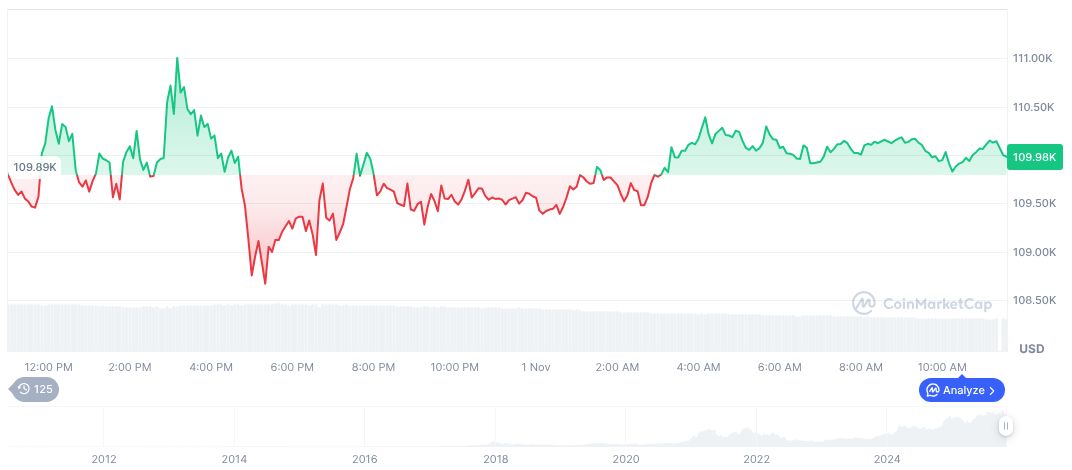
Bitcoin (BTC) continues to hold a dominant position in the cryptocurrency market. As of November 1, 2025, its price was $110,502.79 with a market capitalization of $2.20 trillion. The 24-hour trading volume saw a decrease of 57.67%, reaching $26.44 billion, though BTC still maintains a market dominance of 59.29%. In the last 24 hours, the BTC price experienced a slight increase of 0.96%, but over the past week, it has decreased by 0.86%. This detailed market information is provided by CoinMarketCap.
Experts from the Coincu research team observe that incidents of crypto-fraud underscore the significant regulatory challenges faced by authorities worldwide. Despite ongoing technological advancements, the effectiveness of current regulations in combating crypto-laundering schemes remains a subject of evolution. This situation suggests a persistent need for refined strategies and enhanced cross-border cooperation to effectively combat such deceptive financial practices.