


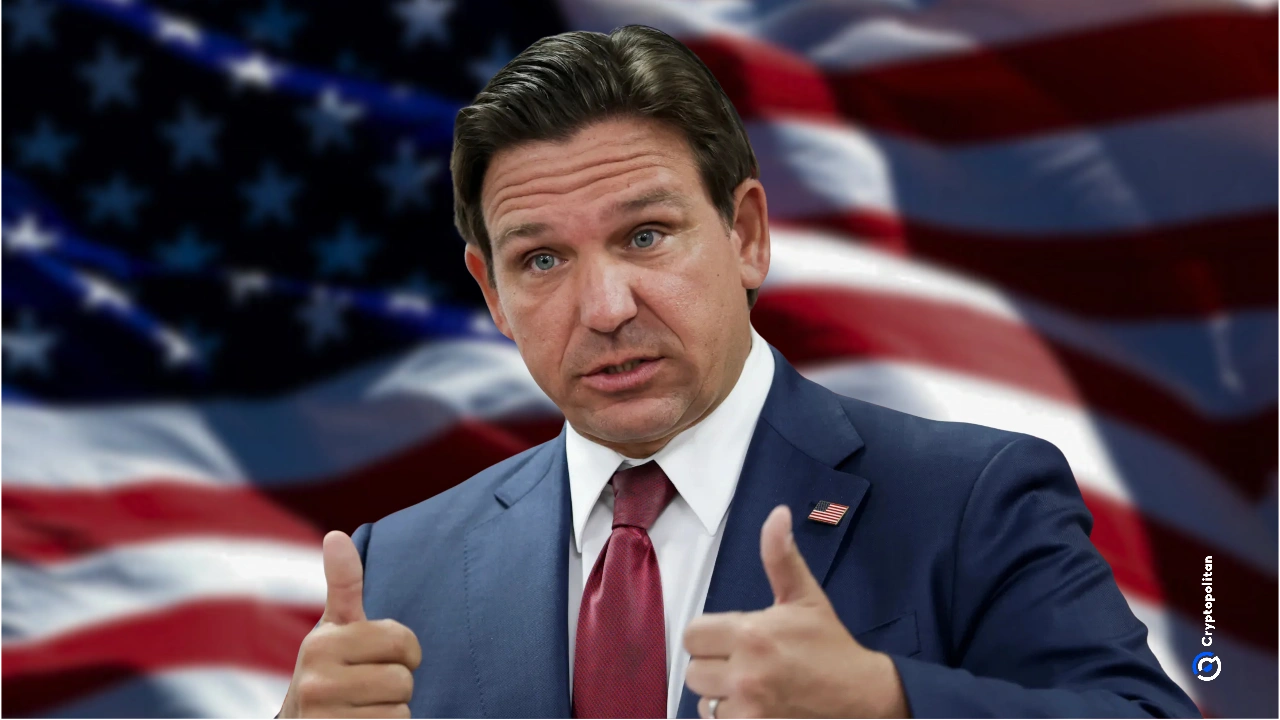
Florida's Governor, Ron DeSantis, has challenged President Trump's approach to AI deregulation, expressing concerns that artificial intelligence could "displace human beings." This comes as President Trump actively promotes AI deregulation to maintain the United States' technological edge over China.
Specifically, Florida lawmakers are focusing on "hyperscale" data centers, proposing legislation to prevent these facilities from excessively consuming local water supplies or increasing electricity costs for residents.
Florida's Stance on AI Regulation
During his final State of the State address on January 13, 2026, Governor Ron DeSantis delivered a strong warning regarding the potential dangers of rapidly advancing technology. He informed the Florida Legislature that AI might soon "displace human beings as the central players on Earth’s stage."
While the Trump administration is taking steps to reduce regulatory hurdles for major technology companies, DeSantis is advocating for Florida to enact some of the nation's most stringent AI protections. The governor's primary concerns include "hyperscale" data centers and the impact of chatbots on children.
A significant factor in DeSantis's push for state-level AI regulations is President Trump's executive order from December 2025, titled "Ensuring a National Policy Framework for Artificial Intelligence."
This order aims to establish a unified national framework for AI development. President Trump's rationale is that U.S. companies will face difficulties in innovating and may ultimately lose the technology race to rivals like China if each state implements its own set of rules.
On January 10, 2026, the Department of Justice launched Trump's "AI Litigation Task Force." This task force is empowered to take legal action against states that enact "onerous" AI laws.
The White House has also indicated it may withhold $42 billion in federal broadband funding from states that do not repeal regulations conflicting with federal policy.
State Authority to Enact AI Laws
In response to President Trump's actions, Governor DeSantis stated that an executive order cannot legally prevent a state legislature from passing its own laws. He noted that although the U.S. House of Representatives previously attempted to ban state AI regulations for a decade through the "One Big Beautiful Bill," the U.S. Senate voted 99-1 to remove that prohibition.
DeSantis believes that public opinion supports state-level protections and that Florida would be successful in any legal dispute with the federal government.
DeSantis plans to introduce a bill known as the "Citizen AI Bill of Rights." This proposed legislation includes a ban on minors accessing AI chatbots without explicit parental consent.
Under the terms of the bill, companies would be required to offer parents tools to monitor their children's AI conversations and to receive notifications if a child exhibits "concerning behavior." The law would also prohibit AI from functioning as a licensed therapist or mental health counselor without direct human oversight.
Governor DeSantis and local residents in Palm Beach County have voiced concerns that "hyperscale" data centers, which require substantial amounts of water for cooling and consume more electricity than small cities, could deplete local aquifers and necessitate higher utility rates for citizens to fund the expansion of the power grid.
The proposed legislation would mandate public hearings before the construction of any such data center and would prohibit their establishment near environmentally sensitive areas.
Texas recently enacted its "Responsible AI Governance Act" on January 1, 2026, which emphasizes data privacy and the prevention of discrimination. Colorado is currently facing potential federal lawsuits over its "algorithmic discrimination" law, scheduled to take effect later this year.