


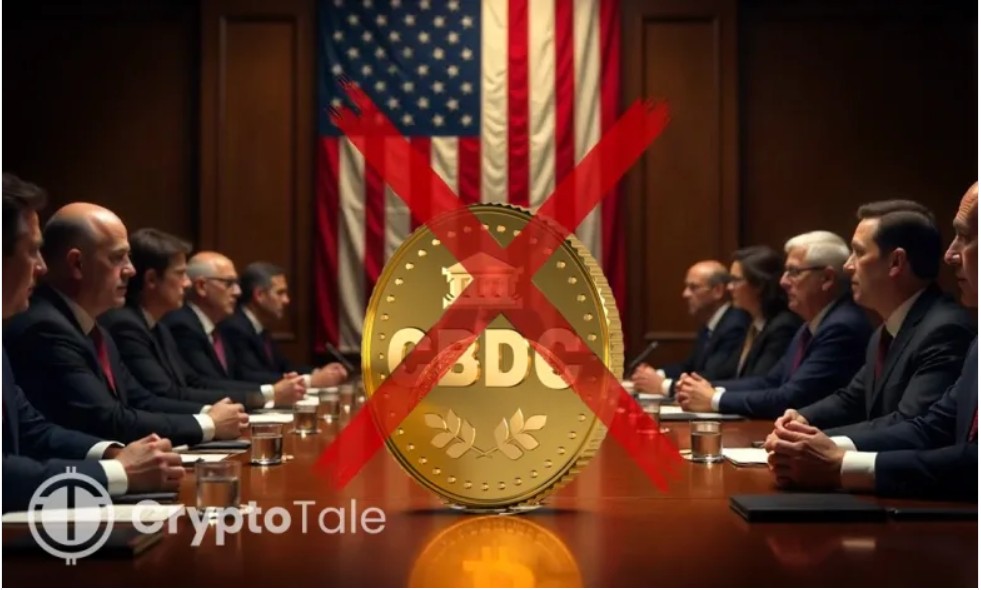
Hardliners Challenge Leadership Commitments on CBDC Ban
Republican anger intensified on Wednesday after the House passed a $900 billion defense bill that notably excluded a Central Bank Digital Currency (CBDC) ban. This development moved the National Defense Authorization Act (NDAA) closer to Senate consideration. Several GOP lawmakers expressed frustration, stating that leadership had removed the anti-CBDC provision despite prior assurances. This situation raises significant questions about how Republicans will approach blocking a critical bill over the absence of this financial language.
A contingent of Republicans asserted that the bill contradicted commitments made during summer negotiations. Representative Keith Self explicitly stated that leaders had given a firm promise to include robust anti-CBDC language within the NDAA. He conveyed on X that this promise had been broken.
Self introduced an amendment on Tuesday aimed at reinstating the CBDC ban, but this amendment did not proceed to a floor vote. He described the situation as members being "forced into a take-it-or-leave-it bill."
He indicated a leaning towards voting against the bill in its current form without the CBDC measure. Self emphasized the importance of protecting financial freedom through statutory means, stating that conservatives had received assurances that the ban would be included in the final text.
Several Republicans indicated uncertainty regarding the procedural vote. Representatives Michael Cloud, Ralph Norman, Byron Donalds, and Anna Paulina Luna did not commit to a specific stance. Representative Tim Burchett suggested he would likely vote no.
Luna pointed out that the bill faced difficulties because it differed from the version initially passed by the House. She also cited concerns regarding funding for the Ukraine Security Assistance Initiative.
Political Tension Surrounds Must-Pass Legislation
The NDAA, a sprawling piece of legislation exceeding 3,000 pages, authorizes annual military spending. It is often used as a vehicle to attach other, sometimes unrelated, legislative items that might otherwise face difficulties in separate procedural votes.
In July, GOP leaders reached an agreement with a group of hardline members to secure their support for three cryptocurrency bills. This agreement stipulated the inclusion of a CBDC ban in the NDAA. However, those crypto bills later stalled during a nine-hour procedural vote. Among these was the GENIUS Act, which President Donald Trump had urged Republicans to approve promptly.
Representative Marjorie Taylor Greene publicly criticized Speaker Mike Johnson on Monday, accusing him of failing to uphold the agreement concerning the CBDC ban. She expressed her support for cryptocurrency but stated her opposition to any government oversight of personal financial access, asserting that no individual should face limitations on their ability to conduct transactions.
Provision Details and Legislative History
The initial version of the NDAA circulated by the House in August contained the CBDC ban. However, this language was subsequently removed through multiple committee markups and amendments. The dropped provision would have prevented the Federal Reserve from testing or issuing any digital currency and would have prohibited the Fed from offering financial products directly to individuals.
The House had previously passed the Anti-CBDC Surveillance State Act in July with a close vote of 219-210. This bill has since stalled in the Senate and remains inactive.
Representative Self indicated his intention to continue advocating for the CBDC ban. He plans to pursue its inclusion in future must-pass legislation, aiming to prevent the advancement of any federal digital currency.
Previous executive actions this year already prohibit federal agencies from promoting a CBDC. President Trump signed an order citing concerns related to privacy and national sovereignty. Despite these actions, some conservatives maintain that statutory protections are still essential.