


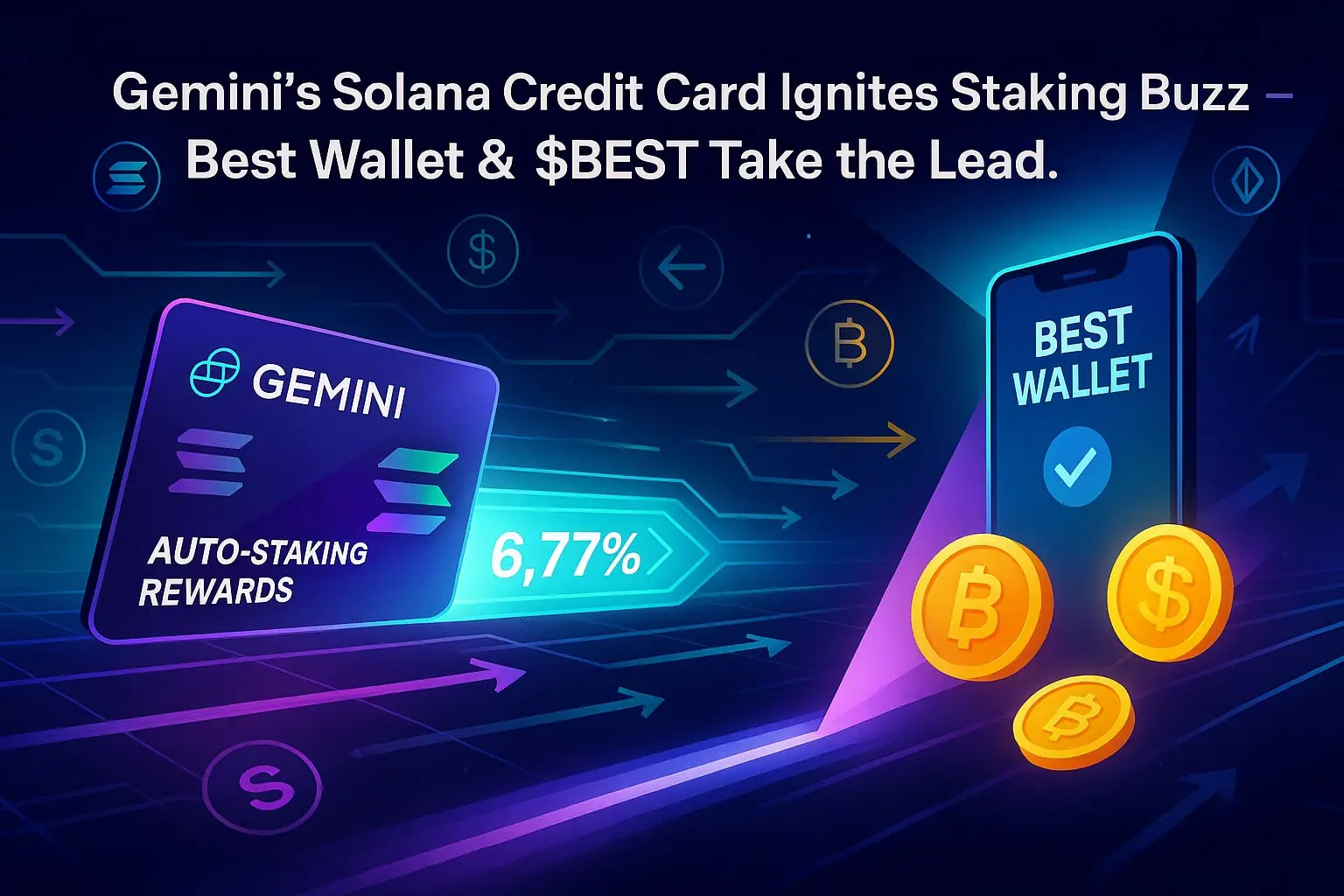
Gemini's recent success with its 2.5 Flash offering has paved the way for its ambitious entry into the broader fintech space with the launch of its new Solana credit card. This development is significant for the cryptocurrency community, as it effectively bridges the gap between traditional credit card functionalities and decentralized finance (DeFi) yield generation, while simultaneously promoting the mainstream adoption of staking mechanisms.
The Gemini Solana Card represents Gemini's inaugural payment card product that is directly linked to a specific blockchain network. This innovative card is designed to simplify DeFi participation through its auto-staking feature, enabling users to earn, stake, and generate yield without the need for manual fund transfers. This streamlined approach is expected to drive substantial mainstream adoption of staking-based returns.
Furthermore, the card offers competitive rewards: up to 4% back in $SOL rewards on purchases like gas, EV charging, and rideshares, 3% on dining, 2% on groceries, and 1% on all other transactions. These rewards can be auto-staked at an impressive 6.77% APY, transforming passive cashback into compounding yield opportunities and making every transaction more rewarding.
The introduction of Gemini's new credit card is also poised to bolster Solana's validator network. By encouraging wider participation and usage of the network, the card will contribute to strengthening Solana's security, decentralization, and overall long-term stability.
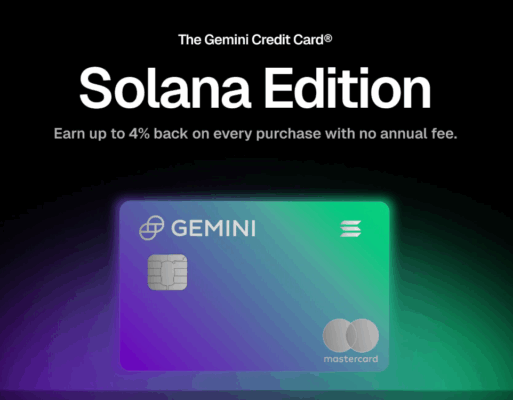
Gemini reports that $SOL rewards have consistently been among the platform's highest-performing assets. Cardholders have experienced substantial gains, with some seeing returns as high as 299% within a single year. This credit card integration further underscores the value of reward retention and staking, suggesting that auto-yield mechanisms can indeed offer superior returns compared to traditional cashback programs.
Why Solana?
Gemini's strategic decision to leverage Solana for its credit card stems from the network's inherent speed and its scalable capabilities, which are well-suited for fintech applications. As traditional credit cards evolve into tools that directly contribute to crypto ecosystems by generating yield, there is a projected increase in demand for wallets that can facilitate on-chain reward automation.
This is precisely where Best Wallet emerges as a prominent solution. It offers advanced auto-yield tracking, seamless staking tools, and robust support for cross-chain integrations. The project's native asset, the Best Wallet Token ($BEST), is already generating significant attention, particularly due to its highly successful presale.
Best Wallet & $BEST — Combining Secure Storage, Presale Access, and Real Token Utility
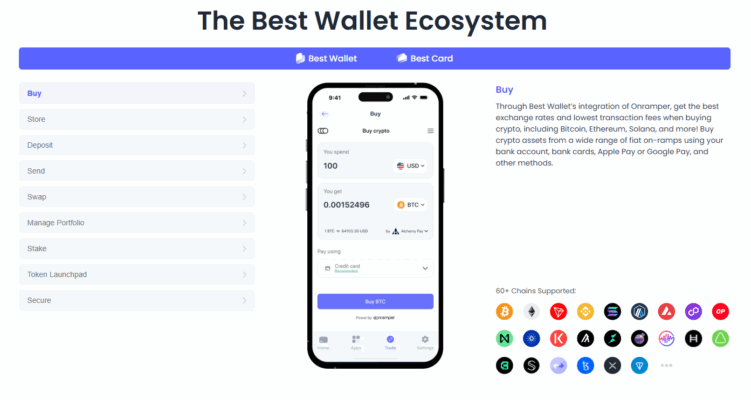
Best Wallet is a non-custodial, hot wallet designed to support over 1,000 cryptocurrencies across six different blockchains, with plans to expand its compatibility to over 60 blockchains in the future. This mobile-first crypto storage solution is available as an iOS and Android application, providing users with a unified interface for storing, buying, selling, swapping, and staking a vast array of digital assets.
The wallet employs a state-of-the-art security infrastructure, incorporating features such as passcode protection, login credentials, two-factor authentication (2FA), and biometric security to ensure the highest level of safety for user assets.
Beyond its core storage capabilities, Best Wallet includes an integrated Decentralized Exchange (DEX), facilitating low-fee cross-chain swaps. It also features a Token Launchpad, allowing users to purchase vetted presale tokens directly from within the wallet interface.
The project's future roadmap includes the implementation of advanced anti-fraud protection, a comprehensive portfolio management feature, and the launch of its own debit card, mirroring the functionality of Gemini's offering.
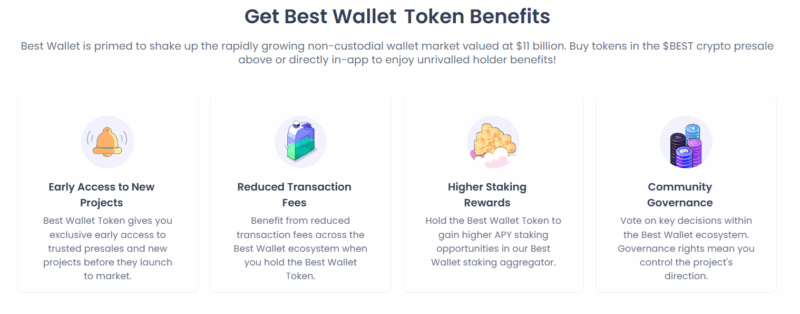
At the heart of the Best Wallet ecosystem is $BEST, its native cryptocurrency. Holding $BEST provides users with a range of benefits, including:
- •Reduced transaction fees across the platform.
- •Attractive rewards through staking opportunities.
- •Priority access to new and carefully vetted cryptocurrency presales.
- •Governance rights, allowing holders to participate in the ecosystem's growth and development decisions.
In a market often characterized by speculative meme coins, $BEST distinguishes itself as a community-driven token offering tangible utility and significant potential for growth.
Significant investor activity, including whale purchases of $BEST valued at $70.2K and $50.9K, indicates strong conviction in the wallet's potential and the token's long-term prospects. These transactions, verifiable on Etherscan, underscore the growing confidence in the project.
The $BEST presale has demonstrated remarkable success for a utility token associated with a wallet, with the project having already raised an impressive $16.6 million. Currently, one $BEST token is priced at $0.025825, and the dynamic staking APY stands at 79%. It is important to note that as more participants join the staking pool, the staking APY will decrease, making it advantageous to secure $BEST holdings sooner rather than later.
While Gemini's Solana card represents a significant step forward in integrating crypto with traditional finance, the $BEST token and Best Wallet ecosystem signify a more profound leap, transforming blockchain innovations into tangible financial benefits for users.