


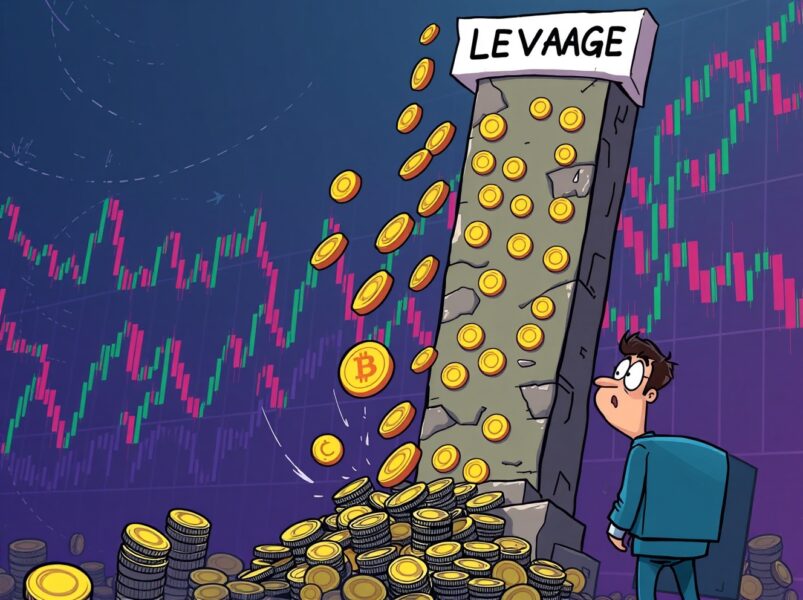
Understanding Futures Liquidations
Futures liquidations occur when a trader's leveraged position is forcibly closed because they can no longer meet the margin requirements. This serves as an automatic risk management mechanism that activates when market prices move significantly against a leveraged position. During periods of sharp price swings, these liquidations can trigger a cascading effect, often referred to by traders as a 'liquidation spiral.'
Factors Driving Massive Liquidations
Several converging factors can lead to substantial futures liquidations. Rapid shifts in market sentiment, often instigated by significant events such as major regulatory announcements, unexpected economic data releases, substantial movements by large holders (whales), or the breakdown of key technical support levels, can all contribute. When these factors align with high levels of leverage across the market, the result can be futures liquidations on an enormous scale.
Impact on Regular Investors
Even investors who do not directly trade futures can experience the effects of these large liquidation events. Massive futures liquidations can contribute to increased market volatility, widen bid-ask spreads, create temporary liquidity crunches, and potentially trigger emotional selling among retail investors. Understanding these dynamics is crucial for making informed investment decisions during turbulent market conditions.
Strategies for Protection
Traders can employ several strategies to mitigate the impact of futures liquidation fallout. Implementing proper risk management through the use of stop-loss orders is paramount. Avoiding excessive leverage that could magnify potential losses is also essential. Furthermore, maintaining a diversified portfolio across various asset classes can help buffer against sector-specific downturns. It is important to remember that significant liquidation events can often present buying opportunities for well-prepared investors.
The Broader Market Context
The $106 million in futures liquidated represents more than just a financial statistic; it signifies the ongoing maturation of cryptocurrency markets, where robust risk management practices are becoming increasingly vital. As institutional participation grows, the development of more sophisticated hedging strategies is anticipated, which could potentially reduce the frequency of such dramatic liquidation events.
Ultimately, the phenomenon of futures liquidations offers valuable insights into market dynamics and the importance of risk management. While these events cause short-term market turbulence, they also underscore the necessity of disciplined trading approaches within the inherently volatile cryptocurrency landscape.
Frequently Asked Questions
What triggers futures liquidations?
Futures get liquidated when traders’ margin balances fall below maintenance requirements due to adverse price movements.
How long do liquidation events typically last?
Most intense liquidation periods last from several minutes to a few hours, though market effects can persist longer.
Can liquidation events predict market direction?
While not perfect predictors, massive liquidations often signal potential reversal points as oversold conditions develop.
Should retail traders avoid futures entirely?
Not necessarily, but they should understand the risks and use appropriate position sizing and risk management.
Do all exchanges experience liquidations simultaneously?
Generally yes, as price movements across major exchanges tend to correlate closely during volatile periods.
How can I track potential liquidation events?
Use platforms that provide real-time liquidation data and set price alerts for key technical levels.