



Key Developments in Spot Crypto Trading
The U.S. federally regulated market is set to trade listed spot cryptocurrency products for the first time under CFTC oversight, commencing on December 4, 2025. This significant milestone aims to integrate cryptocurrency into established financial markets, with expectations of enhancing liquidity, fostering innovation, and influencing major digital assets such as Bitcoin and Ethereum.
CFTC's Initiative for Regulated Spot Crypto Trading
The introduction of regulated trading provides a new framework for trading spot crypto within the United States, a market that was previously primarily confined to derivatives. The ability to utilize tokenized collateral, including stablecoins, in derivative markets signals a substantial step in regulatory modernization and has the potential to redefine liquidity strategies across a wide array of crypto assets.
Following this announcement, strong reactions have emerged from the industry. Key figures, such as the CEO of Bitnomial, have voiced optimism regarding the improved regulatory clarity and its implications for launching the first regulated spot crypto market under the purview of the CFTC.
"It’s a crypto sprint. I’m very serious about that, so we are moving quickly," emphasized Caroline D. Pham, highlighting the urgency in the launch of spot crypto trading and the enablement of tokenized collateral.
Bitcoin Price Dynamics Amidst Regulatory Changes
This initiative by the CFTC in the U.S. represents a pioneering move in federal regulation, permitting spot crypto products to be traded on a futures exchange. This approach deviates from the historical focus solely on derivatives, underscoring an unprecedented level of regulatory integration for digital assets.
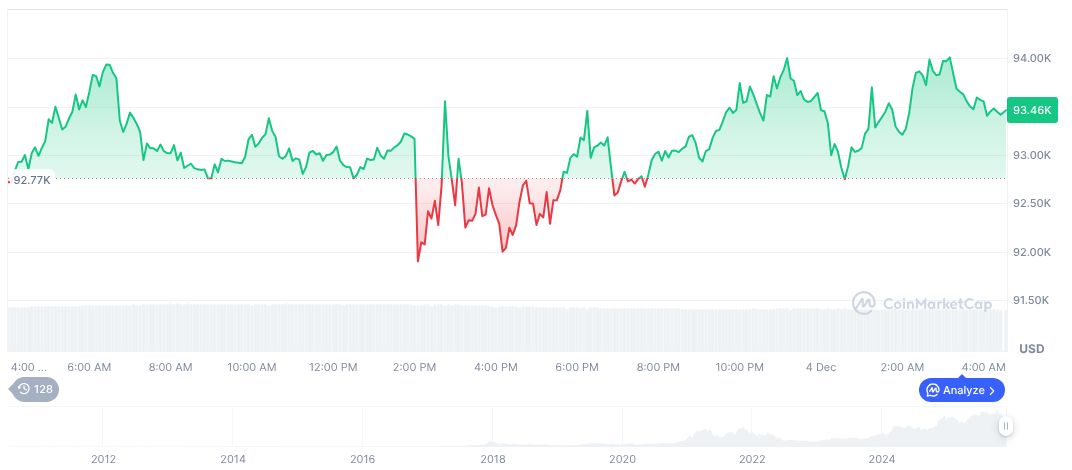
Bitcoin (BTC) is currently trading at $92,941.90, maintaining a market capitalization of approximately $1.85 trillion and a market dominance of 58.54%. In the preceding 24 hours, BTC experienced a modest increase of 0.60%, while trading volume saw a notable decrease of 15.48%. Price trends over the past 60 and 90 days indicate declines of 24.34% and 15.99%, respectively.
Research suggests that the integration of tokenized collateral could pave the way for the development of innovative financial instruments and contribute to the diversification of marketplace dynamics. This strategic alignment with blockchain technology signifies a forward-thinking approach, potentially stimulating new avenues for growth across the digital asset markets.