



Federal Reserve's Policy Stance Amid Inflation Concerns
Raphael Bostic, President of the Federal Reserve Bank of Atlanta, emphasized the necessity of maintaining a restrictive monetary policy due to ongoing inflation pressures during a recent address in Atlanta.
The Fed's stance could bolster USD strength, likely affecting Bitcoin and Ethereum through heightened interest rates and reduced liquidity, impacting cryptocurrency markets and investor sentiment.
Raphael Bostic highlighted the Federal Reserve's commitment to a restrictive monetary policy due to ongoing inflation concerns. At the Metro Atlanta Chamber event, he stated, "We need to stay restrictive because inflation is too high," emphasizing the continuous pressure expected throughout 2026.
The call for a tight policy stems from businesses integrating tariff costs into prices, keeping inflation above the desired threshold. This approach aligns with previous statements advocating for a steady funds rate to manage inflation expectations. The policy also coincides with Bostic's scheduled retirement in February 2026.
Market reactions have been generally cautious, with analysts noting the strengthening USD as a result of the Fed's restrictive stance. This has implications for cryptocurrencies such as Bitcoin (BTC) and Ethereum (ETH), which face potential liquidity pressures as investment shifts towards USD-denominated assets.
Crypto Market Faces Pressure from Strengthening USD
Raphael Bostic is the first African American to lead a regional Federal Reserve Bank, highlighting a significant shift in the Federal Reserve's historical leadership composition.
Bitcoin (BTC) is currently priced at $96,556.33, with a market cap of $1.93 trillion and market dominance at 59.11%. The 24-hour trading volume stands at $55.03 billion, down 18.86%. Recent price movements show a 0.49% decrease in 24 hours, a 5.74% increase over the week, and a 10.80% rise in the past month.
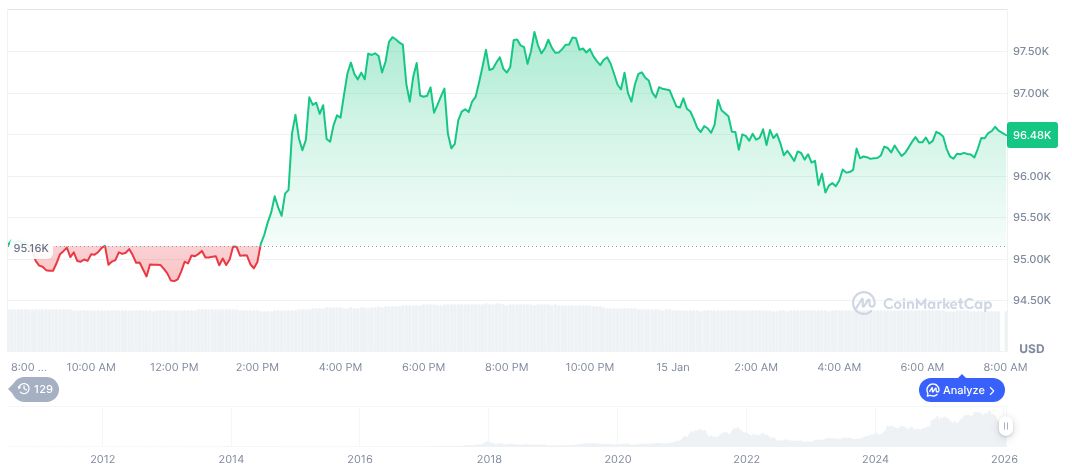
The Coincu research team notes that a prolonged hawkish stance by the Federal Reserve could lead to continued USD strength, potentially suppressing crypto valuations. Historical trends suggest that such policies often result in reduced market liquidity, further impacting risk-sensitive assets like Bitcoin and Ethereum.