


Former Federal Reserve Governor Kevin Warsh is currently leading the prediction markets for the role of the next Federal Reserve Chair. President Trump is expected to announce his successor this month as Jerome Powell's term approaches its expiration on May 15. White House economic advisor Kevin Hassett, who was previously considered a nominee, has indicated a preference to remain in his current role rather than pursue the Fed chair position. Following President Trump's recent comments, Warsh's probability of being selected has increased on prediction platforms like Kalshi and Polymarket. Warsh's extensive experience and established relationships within both market and Treasury sectors position him as a leading contender. In contrast, current Fed Governor Christopher Waller holds a lower probability in the market for this selection.
Scott Bessent, the US Treasury Secretary, has reiterated President Trump's commitment to upholding the independence of the Federal Reserve. The ongoing selection process for the Fed Chair has generated significant interest due to the potential for shifts in monetary policy under new leadership. In response to these developments, spot gold and silver prices have seen a notable surge, with silver gaining over 4% and gold increasing by 2% as discussions continue.
"The markets have shifted significantly following the recent comments, with the odds on my potential nomination now around 60%."
Market Implications of Leadership Change
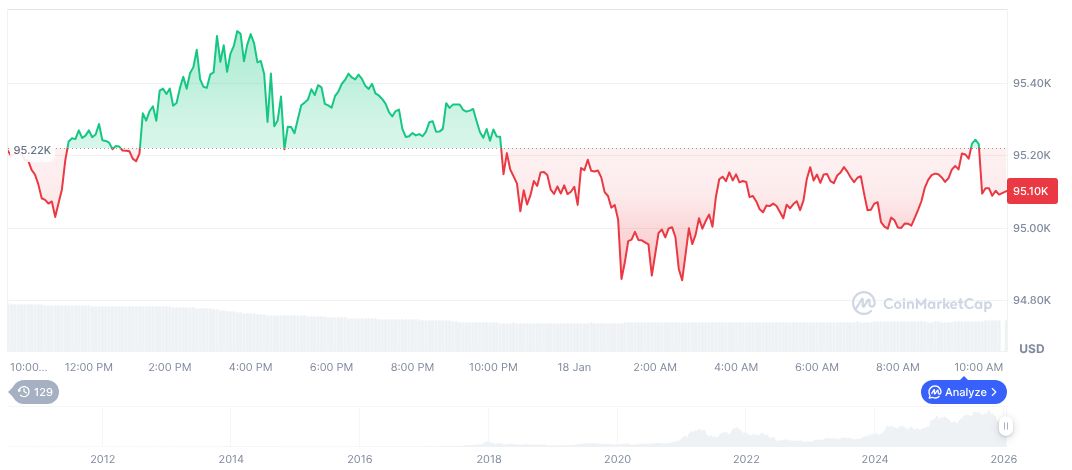
Changes in Federal Reserve leadership have historically been correlated with market volatility, which can impact various assets, including Bitcoin. Bitcoin's current price stands at $92,946.85, with a market capitalization of $1.85 trillion. Recent price movements indicate a decline of 2.39% over the past 24 hours, while maintaining a weekly gain of 2.47%. The trading volume has risen to $36 billion, representing a significant increase of 113.54%.
The Coincu Research Team suggests that Kevin Warsh's potential leadership at the Federal Reserve could influence the direction of monetary policy, leading to distinct market reactions based on his appointment.