
Navigating Crypto News

CoinFeather
Navigating Crypto News
Quick market read from this story
Atomic settlement, while promising faster transactions, paradoxically demands significantly more capital due to the elimination of netting efficiencies, potentially increasing trading costs and favoring larger, well-capitalized entities.
The shift towards T+0 settlement in traditional finance and its parallel in blockchain-based systems redefines market intermediation, with entities capable of coordinating capital and liquidity at scale becoming the new gatekeepers, rather than eliminating intermediaries.
While atomic settlement aims for efficiency, it fundamentally alters capital dynamics, requiring market participants to either hold larger cash buffers or reduce trading frequency, impacting strategies reliant on rapid turnover.
The evolution towards atomic settlement highlights that speed alone is insufficient; robust infrastructure for capital and liquidity coordination is critical, suggesting that firms mastering these operational aspects will capture market advantages.
Deep Dive
The global financial landscape is rapidly shifting towards shorter settlement cycles, with the United States moving to T+1 settlement in 2024 and Europe, the UK, and several Asian markets expected to follow by 2027. This trend, amplified by blockchain-based finance and stablecoins enabling instant atomic settlement, has seen stablecoin transfer volume exceed $1.8 trillion. However, this increased speed introduces new challenges, primarily the demand for more capital and efficient liquidity coordination, which could reshape market participation and favor entities capable of managing these demands.
Atomic settlement, where payment and asset transfer occur simultaneously, eliminates counterparty credit risk but fundamentally alters capital efficiency. Traditional T+2 or T+1 systems allow for netting of exposures before final settlement, enabling a small pool of capital to support high trading volumes. In contrast, atomic settlement (T+0) requires each trade to be fully funded and settled immediately. This reduces netting opportunities, locking capital into each transaction and making the system financially less efficient despite being operationally faster. This phenomenon is termed the atomic settlement paradox.
The shift to atomic settlement significantly increases capital requirements. While $1 million in capital might support over 100 times that volume in a netted T+2 system, it can only support $1 million in trading in an atomic environment. This necessitates larger capital buffers or reduced trading frequency for market participants, particularly affecting strategies reliant on rapid turnover. The recent move to T+1 settlement already demonstrated this, with NSCC data showing a reduction in the Clearing Fund and requiring firms to manage liquidity within a single day. These constraints are expected to intensify under T+0 atomic settlement, potentially leading to wider spreads and less market depth for retail investors.
While proponents tout atomic settlement for its speed and safety, it reintroduces intermediaries to coordinate liquidity, manage risk, and deploy capital efficiently. Banks and large financial institutions remain crucial, providing the capital buffers necessary for real-time settlement. This evolution shifts the intermediary's role towards orchestrating capital and liquidity. Despite concerns that atomic settlement may favor larger players, it is also spurring innovation in areas like liquidity pooling, real-time netting, and cross-venue margin optimization. Firms that can deliver both speed and efficiency will be key in the next generation of financial markets.
Atomic settlement is rewriting market rules by redistributing frictions towards those best equipped to manage them, structurally advantaging scale and coordination. It shifts the function of intermediaries towards orchestrating capital and liquidity, rather than eliminating them. As tokenized assets grow, efficient management of complex trades becomes even more critical. The core assumption of crypto finance that speed alone removes the need for trusted infrastructure is challenged; capital and liquidity coordination remain paramount. Firms building systems to manage these flows will define market possibilities and scalable strategies. Ultimately, markets reward efficiency, and those aligning speed with disciplined operations will capture its benefits.
Source, catalyst, and sector overlap from the latest feed.
OpenFX's $94M Series A funding round signals significant investor confidence in stablecoin-based cross-border payment solutions, potentially driving adoption and infrastructure development in this niche. The expansion into Southeast Asia and Latin America by OpenFX, leveraging stablecoins for faster settlement, could create new market opportunities and pressure traditional FX services. While OpenFX highlights rapid settlement times, regulatory divergence across major markets presents a key hurdle that could temper the broader adoption of stablecoin-based payment infrastructure. The "ChatGPT moment" analogy for stablecoins suggests a potential inflection point for corporate crypto adoption, with significant implications for payment infrastructure providers like OpenFX.
The proposed Ethereum Economic Zone (EEZ) framework aims to address L2 fragmentation by unifying rollups under Ethereum's security and settlement, potentially improving ETH's value accrual and user experience. While the EEZ seeks to create a more cohesive ecosystem, historical attempts like Cosmos' Atom Economic Zone faced challenges, raising questions about the EEZ's long-term adoption and success despite structural differences. The initiative highlights a strategic shift in Ethereum's scaling narrative, moving from pure L2 expansion to a more integrated model that could re-center economic activity on the mainnet and mitigate risks associated with bridge exploits. The EEZ's success hinges on overcoming the inherent 'walled garden' nature of individual rollups and demonstrating tangible benefits for protocols and users, with technical details still forthcoming.
Base's 2026 roadmap signals a strategic pivot towards integrating AI agents, positioning the Ethereum L2 as a foundational layer for a future AI-driven economy. The network's focus on smart accounts, tokenization of diverse assets, and scaling payments indicates a proactive approach to capturing value from the emerging agentic AI sector. By aligning with initiatives from Ethereum, Tron, Visa, and Stripe, Base is signaling a broader industry trend towards blockchain infrastructure supporting AI agent interactions and transactions.
The rapid adoption of AI agents like OpenClaw presents a significant new attack vector for crypto wallets, as malicious skills can bypass traditional security measures through natural language manipulation. Security firm CertiK warns that OpenClaw's integration capabilities with messaging platforms and local systems create vulnerabilities for credential theft, impacting a wide range of browser extension wallets. While the OpenClaw founder claims security improvements, the platform's history of numerous vulnerabilities and its recommendation against use by non-experts suggest ongoing risks for users interacting with crypto assets.
A Singapore court has issued a harassment order against OneKey founder Wang Lei and another individual, prohibiting defamatory statements related to the $9.6 million Resupply exploit. The legal action highlights the increasing intersection of crypto disputes and traditional legal frameworks, potentially signaling a trend of formal dispute resolution for on-chain events. While the exploit itself is a past event, the ongoing legal fallout and accusations of fraud could impact the reputation of individuals and projects involved in the DeFi ecosystem.
The U.S. Department of Labor's reversal of its 2022 stance on crypto in 401(k) plans removes a significant legal barrier, potentially opening up substantial retirement assets to digital asset investment. Plan fiduciaries can now legally offer crypto exposure if they adhere to a new six-factor safe harbor framework, emphasizing documentation and due diligence, which could drive demand for compliant crypto products. The DOL's move, coupled with the introduction of the 'Mined in America Act,' signals a broader regulatory shift towards acknowledging and integrating digital assets into traditional financial and industrial frameworks. With the $10.1 trillion 401(k) market now more accessible, even a small allocation shift towards crypto could have significant implications for asset managers and the broader digital asset ecosystem.
KuCoin operator Peken Global has been permanently barred from serving U.S. users unless registered, following a $500,000 CFTC settlement and a prior guilty plea to operating an unlicensed money transmitting business. The regulatory action against KuCoin, including a two-year exit from the U.S. market, signals increased enforcement and compliance scrutiny for centralized exchanges operating without proper registration. This development, coupled with the CFTC's recent coordination pact with the SEC and formation of an innovation task force, suggests a more aggressive regulatory stance towards crypto platforms in the U.S.
The shift towards social engineering as the primary attack vector, highlighted by the Kraken user's $18.2M loss, indicates a growing need for enhanced user education and personal security measures over protocol-level defenses. With wallet compromises and phishing accounting for over 80% of March's losses, the crypto market faces persistent threats to individual holdings, underscoring the importance of robust security practices for users and exchanges. Despite a significant year-on-year drop in Q1 losses, the underlying trend of substantial financial damage from exploits and scams suggests ongoing systemic risks within the DeFi and broader crypto ecosystem. The repeated use of THORChain as a laundering route for stolen funds points to the challenges in tracing and recovering assets in a permissionless cross-chain environment, impacting overall market confidence.
RIVER's integration with Base, a prominent L2 ecosystem, provides a fundamental catalyst for potential price appreciation by increasing accessibility and on-chain activity. The price action shows RIVER testing key resistance at $25, with rising open interest suggesting new capital is entering the market, potentially signaling a breakout scenario. On-chain data indicates significant liquidity above current price levels, suggesting that a sustained move above $25 could trigger rapid upside momentum due to short liquidations. While RIVER is consolidating, the combination of Base integration and bullish on-chain signals suggests a constructive setup for a potential rally towards $35-$40 if resistance breaks.
Live Feed
Loading the broader stream in the same flow as the homepage feed.

Cardano founder Charles Hoskinson's struggle to prove his identity on social media highlights a critical gap in online verification, potentially impacting user trust and security across platforms. The incident underscores the need for robust identity solutions, with Hoskinson pointing to Zero-Knowledge (ZK) systems as a potential fix, aligning with the principles of Cardano's recently launched Midnight network. This situation draws attention to the prevalence of impersonation in the crypto space and the ongoing challenge of distinguishing legitimate actors from scammers, a problem ZK technology aims to address.
Ripple's partnership with Convera leverages stablecoin settlements to enhance cross-border payments, signaling increased enterprise adoption of blockchain for financial infrastructure. The integration aims to improve transaction speed, liquidity, and transparency, offering a competitive alternative to traditional payment systems and potentially driving demand for Ripple's payment solutions. This collaboration highlights a strategic move by Ripple to expand its reach in the corporate finance sector, utilizing its blockchain technology to address inefficiencies in global commerce.
Solana's price action is consolidating within a defined range, with key resistance at $85 and support around $74-$80, indicating indecision and a potential for further downside if support breaks. The current market structure shows lower highs and lower lows, reinforcing a bearish bias for short-term price movements, suggesting traders await clearer signals for entry. Despite recent consolidation, elevated trading volume suggests active participation, but the lack of strong upward momentum from the $74-$78 bounce points to continued pressure.
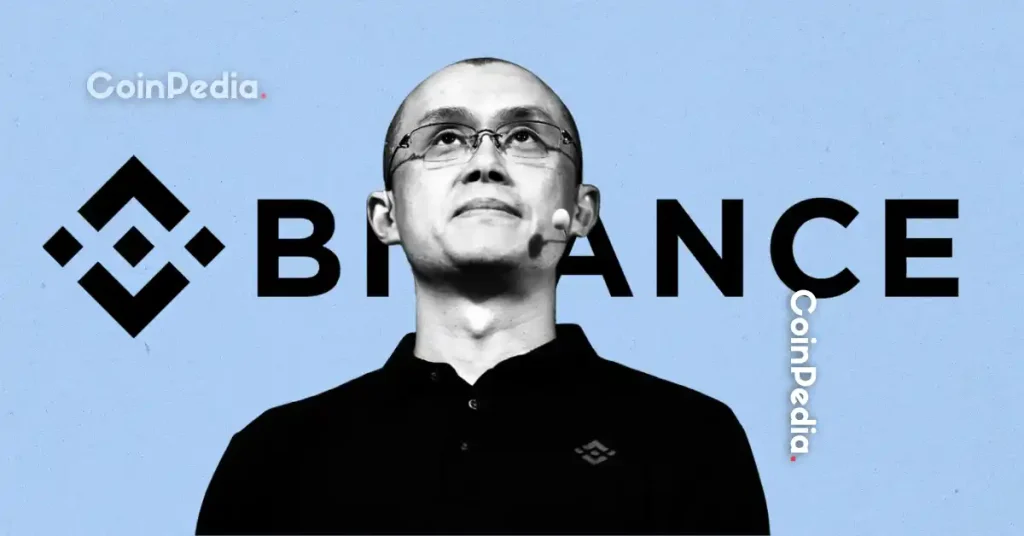
While quantum computing poses a theoretical long-term threat to Bitcoin's cryptography, the market is currently pricing in minimal near-term risk due to ongoing developer efforts and the distant timeline for practical quantum attacks. Changpeng Zhao's assertion that crypto can survive quantum computing, despite warnings from Google research, suggests a narrative of resilience and adaptability within the blockchain ecosystem, potentially easing investor concerns about existential threats. The discussion around quantum-resistant cryptography highlights a potential future catalyst for protocol upgrades across various blockchains, indicating a need for proactive development and investment in security infrastructure.

Bitcoin's March close below the 50 SMA and significant derivatives data shifts, including a $1.4 billion CVD reversal on Binance, indicate increasing short exposure and potential downside pressure. The Long-Term Holder Spent Output Profit Ratio (LTH SOPR) at 0.8 marks the fourth historical instance of this capitulation level, suggesting that while current price action is weak, it aligns with historical bottoms preceding major recoveries. Analyst Michaël van de Poppe anticipates an early April 'low sweep' to clear liquidity before a sustainable recovery, a scenario supported by the current derivatives positioning and historical LTH SOPR data. The confluence of bearish derivatives signals and historically significant on-chain capitulation levels suggests that a final flush lower, potentially triggering a short squeeze, is a plausible near-term scenario before a potential recovery.

The CoinDesk 20 Index showed a slight gain of 0.1%, indicating a broadly flat market with mixed performance among its constituents. Bitcoin Cash (BCH) and NEAR Protocol (NEAR) were the top performers within the CoinDesk 20, each showing positive price action. The performance of specific assets like BCH and NEAR suggests localized strength, but the overall index flatness implies no strong directional trend for the broader market.
Dogecoin price is consolidating at $0.09 with weak volume, indicating a lack of conviction and potential for a breakdown if support fails. Speculation surrounding X Money integration and Elon Musk's involvement provides a speculative bullish narrative, but lacks concrete confirmation. Technical indicators like Bollinger Bands and parabolic SAR suggest a tightening range with resistance at $0.099-$0.10, limiting immediate upside potential. The current market environment for DOGE presents a neutral outlook, with bearish technicals offset by speculative bullish hype, suggesting a watchlist approach.

Nakamoto's sale of 284 BTC at a significant loss, below its $118k average purchase price, signals potential funding stress for Bitcoin treasury companies. The market is repricing Bitcoin treasury wrappers based on durability and financing discipline rather than ambition, as realized losses crystallize the gap between acquisition cost and exit value. Upcoming macro data releases and geopolitical events will further test the financing discipline and survivability of Bitcoin treasury companies, potentially leading to a divergence between those that can hold and those that must manage through selling assets. The equity performance of NAKA, trading near $0.21 after a peak of $34.77, highlights the market's skepticism towards treasury strategies facing realized losses and increased operational costs.

Uniblock's $5.2M funding round highlights continued investor confidence in blockchain infrastructure solutions that simplify multi-chain operations. The platform's focus on unifying infrastructure across over 300 blockchains addresses a critical pain point for developers, potentially improving efficiency and reducing costs for dApps. The integration of AI-native developer tools suggests a forward-looking approach to developer experience, which could drive adoption and innovation in the ecosystem.
Riot Platforms (RIOT) stock offers leveraged exposure to Bitcoin, with its price movements closely mirroring BTC's volatility due to mining economics and operational costs. While analysts maintain a generally bullish outlook with median price targets around $21, significant risks including Bitcoin volatility, high operating costs, and profitability challenges persist. The company's potential diversification into AI and data centers presents a growth avenue, but its core revenue remains tied to Bitcoin mining profitability, making it a speculative play on BTC's trajectory. Investors should consider RIOT as a high-risk, high-reward asset suitable for those bullish on Bitcoin and comfortable with significant price swings, rather than a conservative investment.

Base is strategically shifting its focus towards tokenized markets and stablecoin payments, signaling a move to capture institutional interest in on-chain finance. The network's pivot away from Optimism's tech stack towards in-house infrastructure indicates a drive for greater independence and scalability, potentially impacting its integration with the broader Superchain ecosystem. By prioritizing developer growth and AI integration, Base aims to foster innovation and increase user activity, which could lead to higher transaction volumes and network adoption. The emphasis on stablecoins and tokenized assets positions Base to capitalize on the growing trend of on-chain financial services, potentially attracting significant capital inflows.

Chainalysis's integration of AI agents aims to democratize blockchain intelligence, lowering the barrier to entry for non-technical users and traditional finance professionals. The move signifies a competitive response to TRM Labs' similar AI agent announcement, indicating a potential new AI-driven era in blockchain analytics and investigation. By enabling custom AI agents, Chainalysis empowers enterprises and law enforcement to build bespoke investigation workflows, enhancing their ability to track illicit asset movements.
Signal context only. Validate with price action, liquidity, and risk limits before taking a position.
