


The NYC Token crash has reignited debate about accountability and transparency in crypto ventures involving public personalities. The coin, which gained traction after being linked to former New York City Mayor Eric Adams, experienced high volatility immediately after its launch. Adams has openly denied benefiting from the coin, based on a statement obtained by CryptoBriefing.
What Happened During the Launch
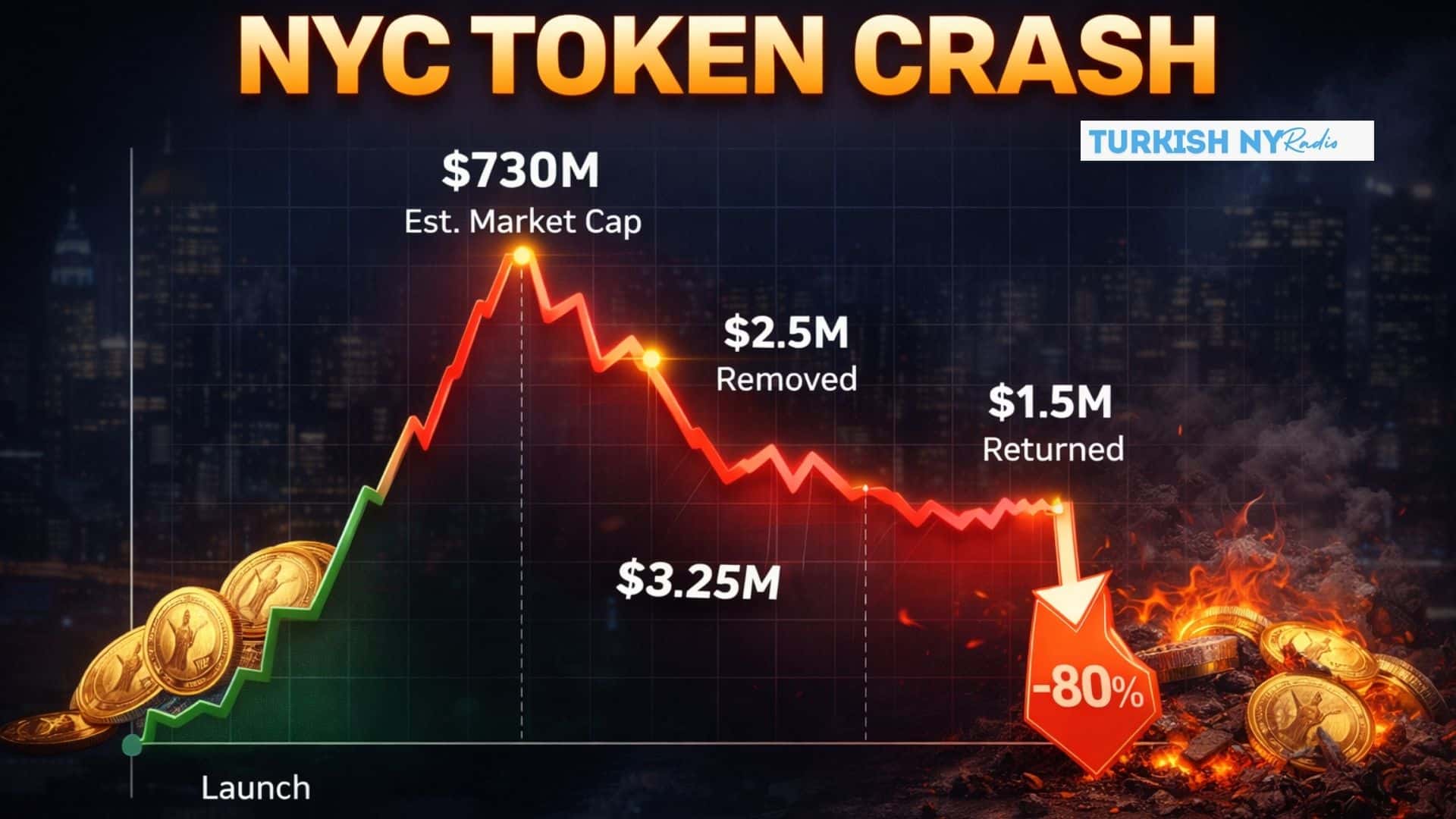
According to CryptoBriefing, the token surged after launch, then collapsed by more than 80% within a short time frame. This sudden reversal marked the beginning of the NYC Token crash, catching many retail traders off guard. Blockchain data reviewed by independent analysts showed that liquidity was removed during peak trading, intensifying the price decline. The NYC Token crash was not driven by broader market conditions; Bitcoin and other altcoins remained reasonably constant throughout the same time span, indicating that the fall was mostly limited to the token itself.
On-Chain Data and Wallet Concentration
CryptoBriefing’s on-chain investigation revealed that a single wallet held a significant portion of the available token supply throughout the early trading session. This level of concentration can amplify price fluctuations, particularly in low-liquidity markets. Analysts noted that such conditions increase the likelihood of sharp declines like the NYC Token crash, even without clear evidence of malicious intent. Importantly, CryptoBriefing did not confirm that Eric Adams controlled or benefited from these wallets, emphasizing that blockchain data alone cannot determine intent or personal profit without additional verification.
Eric Adams’ Response
In response to the controversy, Adams issued a firm denial. According to CryptoBriefing, he stated that he did not trade the token, did not remove liquidity, and did not profit from the NYC Token crash.
“Any claim that I benefited financially from this project is false,” Adams said, according to the report.
A spokesperson added that the token was not an official government project and that Adams’ involvement was limited to public support for innovation and civic engagement.
Investor Impact and Market Reaction
Despite the denial, the NYC Token crash resulted in widespread investor losses. CryptoBriefing reported that a majority of wallets that interacted with the token ended in a loss, largely due to buying during peak prices. The event reignited concerns about tokens associated with high-profile individuals. Market observers noted that public trust can accelerate speculative behavior, increasing downside risk when projects lack clear disclosures. The NYC Token crash has since been cited by analysts as an example of why retail investors should assess token mechanics, not personalities.
Broader Implications
The NYC Token crash also highlights unresolved questions around accountability in crypto. Although Adams denies intentional misconduct, the event demonstrates how fast harm to reputation can spread in initiatives that lack openness. In accordance with CryptoBriefing, no official inquiry has been declared yet, and no proof of criminal behavior has been found. Still, experts say the NYC Token crash could influence future discussions around disclosure standards for politically connected crypto initiatives.
Conclusion
As things stand, the NYC Token meltdown is an example of instability rather than proven malfeasance. Eric Adams’ denial is not being challenged by on-chain data, yet investment losses and unresolved issues persist. Analysts advise against reaching conclusions based on data that is not yet clear. The story highlights the necessity of openness, particularly when prominent personalities are participating in speculation markets like cryptocurrency.
Glossary of Key Terms
Liquidity: Is the amount of capital accessible for trade without causing substantial price disruptions.
On-chain data: Accessible blockchain files include wallet activities and purchases.
Wallet concentration: Occurs when only a handful of wallets hold a significant portion of tokens.
Volatility: Refers to frequent and large price movements in any direction.
Retail investors: Are independent, informal investors in the market.
FAQs for NYC Token Crash
1. What caused the NYC Token crash?
According to CryptoBriefing, rapid liquidity removal and concentrated holdings amplified the price decline.
2. Did Eric Adams profit from the token?
No verified evidence shows that he profited. Adams has publicly denied any financial gain.
3. Was the token an official NYC project?
No. The token was not affiliated with the city government.
4. Are regulators investigating the crash?
As of publication, no investigation has been announced.
5. What lesson does this event offer investors?
It highlights the importance of reviewing token structure and liquidity, not just public endorsements.