


Executive Summary
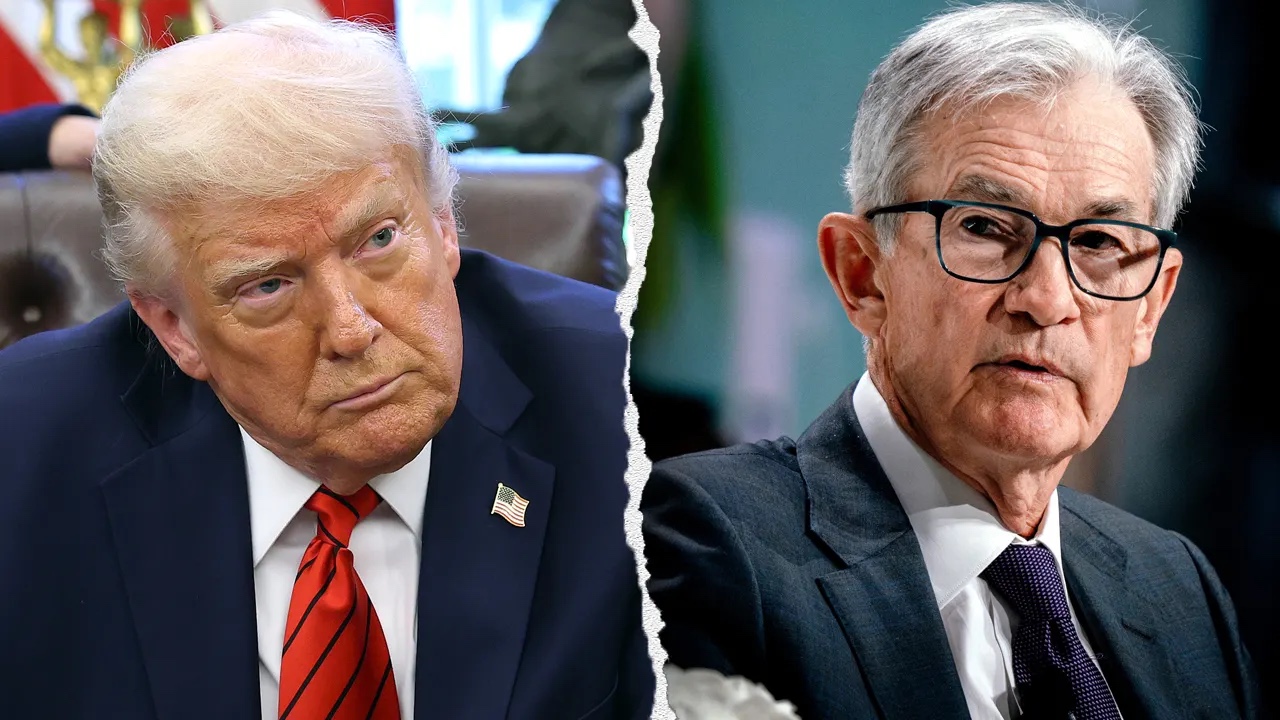
Was the Fed’s 25 basis points rate cut, bringing the rate to 3.50–3.75%, driven by real economic weakness or by relentless pressure from Donald Trump?
After reviewing commentary from over 50 economists, market analysts, and Federal Reserve officials, the consensus indicates:
- •Economic Justification: 68%
- •Political Pressure: 32%
The cut was largely economically justified due to actual deterioration in the labor market. However, Trump’s persistent pressure has undeniably created a political overhang that is weakening the perception of the Fed's independence.
Part 1: The Economic Case - Why the Cut Made Sense
Several economic indicators supported the decision to cut rates:
Layoff Wave
Year-to-date layoffs reached 1.17 million, marking the largest number of cuts since 2020. Sectors including tech, finance, retail, and manufacturing are all experiencing a slowdown. Economist Claudia Sahm noted that the Fed needed to act proactively before unemployment accelerates further.
ADP Shock: Small Businesses Collapsing
The ADP report indicated a loss of 32,000 private sector jobs. Small businesses, in particular, shed 120,000 jobs. This significant decline is viewed as a major red flag, as small businesses often serve as an early indicator of broader economic trends.
Powell’s Stunning Admission
Federal Reserve Chair Jerome Powell acknowledged that official job growth figures might be overstated, stating that job growth could potentially be negative. This admission alone provides a strong justification for the Fed's action.
“Low Hire, Low Fire” Stagnation
Hiring rates have remained stagnant at levels typically associated with recessions. While companies are not yet widespread layoffs, they are also not actively adding to their workforces, indicating a general lack of economic momentum.
Fed Operating Blind Due to Shutdown Data Gap
A six-week gap in data from the Bureau of Labor Statistics (BLS) due to a government shutdown forced the Fed to rely on private sector data, which showed worsening labor market trends. This lack of official data necessitated a more cautious approach.
Unemployment Up to 4.4%
The unemployment rate climbed to 4.4%, its highest level since 2021. The duration of unemployment has also seen a sharp increase, signaling growing difficulties for job seekers.
Worker Confidence Cratering
A survey by the Federal Reserve Bank of New York revealed that worker confidence in finding a job has reached its lowest point in the history of the survey, indicating widespread pessimism among the labor force.
Economist Consensus: Major financial firms, including Goldman Sachs, Fidelity, and Oxford Economics, supported the rate cut as a necessary "insurance" measure to prevent a more significant economic slowdown.
Part 2: The Inflation Problem - Why Some Fed Officials Opposed It
Despite the economic justifications, some Federal Reserve officials dissented due to ongoing inflation concerns:
Inflation Still Approximately 3%
Inflation has remained above the Fed's 2% target for over four years, with core Personal Consumption Expenditures (PCE) inflation still elevated. This persistent inflation poses a challenge to achieving price stability.
Tariffs Driving Prices Up
Fed Chair Powell directly attributed some of the inflation overshoot to tariffs imposed by the Trump administration, stating, "It's really tariffs causing most of the inflation overshoot." Goods inflation has been rising across categories such as apparel, groceries, and appliances.
Fed Hawks Dissented
Officials like Fed Governor Schmid and Chicago Fed President Goolsbee argued that inflation remained too high and was broadening across different economic sectors. They warned that cutting rates prematurely could risk repeating the inflationary mistakes of the 1970s.
Financial Conditions Not Restrictive
With financial markets at record highs and credit spreads remaining tight, some argued that monetary policy was not sufficiently restrictive to warrant rate cuts. The current financial environment did not signal a need for easing.
Part 3: The Political Pressure Factor - 32%
A significant portion of the decision-making environment was influenced by political pressure:
Trump’s 10-Month Pressure Campaign
Donald Trump engaged in a sustained pressure campaign against the Fed for approximately 10 months. This included calls for Jerome Powell's dismissal and frequent public demands for aggressive interest rate cuts, creating unprecedented pressure on the Federal Reserve Chair.
Stephen Miran’s Appointment
The appointment of Stephen Miran, an advisor to Trump, to the Federal Reserve Board introduced a potential conflict of interest. Miran consistently voted for 50 basis points rate cuts at each meeting, reflecting a clear political agenda.
Attempt to Fire Lisa Cook
Trump reportedly attempted to remove Fed Governor Lisa Cook from her position, an action that would have been unprecedented in U.S. history. A Supreme Court case in 2026 is set to determine whether presidents have the authority to dismiss Fed governors at will.
Kevin Hassett: The “Shadow Chair”
Kevin Hassett, who is expected to succeed Powell, has been publicly advocating for aggressive rate cuts. His influence and public statements contribute to the perception of political interference.
Market Fear of Lost Independence
Surveys indicate that 82% of market participants perceive a threat to the Fed's independence. The rally in gold prices has been partly attributed to investors hedging against political risk, with fears of a recurrence of the "Nixon-Burns 2.0" scenario, where political considerations influenced monetary policy.
Part 4: Why This Isn’t the 1970s (Yet)
Despite the pressures, several factors differentiate the current situation from the inflationary environment of the 1970s:
Decentralized FOMC Still Protects Independence
The structure of the Federal Open Market Committee (FOMC), with its regional Federal Reserve presidents, helps to dilute direct political influence and safeguard the Fed's independence.
Powell Still Showing Resistance
Jerome Powell has demonstrated resilience against political pressure:
- •He implemented a 25 basis points cut, not the 50 basis points demanded by Trump.
- •The Fed's projections indicate only one additional rate cut in 2026.
- •Powell has publicly attributed inflation to Trump's tariffs.
- •The Fed's language has maintained a stance suggesting a pause rather than the initiation of an aggressive cutting cycle.
Final Verdict
The December 2025 rate cut was primarily driven by genuine labor market deterioration, including negative job growth, collapsing small business hiring, rising unemployment, and unprecedented pessimism among workers. However, political pressure exerted by Donald Trump undeniably influenced the environment, shaped expectations, and challenged the Fed's governance, creating the most significant threat to its independence since the 1970s.
While economics was the main driver of the decision, politics served as the amplifier of these economic concerns.