



Market Overview and Expert Insights
Goldman Sachs, on November 9th, attributed the recent 5% US stock pullback to typical year-end AI cycle fluctuations, suggesting continued potential growth influenced by seasonal factors.
Despite the market dip, Goldman Sachs traders foresee further upside given early AI investment stages and light institutional positions.
Ethereum Whale Leverage Positions Reach $20 Million
High-profile Ethereum traders, such as Huang Licheng, have significantly increased their long positions amid market fluctuations. Huang's ETH long position, leveraged at 25x, has grown to $13.2 million, while another unnamed whale has taken a $6.8 million leveraged position.
Capriole's market analysis and commentary highlight market participants' concerns over potential volatility from these moves, especially with the leverage involved. Such strategic shifts could lead to price destabilization if positions approach their critical liquidation points, prompting a cautious stance from institutional investors.
Critics highlight the implications of these leveraged positions, emphasizing the need for close monitoring of potential liquidations. Analysts note that major whale maneuverings can precede market swings, inviting intensified scrutiny from both traders and regulators alike.
Charles Edwards, Founder of Capriole Investments, stated, "OG Bitcoin Whales Are Selling Off: The attached image intuitively shows how many super whales are cashing out Bitcoin..." He also described $100 million – $500 million sell-offs among long-term holders.
Ethereum's Resilience and Future Market Predictions
Ethereum, valued at $3,568.77 and showing a 5.48% 24-hour gain, maintains a market cap of around $430.74 billion. Despite a recent downturn over the past 30 days, ETH exhibits resilience, with changes driven by strategic whale activities and broader market sentiments.
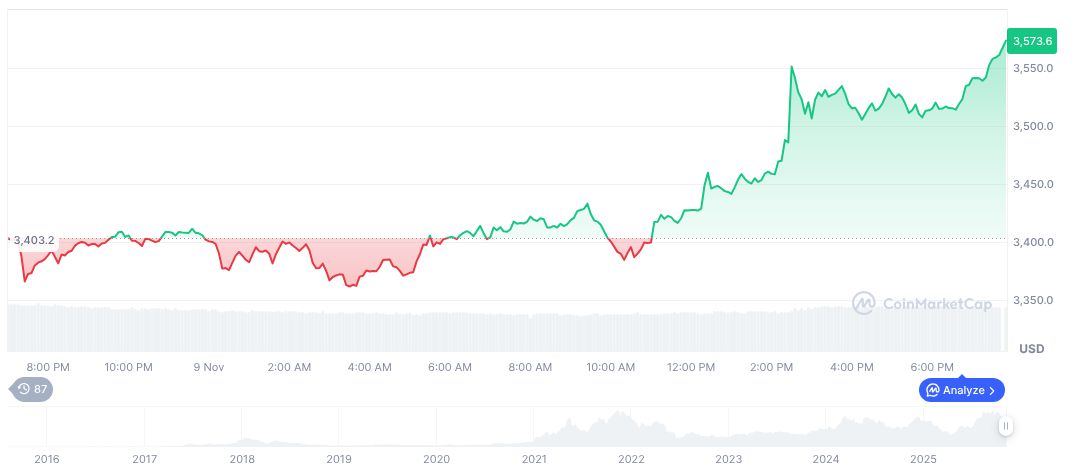
Coincu research suggests that ongoing whale maneuvers indicate possible market redistribution or preparatory stages for a new bullish cycle in 2026. Stakeholders should observe regulatory responses and long-term impacts on market stability closely as these trends evolve.