


Market Volatility Fueled by $684 Million in Liquidations
Recent market activity on January 14 resulted in $684 million in liquidations, primarily short positions, marking a significant market movement. This substantial liquidation event highlights investor risk in volatile markets, affecting top cryptocurrencies and indicating potential shifts in market sentiment and trading strategies.
The crypto market's recovery caused an unexpected $684 million in liquidations, primarily affecting short positions. This development marked one of the largest movements within the Top 500 cryptocurrencies by market cap, attributed to sudden price spikes. Bitcoin was notably involved, yet corresponding statements from official sources remain unavailable.
The financial implications are substantial, with $577 million tied to short positions. Industry observers highlight the absence of clarifications from major executives or official project sites. Market dynamics suggest significant volatility may continue. The event showcased trading vulnerabilities, leading investors to reevaluate their strategies amid rapid price shifts.
Community reactions were mixed, with no official confirmations or comments from prominent figures or regulatory bodies. Market participants are keenly observing potential long-term effects, reflecting ample speculation about forthcoming price stability.
Bitcoin's Surge Drives Short Squeeze Analysis
The crypto market's largest short squeeze since October highlighted potential trading risks, a reminder of the sector's inherent volatility and the strategic adjustments investors might consider moving forward.
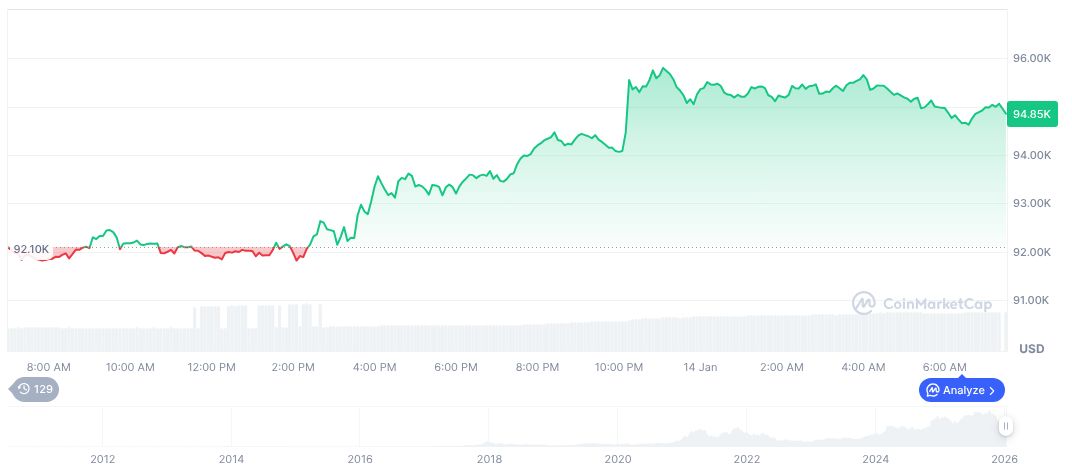
Bitcoin (BTC) commands the market with a price of $97,617.58, boasting a market cap of $1.95 trillion and a 58.98% dominance. Trading activity surged as volumes increased 60.42% over the last 24 hours. BTC's price reflected gains of 4.62%, continuing upward momentum seen in the previous week.
Research insights note potential regulatory impacts and technological adjustments following the squeeze. Analysts predict future financial conditions could challenge traders further, emphasizing the need for stable regulatory guidelines. Observers point to historical trends that suggest heightened scrutiny may emerge due to current market conditions.