


Key Insights
- •Why has PPI data historically had an impact on crypto market price movements?
- •Crypto bulls secure dominance despite the latest US PPI data.
- •Institutional flows were negative last week, but this week, ETFs rebounded.
Understanding the Historical Impact of PPI Data on Crypto
The crypto market has been rallying during the first half of this week. This was despite the fact that the Bureau of Labor Statistics (BLS) released the November US producer price index (PPI) data earlier in the day.
US PPI data has historically had an impact on the crypto market. Hence, many analysts expected it to influence the November PPI print and, in turn, prices. But before we look into how the market reacted, let’s first explore how and why the market historically responded to PPI and inflation data.
The Federal Reserve uses PPI data to make interest rate decisions, and this is where the crypto market derives its link. The PPI is used as an inflation indicator.
Higher-than-anticipated US PPI data signals pesky or rising inflation. It is often a bearish sign in the short term. The opposite is true; a cooler PPI print signifies lower inflation and is often considered a bullish sign for the cryptocurrency market.
US PPI Data for November Pushes Higher Than Anticipated
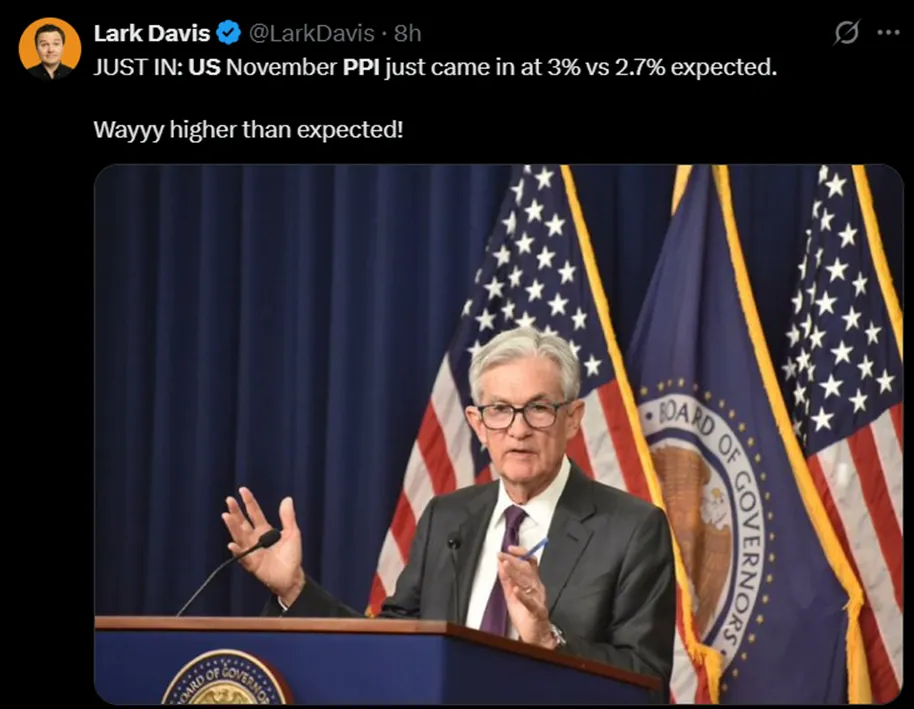
The November US PPI print pushed to 3%, which was higher than the projected 2.7%. If the cryptocurrency market were to react to this outcome as expected, it would have achieved a sizable retracement.
Instead, the market extended the bullish momentum it achieved on Tuesday. The total crypto market cap jumped from a low of $3.06 trillion on Tuesday to $3.29 trillion at the time of observation.
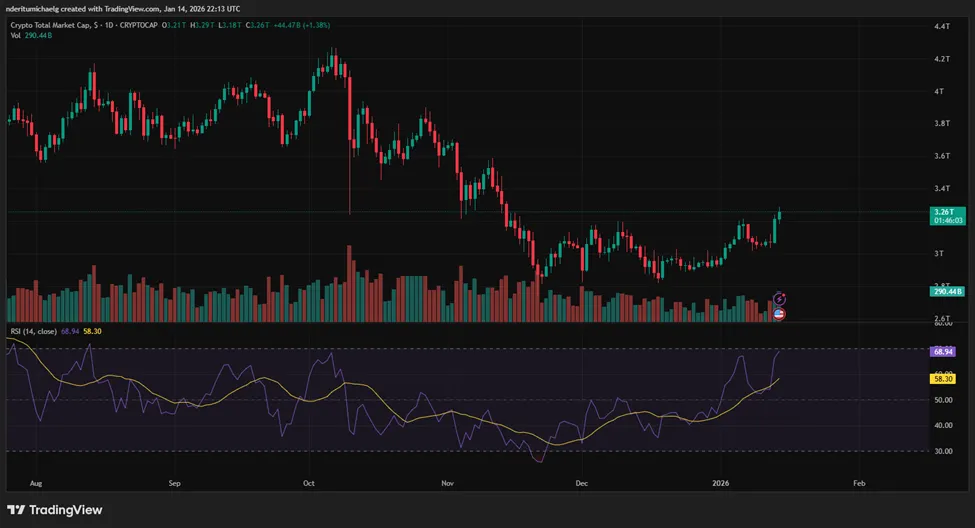
In other words, the cryptocurrency market has been on a bullish trend that somehow managed to weather the latest US PPI data better than expected. This deviation from the historic norm raised a few questions.
There were a few reasons why the crypto market did not respond negatively to PPI data. The market already experienced a heavy downside in Q4, and prices were significantly discounted.
The bearish shakedown already took out heavy leverage, which contributes to volatility. More importantly, crypto holders were less inclined to sell at recent lows. They instead leaned more towards accumulation.
Rising Liquidity and Institutional Inflows Propping Up the Crypto Market
Institutional flows were negative last week, but this week, ETFs rebounded. There was a noteworthy spike in total spot ETF inflows in the crypto market on Tuesday.
Crypto ETFs collectively injected $902 million back into the cryptocurrency market on Tuesday. This may have shielded the market from a reactionary downside from the elevated PPI figures.

Aside from the rising accumulation by institutional investors, the crypto market experienced limited sell pressure due to favorable liquidity conditions. Global liquidity levels have been rising, particularly with governments lowering interest rates in late 2025.
Cryptocurrencies, especially Bitcoin, are sensitive to liquidity conditions in the market. They tend to rally when liquidity improves and crash when liquidity is sucked out of the market.
The U.S government has been pushing for lower rates to avoid a recession, and market participants are banking on this. While these factors have been responsible for the crypto market rally this week, the rising PPI may influence the market further down the line.
The risk in this case is that the US PPI may remain elevated, pushing inflation higher. The Federal Reserve might be forced to raise rates if that happens. This could also send a ripple effect across the market.