



Market Analysis and Rebound Signals
CryptoQuant analyst Axel reports that the crypto market is poised for a potential rebound. This outlook is primarily driven by the accumulation of significant short positions and persistent oversold conditions, which have emerged following a decline in liquidity influenced by U.S. government fiscal policies. This scenario highlights the delicate balance within the market, where historical consolidation phases are often necessary amidst worsening risk aversion and tightened liquidity conditions that restrict growth prospects.
Axel has specifically pointed to the current market conditions as being ripe for a rebound. The accumulation of substantial short positions and the general overselling of the market are key factors contributing to this view. However, historical patterns suggest that a period of consolidation typically precedes any genuine recovery.
Market reactions are currently cautious. Analysts, including Daan Crypto Trades, have cautioned that while the setup for a rebound might exist, the current factors do not appear convincing enough to support long-term growth. Discussions within the community are largely focused on adopting defensive trading strategies to navigate these challenges.
Bitcoin Price Dynamics and Market Context
Bitcoin (BTC) has experienced a 1.19% decrease in value over the last 24 hours, trading at $102,624.84. Its market capitalization currently stands at $2.05 trillion, with a significant surge of 35.95% in its 24-hour trading volume, reaching $111.62 billion.
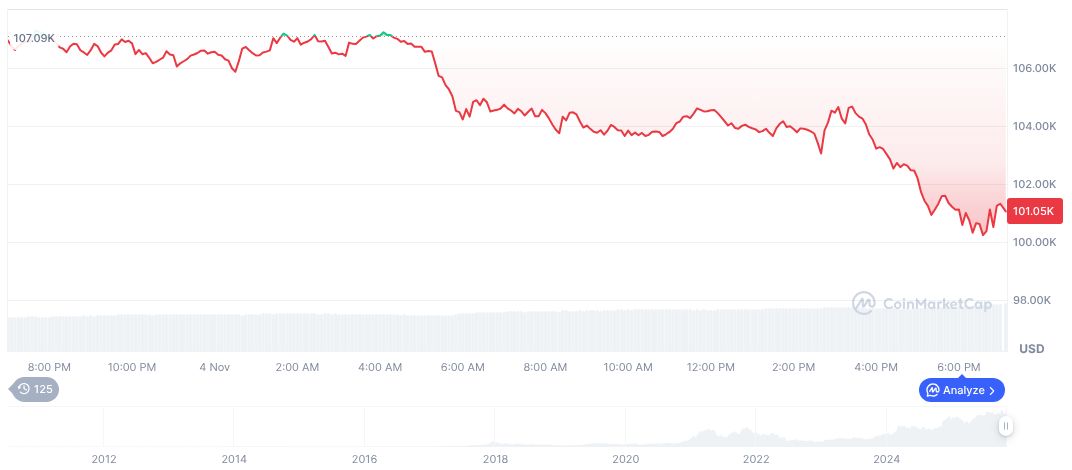
The Coincu research team suggests that potential future volatility levels may be influenced by ongoing regulatory tightening and persistent fiscal pressures. However, technological enhancements within the cryptocurrency sector could potentially counterbalance current liquidity shortages and contribute to a gradual market correction.
Historically, Bitcoin has often required a consolidation phase after periods of being oversold before entering a sustained recovery. This pattern has been observed across several past market cycles.