


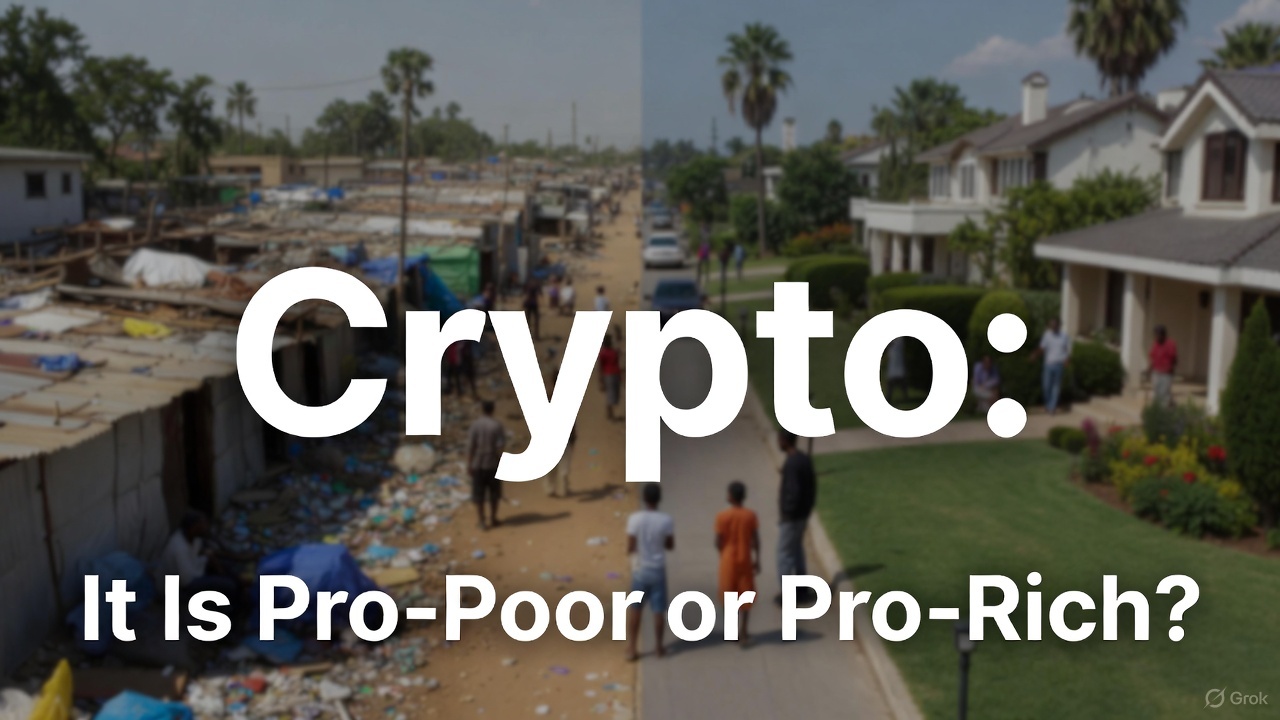
Cryptocurrency has reshaped the global financial landscape, offering new opportunities and challenges for people across all income levels. But one question continues to stir debate: Is crypto pro-poor or pro-rich?
The Pro-Poor Potential of Cryptocurrency
At its core, cryptocurrency was designed to be decentralized—free from government control and accessible to anyone with an internet connection. This inclusivity gives crypto a strong pro-poor potential. In countries where access to traditional banking is limited, digital currencies provide a way for individuals to save, transfer, and grow their money without relying on intermediaries. With just a smartphone, anyone can participate in a financial system that’s open 24/7, borderless, and often cheaper than traditional banking.
For freelancers, small business owners, and migrant workers, crypto enables faster international payments with lower transaction fees. It also allows people to protect their savings from inflation, especially in developing nations where currencies often devalue rapidly. Stablecoins—cryptocurrencies pegged to fiat currencies like the US dollar—are increasingly used as safe havens in these economies.
The Pro-Rich Argument and Its Challenges
However, the pro-rich argument stems from how wealth within crypto is distributed. A large percentage of cryptocurrencies are owned by a small group of investors known as “whales.” These individuals and institutions often influence market trends, price movements, and even the development of blockchain networks. As a result, while crypto provides access to financial tools, the biggest profits often go to those who can afford to invest early or in large amounts.
Additionally, the knowledge gap and technical barriers make it harder for lower-income individuals to fully benefit. Understanding wallets, exchanges, and blockchain security takes time—and mistakes can be costly. Scams, volatility, and lack of regulation also pose risks to new users who may not have the resources to recover from losses.
Bridging the Gap for Inclusive Growth
So, is crypto pro-poor or pro-rich? The truth lies somewhere in between. It’s a tool—neutral by design—that can empower anyone who learns how to use it effectively. Its inclusivity, transparency, and borderless nature make it pro-poor in opportunity, but its concentration of wealth and early-mover advantages make it pro-rich in practice.
As crypto adoption grows, the challenge is to make blockchain education, access, and security more inclusive—so the next wave of financial innovation truly benefits everyone.