


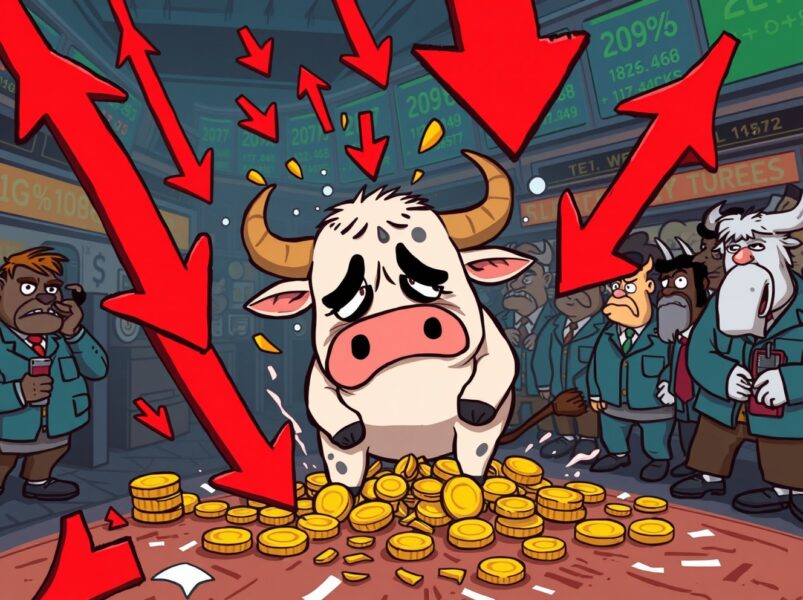
The cryptocurrency market recently experienced a significant shakeout. Over a 24-hour period, a substantial wave of crypto futures liquidations resulted in the closure of leveraged positions valued at over $389 million. The data indicates that long traders, who were anticipating price increases, bore the brunt of these liquidations. This article examines the event and its implications.
What Are Crypto Futures Liquidations and Why Do They Matter?
Crypto futures liquidations occur when a cryptocurrency exchange automatically closes a trader's leveraged position because the trader can no longer meet the margin requirements. This process is a forced sale initiated to prevent further losses beyond the available collateral. While liquidations are an inherent part of derivatives trading, large-scale events can amplify market movements by creating additional selling pressure.
The $389M Bloodbath: A Breakdown by Asset
The magnitude of this event was considerable, with forced closures predominantly affecting bullish bets. The breakdown by asset is as follows:
- •Bitcoin (BTC): $258 million was liquidated, with 78.27% of this amount originating from long positions.
- •Ethereum (ETH): $112 million was liquidated, and 77.68% of these were long positions impacted by the price decline.
- •Solana (SOL): $19.45 million was liquidated, with a significant 83.61% of these being long positions.
This pattern strongly suggests that a rapid price drop triggered margin calls on highly leveraged long contracts. The subsequent crypto futures liquidations likely contributed to the further downward price movement.
Why Were Long Positions So Vulnerable?
Several factors can contribute to an environment ripe for a long squeeze. Extended periods of bullish sentiment in the market can encourage traders to employ high leverage to maximize potential profits. When a negative catalyst arises—such as macroeconomic news, regulatory concerns, or substantial sell orders—a swift price drop can rapidly breach the liquidation prices for these crowded long trades. The exchange's automated systems then sell the assets to cover the outstanding debts, which can further depress prices, initiating a cycle of additional crypto futures liquidations.
How Can Traders Navigate This Volatility?
Experiencing such events serves as a potent reminder of the risks associated with leveraged trading. Traders can implement several strategies to help protect their capital:
- •Manage Your Leverage: Employing lower leverage levels substantially reduces your risk of liquidation and provides a greater buffer against market volatility.
- •Set Strategic Stop-Losses: Implement stop-loss orders at logical technical levels, rather than arbitrary percentages, to ensure positions are exited before a forced liquidation occurs.
- •Monitor Funding Rates: Exceptionally high positive funding rates can indicate overcrowded long positions, which may precede a potential squeeze.
- •Diversify Strategies: Avoid relying solely on directional long bets. Consider a diversified approach that includes spot holdings, staking, or other non-leveraged investment methods.
The Ripple Effect on the Broader Market
Large-scale crypto futures liquidations do not occur in isolation. The forced selling from derivatives markets introduces significant sell-side pressure into the spot market, often leading to increased volatility and market fear. This can result in the exit of less committed traders and can help to reset leverage levels. Following such cascades, the market may find a new equilibrium, potentially creating buying opportunities.
Conclusion: Respect the Power of Leverage
The recent $389 million liquidation event underscores the importance of understanding market mechanics. While crypto futures liquidations are a standard feature of derivatives trading, their scale highlights the inherent dangers of excessive leverage, particularly during periods of market uncertainty. For informed participants, comprehending these dynamics is essential. The objective is not to avoid futures trading entirely but to approach it with caution, employ robust risk management practices, and maintain a clear awareness of the potential for sudden, automated sell-offs. The market tends to temper overconfidence, while rewarding diligent preparation.
Frequently Asked Questions (FAQs)
What triggers a crypto futures liquidation?
A liquidation is triggered when the value of a trader's position declines to a point where their remaining margin (collateral) is insufficient to cover potential losses. The exchange automatically closes the position to prevent the trader from incurring a negative balance.
Can I get my money back after a liquidation?
No. Once a position is liquidated, the funds used as margin for that trade are lost to cover the realized loss. Any remaining collateral that was not used as margin is typically returned to the trader.
Are liquidations always bad for the market?
Not necessarily. While liquidations cause short-term pain and volatility, large liquidation events can serve to "reset" excessive leverage within the system. This process can reduce speculative activity and may establish a more stable foundation for subsequent market movements.
How can I check current liquidation levels?
Various websites, such as Coinglass, offer real-time data on liquidations across different exchanges. These platforms often provide heatmaps indicating price levels where substantial numbers of positions are scheduled for liquidation.
What’s the difference between a long and short liquidation?
A long liquidation occurs when a trader who has bet on a price increase is forced to close their position. A short liquidation happens when a trader who has bet on a price decrease is compelled to buy back the asset as the price rises, which can contribute to a "short squeeze."
Is spot trading safer than futures regarding liquidations?
Yes, generally spot trading is considered safer concerning liquidations. In spot trading, you directly own the asset. While the value of your holdings can decrease, you cannot be forcibly liquidated unless you are utilizing borrowed funds (margin) on a spot margin trading platform.