



Key Takeaways
- •Crypto treasury firms are liquidating Bitcoin holdings due to market pressures and declining cryptocurrency values.
- •MicroStrategy, led by Michael Saylor, is a prominent example of a company affected by these trends.
- •The current market conditions highlight potential vulnerabilities in business models heavily reliant on crypto appreciation and are leading to increased regulatory scrutiny.
Crypto Firms Liquidate Holdings Amidst Bear Market
Crypto treasury companies, which were once accumulating digital assets, are now selling tokens to support their tumbling stock prices. Michael Saylor’s MicroStrategy, known for its substantial Bitcoin holdings, is at the forefront of this trend.
The significant decline in cryptocurrency prices has compelled these companies to reassess their strategies, resulting in increased sell-offs that are impacting stock markets and the broader market sentiment.
“The vicious cycle of price drops and forced liquidations poses substantial risks for corporate treasuries in this environment.” — Adam Morgan McCarthy, Senior Research Analyst, Kaiko
Bitcoin Market Trends Reflecting 2021–2022 Price Challenges
Bitcoin's current market challenges bear a strong resemblance to the bear market experienced in 2021–2022. During that period, corporate treasuries also faced significant stress, driven by asset markdowns and forced liquidations.
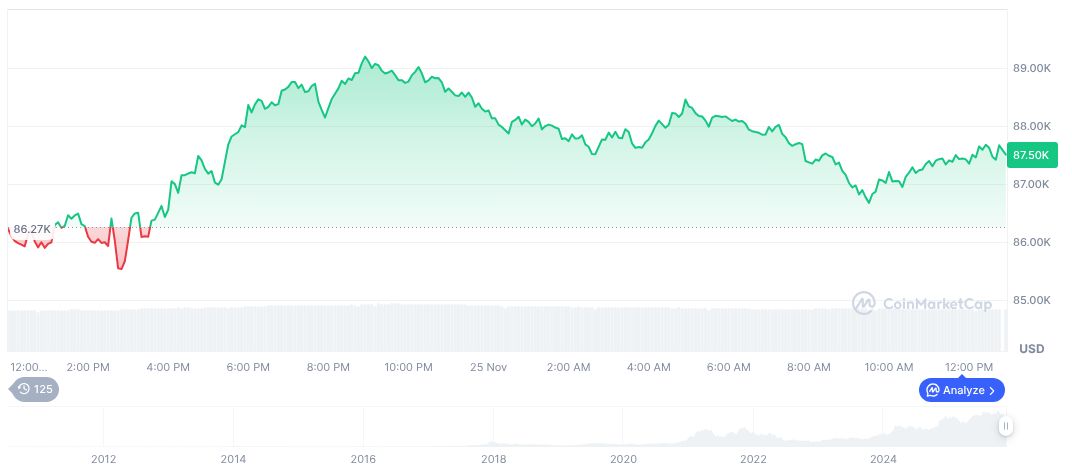
Bitcoin is currently trading at $87,536.72, with a market capitalization of $1.75 trillion. Despite a slight daily drop of 0.72%, it has shown some recovery from previous lows. Bitcoin's current dominance stands at 57.92%, with a circulating supply of 19.95 million BTC.
Analysts predict that regulatory scrutiny on corporate crypto holdings is likely to increase, potentially impacting financial disclosures. Historical market trends suggest that ongoing volatility could influence governance and investment strategies within the coming months.