


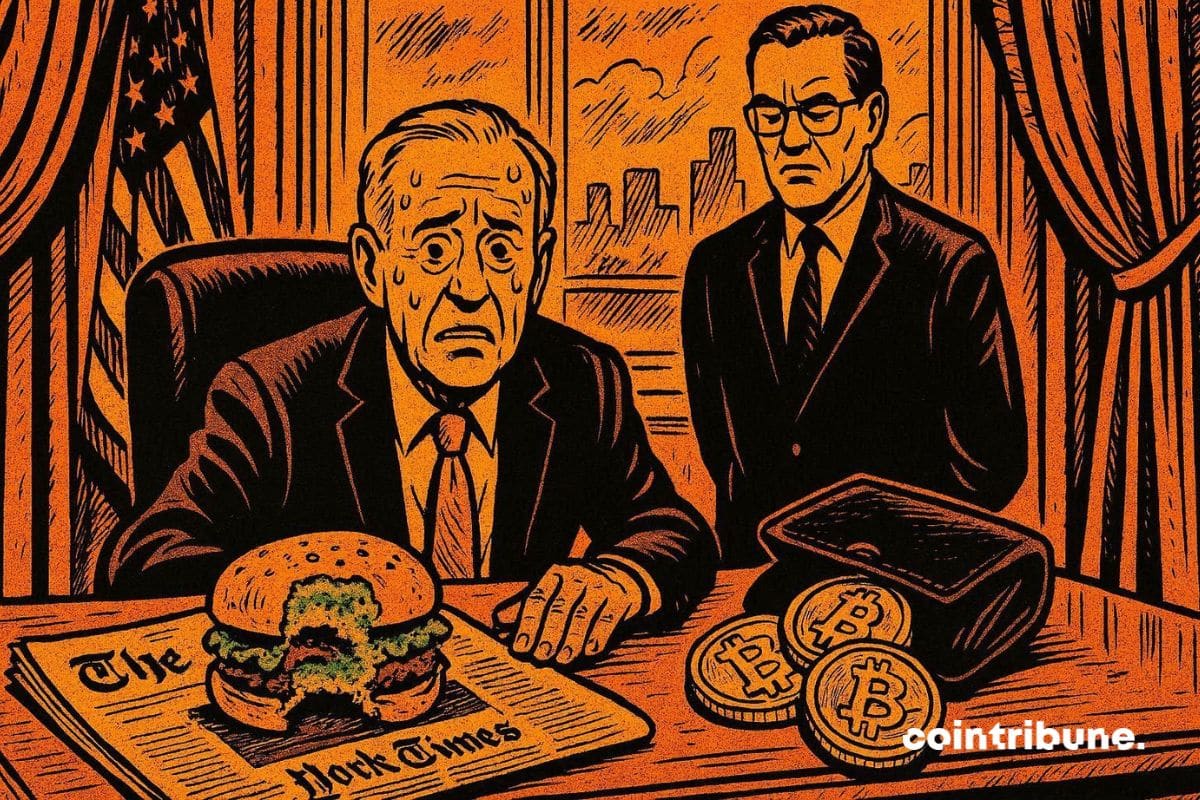
David Sacks, a prominent figure in the tech industry and an advisor to Donald Trump on artificial intelligence and cryptocurrency, is currently embroiled in a controversy surrounding accusations of conflicts of interest. Sacks has dismissed these allegations, characterizing them as a "nothing burger." This situation highlights the ongoing tensions between innovation, politics, and media scrutiny.
David Sacks: The Crypto Advisor Under Fire
The New York Times recently published an article alleging that David Sacks, who has been referred to as the "Crypto Tsar" during the Trump administration, used his position to benefit private companies. The report claims Sacks influenced defense contracts and promoted companies such as Nvidia, Anduril, and Groq, in which he reportedly holds financial interests.
The New York Times article relies on anonymous sources and interpretations of public documents to support its claims. These sources mention private meetings with CEOs, promises of privileged access to Donald Trump, and Sacks' influence over critical technological decisions. The timing of these revelations, coinciding with increased political discussion around cryptocurrency, raises questions about the motivations behind the New York Times report, potentially suggesting an effort to undermine Trump's crypto-related policies.
Sacks' Strong Rebuttal and Potential Defamation Lawsuit
David Sacks has responded swiftly to the New York Times article. Through a series of public statements and a formal letter from his legal team, he has vehemently denied the accusations, labeling the report a "nothing burger" and a baseless scandal. Sacks asserts that the New York Times deliberately disregarded his responses and misrepresented facts to promote a predetermined narrative.
Sacks maintains that he fully disclosed all his financial interests to the Office of Government Ethics (OGE) prior to assuming his role, including his stakes in the companies mentioned, in accordance with ethical guidelines. His legal representatives, from the Clare Locke firm, have issued an open letter to the New York Times, demanding a retraction and indicating their intention to pursue defamation lawsuits.
Sacks emphasizes that this situation extends beyond his personal reputation, impacting the broader cryptocurrency sector. In an industry where trust is paramount, such allegations could have significant ramifications. He stresses the importance of distinguishing between factual reporting and speculation, particularly within the highly scrutinized field of cryptocurrency.
Trump's Pro-Crypto Stance and Conflicts of Interest
The Trump administration had positioned cryptocurrency as a key component of its platform, aiming to establish the United States as the "global crypto capital." In this strategic context, the involvement of figures like David Sacks appears consistent with the administration's objectives. The presence of individuals with ties to crypto-investing companies within such a framework might not be entirely unexpected.
However, this approach inevitably raises concerns about potential conflicts of interest. Critics of the Trump administration view this as an illustration of the risks associated with an administration where personal and public interests can become intertwined. Conversely, supporters argue that this strategy is essential for fostering innovation, contending that traditional regulatory frameworks hinder the growth of a rapidly evolving sector. The question remains: how far can this integration proceed without compromising ethical standards?
At a time when a U.S. legislator has proposed a ban on Donald Trump and his family from engaging in crypto or stock trading, the dispute between David Sacks and the New York Times transcends a personal disagreement. It underscores the complex challenges of integrating cryptocurrency into the political landscape, where the imperative for innovation must be balanced with ethical considerations. The situation prompts reflection on whether conflicts of interest can be deemed a necessary compromise for progress.