


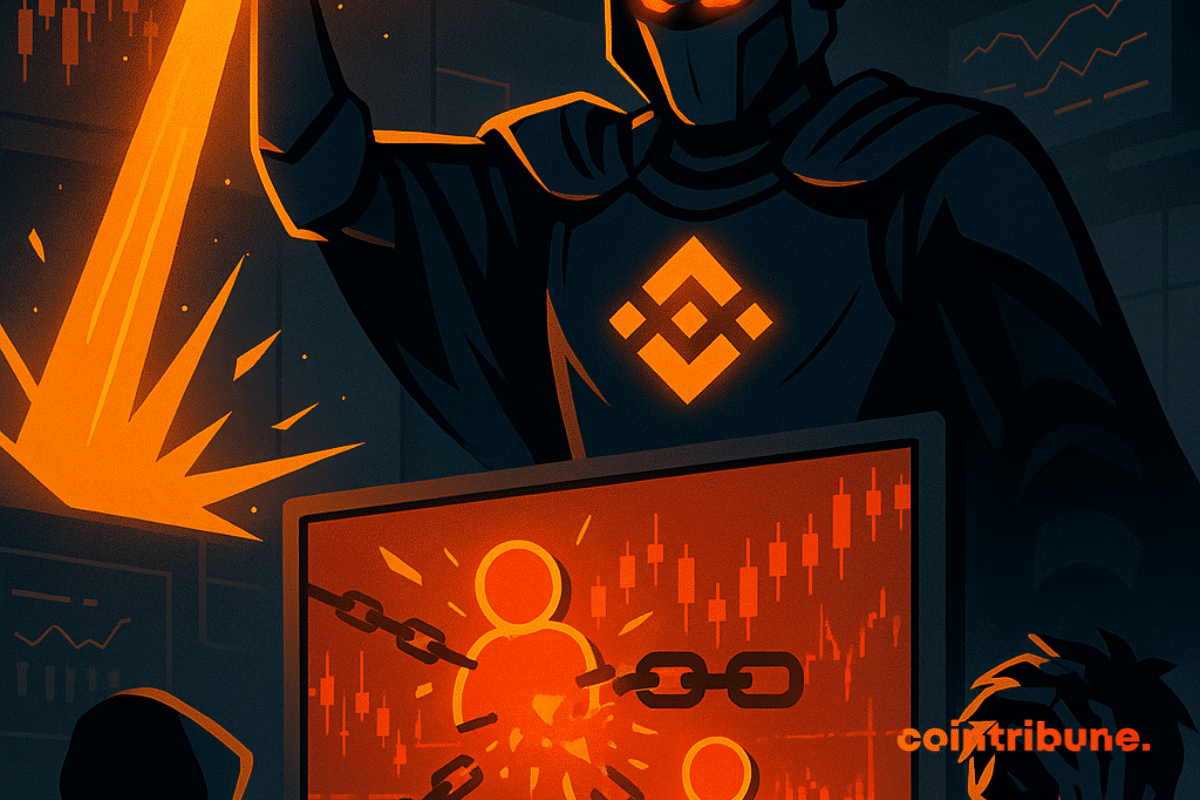
Binance has taken significant action, closing over 600 accounts for abusive exploitation of the Alpha platform through "bot farms." The announcement targets individuals who manipulated the rewards structure and falsified access to crypto token sales and airdrops. This decisive action repositions the platform with a zero-tolerance stance against predatory automation.
In brief
- •Binance closed more than 600 accounts linked to bot farms exploiting Alpha.
- •The platform deploys paid reporting and relies on on-chain evidence to target fraudsters.
Alpha, Web3 Showcase Under Pressure
Alpha was designed as a launchpad for early-stage Web3 projects, with a simple promise: give users prelisting exposure to promising tokens and reward real engagement. The success was swift, with substantial volumes and obvious speculative interest. But traction also attracts scripts.
In fact, organized groups industrialized the collection of Alpha points. This was achieved by creating clusters of automated accounts capable of farming the same crypto incentive mechanisms 24/7. The result was that supposedly fair allocations were siphoned off by a heavily equipped minority, to the detriment of legitimate users in the crypto ecosystem.
The severity of the sanction, with more than 600 banned accounts, is a signal. It acknowledges that engagement measured by points means nothing if the algorithmic noise is not cleaned up. The platform also canceled undue gains and assumes a return to less manipulable metrics.
Binance Tightens Control and Rewards Reporting
Binance states it has tightened its detection systems and enforcement rules to spot bot patterns faster and act without delay. This includes point removal, account closure, and broader restrictions if necessary. This policy follows warnings published as early as June 2025.
Users can report suspicious accounts and, if fraud is proven, receive up to 50% of the recovered funds. Reports must include verifiable evidence, such as screenshots, on-chain addresses, or technical data, to be considered. This represents a strong incentive that effectively introduces a community surveillance dimension.
This policy arrives as on-chain investigations expose synchronized activity patterns well beyond Alpha. Bubblemaps, for example, has documented clusters of wallets acting in concert on BNB Chain around the ChainOpera (COAI) project, with estimated profits of $13 million and uniform financing and trading behaviors. This highlights that the fight against fraud extends beyond a single use case.
Binance Purges Bots to Restore Trust
In the short term, airdrops and sales are losing intensity. Distribution is becoming more organic again, and each tightening measure increases the cost and exposure surface of bot farms. Platforms will need to redesign their points programs with more qualitative signals, such as proof of personhood, limits per verified identity, robust randomness, and non-replicable engagement scoring.
In the long term, the question remains: should rewards be given for attention or for actual value brought to the network? Alpha's initiatives will remain relevant if they align incentives with utility, such as useful testnets, validated feedback, or measurable contributions. Otherwise, the "social yield" will devolve into a software arms race.
Strategically, Binance is protecting its core asset: the trust of its retail base. Technically and regulatorily, the battle can be won by changing the game, not by using "no bots" banners. This could involve on-chain VRF draws, adaptive caps per identity, random eligibility windows, or weighting by non-scriptable tasks like high entropy quizzes, repository contributions, or soulbound attestations. A reputation cost remains. The reporting program may alienate part of the community. Furthermore, France is stepping up pressure on Binance and crypto platforms.