


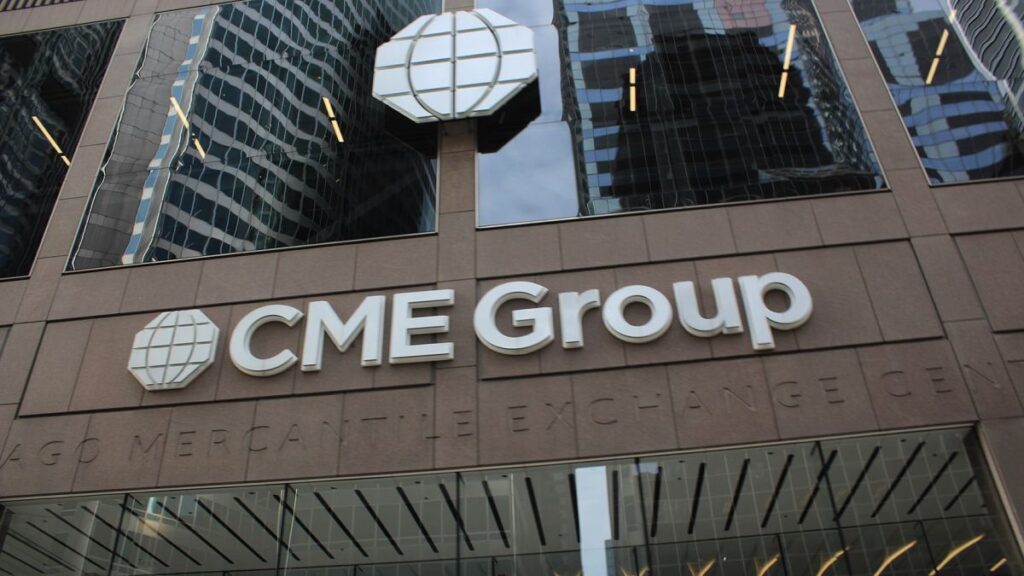
Trading Disruption Affects Multiple Markets
CME Group has temporarily suspended all trading on its Globex platform due to a cooling system failure at CyrusOne data centres. This outage impacts a wide range of futures and options contracts across stocks, currencies, and cryptocurrencies. The company has stated that its support teams are actively working to restore operations and will provide updates on the resumption of trading.
The disruption affected key contracts, including Bitcoin and Ethereum futures, at a time when liquidity in Asian markets was already thin following the U.S. Thanksgiving holiday. Traders also reported interruptions in trading for crude oil and palm oil contracts. Some market participants requested risk mitigation measures for trades that were active or pending during the halt.
Official communication from CME Group on their website has been posted. It’s officially ruled as a technical halt. Carry on. I’d expect your prop firm to cancel losses for any stuck trades but we’ll see. $NQ $GC $ES pic.twitter.com/kknVpFj7Hj
Impact on Crypto and Commodity Markets
CyrusOne, which operates over 55 data centres globally, experienced the cooling issue that led to the widespread trading halt on CME's Globex platform. This included high-volume Bitcoin and Ethereum derivatives, highlighting the interconnectedness of traditional financial infrastructure and digital asset markets. The timing of the outage, during a low-liquidity period in Asia, exacerbated concerns among market participants. Analysts have pointed to this incident as a reminder of the vulnerabilities inherent in centralized systems, even as the demand for digital assets continues to rise. Some institutional traders reportedly explored decentralized platforms as alternatives during the downtime.
Trader Reactions and Risk Management
Traders described the situation as a significant disruption, with halts affecting not only crypto derivatives but also commodity contracts such as crude oil and palm oil. Social media discussions saw some users advocating for the cancellation of losses incurred on trades that were frozen during the outage. Bitcoin futures experienced a temporary halt, leading to brief price dislocations. Ethereum contracts also faced similar interruptions, underscoring the reliance of institutional crypto trading on established market infrastructure. Several trading firms confirmed that their automated risk management protocols were triggered to prevent excessive losses, though market confidence remained tentative until services were restored.
Market Adjustments and Future Implications
Bitcoin experienced a slight decline to $90,896 over a 24-hour period, despite achieving an 8.32% gain for the week. Market analysts suggested that this dip was influenced by a significant BTC options expiry, which favored bearish positions. Automated sell orders were reportedly triggered when Bitcoin repeatedly failed to break through the $91,800 resistance level, adding downward pressure during the CME outage. At the time of reporting, Bitcoin was trading around $91,240.

The CME Group outage serves as a clear illustration of how disruptions in traditional financial systems can temporarily impact digital asset markets, even as the crypto space continues to evolve and grow independently. Both traders and analysts closely observed the system recovery process and price movements to gauge short-term volatility and potential trading opportunities. Some industry experts believe that incidents like these may accelerate the adoption of decentralized exchanges as viable alternatives to centralized trading platforms.