



Coinbase's Ethereum layer 2 network, Base, has initiated a cross-chain bridge to Solana, enabling native Solana asset operability through Chainlink's Cross-Chain Interoperability Protocol (CCIP). This development, reported on December 5th, aims to boost interoperability between the Base and Solana ecosystems, enhancing asset movement and liquidity options.
Market Impact and Future of DeFi Interoperability
The bridge deployed by Base allows for the migration of Solana assets to and from the Base network. Coinbase and Chainlink Labs are central to this initiative, with the bridge leveraging Chainlink's CCIP for robust security. This integration, supported by dual verification from Coinbase and Chainlink, facilitates the direct transfer of Solana-based tokens to Base and vice versa.
This technological enhancement is designed to provide users with more accessible DeFi applications and NFTs across both platforms. The collaboration seeks to streamline cross-network transactions, potentially increasing transaction liquidity and fostering further ecosystem development. This integration represents a significant step towards a more interconnected blockchain environment, enabling seamless asset transfers without the need for multiple intermediary platforms.
Jesse Pollak, Creator/Lead at Base, highlighted the bridge's importance in improving interoperability between Base and Solana. He stated that it allows for the direct utilization of SOL and SPL tokens within Base-native applications, thereby strengthening cross-chain liquidity.
Market Data and Trends
Cross-chain bridges are recognized as critical components for the future development of blockchain technology and decentralized finance.
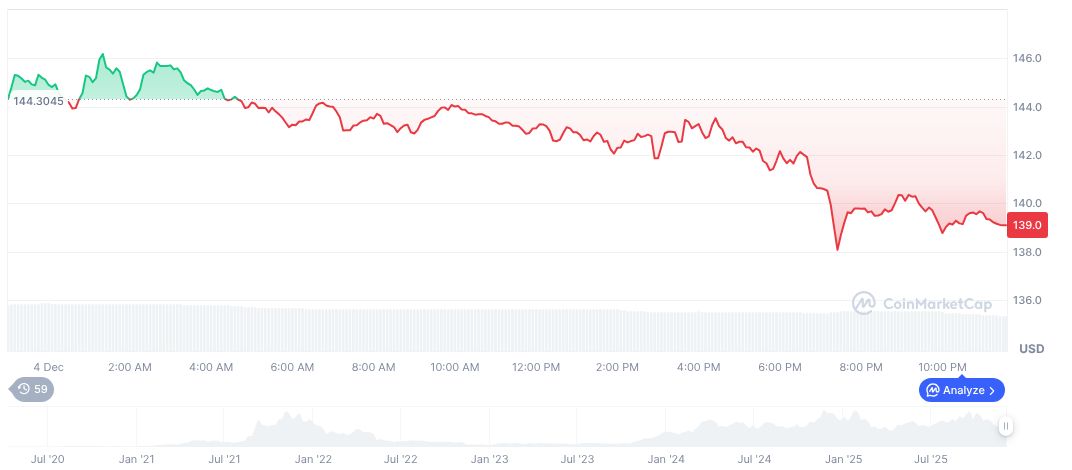
Solana (SOL) is currently trading at $139.10, with an approximate market capitalization of $77.88 billion, according to available data. The trading volume for SOL over the past 24 hours has decreased to $4.36 billion. Recent price movements indicate a 4.12% decline in the last 24 hours and a 39.08% decrease over 60 days, reflecting considerable volatility. The circulating supply stands at 559,896,732, with no capped maximum supply, further contributing to its volatile nature.
These developments are expected to drive innovations in cross-chain DeFi strategies. Such infrastructure has the potential to improve liquidity management, with enhanced security measures bolstering confidence in digital asset transfers. This alliance between prominent blockchain platforms may also stimulate regulatory discussions, focusing on the establishment of secure, interoperable frameworks for decentralized finance.