


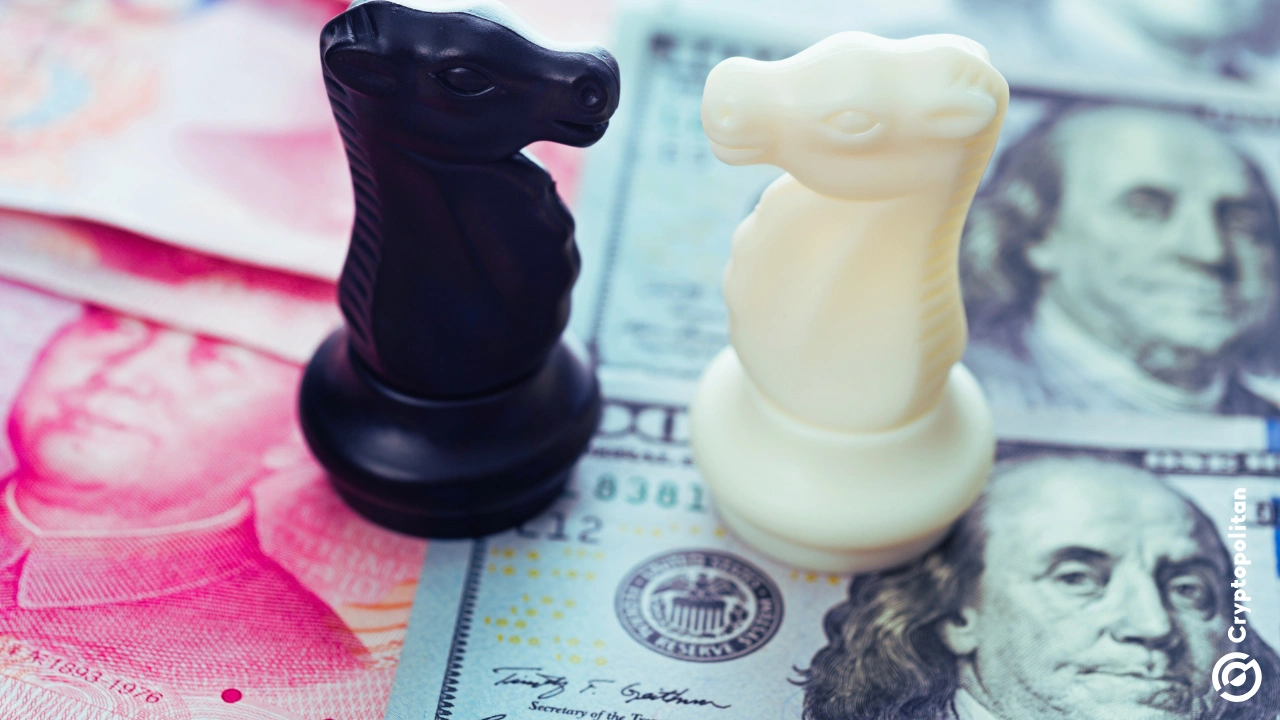
State Banks' Unusual Dollar Strategy
China’s largest state-run banks engaged in aggressive US dollar purchases in the onshore market this week, a move characterized by their subsequent inaction with the acquired currency. This action coincides with the yuan reaching a 14-month high. These banks traditionally employ US dollars to manage the currency's appreciation, aiming to moderate its rally without instigating a complete reversal.
Unlike their usual practice of injecting these dollars into the swap market, these state lenders opted to retain them. The apparent objective of this strategy is to increase the cost of holding long yuan positions by restricting access to US dollars, thereby applying pressure on yuan bulls.
Impact on FX Markets and Yuan's Performance
The foreign exchange markets responded to this development with a sharp decline in back-end dollar/yuan swap points. This indicates a deepening negative carry, suggesting that holding yuan long-term yields less compared to holding dollars. The one-year tenor, which had recently reached a one-month high last week, is now experiencing a downturn.
While this intervention does not necessarily signal an imminent collapse of the yuan, it did lead to a slight weakening of the currency to 7.072 per dollar following the initial news reports. Earlier that morning, the yuan had already experienced a decline after the People's Bank of China (PBOC) set its trading band significantly lower than market expectations. The official fixing was established at 7.0733, a substantial 164 pips away from the average estimate in a Bloomberg survey, marking the widest weak-side gap observed since February 2022 and causing market ripples.
The significance of the fixing lies in its role as a cap on the onshore yuan's movement, limiting its fluctuation to 2% in either direction.
Yuan's Strength Reflects Economic Shifts
The current strength of the yuan is a testament to China's economic evolution since the trade war era of 2018-2019. At that time, the Chinese economy was heavily reliant on US demand. However, current trends indicate a shift, with exports increasingly directed towards the Global South. Furthermore, China has solidified its position in critical global supply chains, particularly in rare earths, a development influenced by policies enacted during the Trump administration.
Despite these recent gains, the yuan's performance on a trade-weighted basis remains less robust. Even with the recent spike, the real effective exchange rate (REER), which accounts for inflation, is positioned near its lowest point since 2011, according to data from the Bank for International Settlements. Year-to-date, the yuan has appreciated by approximately 3.3% against the dollar, positioning it for its most significant yearly gain since 2020, a year marked by the global pandemic.