



Key Regulatory Changes for Digital Asset Providers
The Central Bank of Brazil announced new regulations on November 11, 2023, requiring digital asset service providers to obtain authorizations and implement compliance systems, effective from February 2026.
These measures align Brazil's digital asset sector with traditional finance standards, potentially raising operational costs for Virtual Asset Service Providers (VASPs) and affecting cryptocurrencies like ETH, BTC, and stablecoins.
Capital Requirements and Compliance Mandates
The Central Bank of Brazil has outlined extensive new regulations for digital asset companies. Financial service providers are categorized as intermediaries, custodians, and brokers, each needing explicit authorization.
Gilneu Vivan, Director of Regulation, emphasized the intent to balance innovation and security in the crypto space. Stablecoin and international transaction rules are tightening, with operations subject to foreign exchange regulations. Unauthorized counterparty transactions will have a capped amount, affecting market dynamics.
The challenge was finding a way to unite innovation and security. The crypto market depends heavily on technology and has very important obligations related to anti-money laundering. All of this requires guarantees that it will be well executed.
The new capital requirement for operators is set at $7 million.
Industry leaders and government officials have remained relatively silent on public forums following the announcement. No major reactions from Brazilian blockchain projects have surfaced in community channels.
Global Context and Market Impact
Brazil's regulatory framework reflects lessons from the EU's Markets in Crypto-Assets (MiCA) regulation, underscoring a global shift towards tighter crypto oversight. This echoes past regulatory patterns that often led to decreased market liquidity and increased compliance costs.
Ethereum (ETH), priced at $3,499.29, reflects a 7-day decline of 1.58% with a market cap nearing $422.35 billion. Notable reductions over the last 90 days show a drop of 24.67%, according to CoinMarketCap's latest updates.
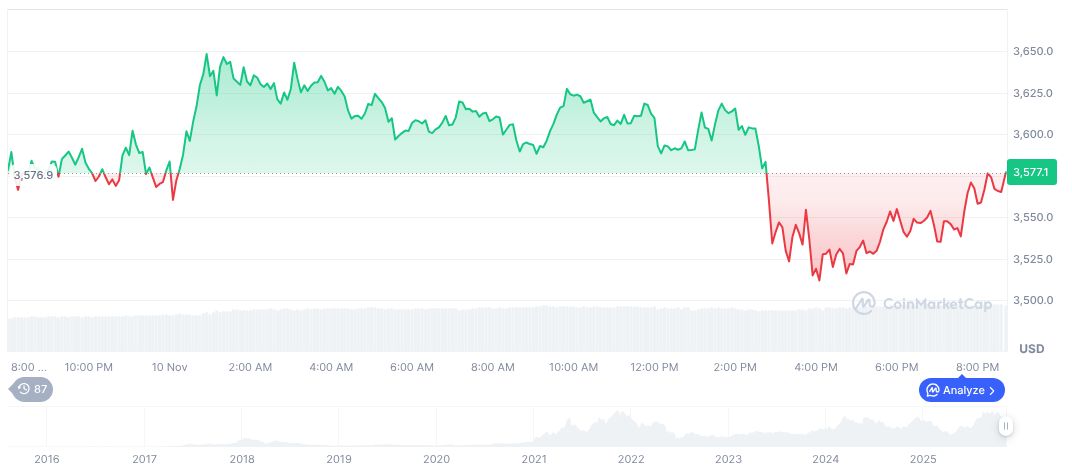
Brazil's regulatory push may spur market consolidation among service providers unable to meet new standards, potentially influencing technological compliance trends in Latin America's burgeoning digital economy.
In broader market trends, stablecoin and international transaction rules are highlighted as crucial regulatory elements impacting global crypto transactions.
Furthermore, the shift in Brazil's policy, reminiscent of certain aspects from EU regulations, underscores a more globalized approach to crypto oversight. This is similar to steps taken by Western Union in its stablecoin remittance pilot, illustrating real-world applications and impacts of firm regulatory measures.