


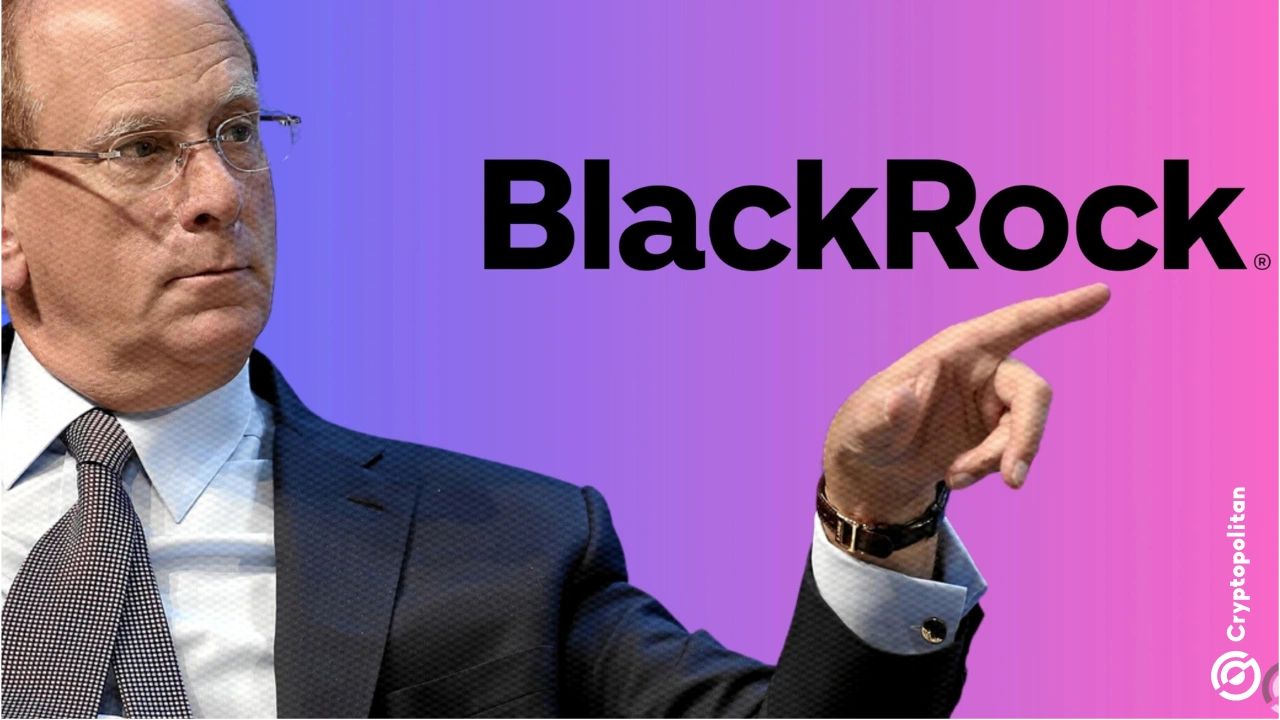
Larry Fink, chief executive officer of BlackRock, described the largest cryptocurrency by market cap as an asset of fear at the New York Times DealBook Summit, while simultaneously defending its place in investor portfolios.
He stated, “Bitcoin is an asset of fear. And when you’re less fearful, like we had a trade agreement with China, you saw a shift downward. There are conversations this week that there may be some type of settlement in Ukraine. Bitcoin fell a little bit.”
These comments referenced recent market movements, which Fink attributed to macro factors.
“You own Bitcoin because you’re frightened of your physical security. You own it because you’re frightened of your financial security,” Fink explained, adding that the fundamental long-term driver remains concerns about the debasement of financial assets due to deficits.
BlackRock's Evolving Stance on Bitcoin
In 2017, Fink, then a skeptic of Bitcoin, dismissed the cryptocurrency as little more than an index for money laundering.
He now acknowledges that his earlier skepticism was misguided, and his latest comments reflect the significant evolution of Bitcoin's perception.
His company’s iShares Bitcoin Trust (IBIT), launched in January 2024, was one of the first Bitcoin Exchange-Traded Funds (ETFs) in the US. It holds the record for being the fastest ETF to surpass $70 billion in assets and ranks number one in terms of volume, assets under management, and market capitalization.
Understanding Bitcoin's Volatility
Fink also addressed Bitcoin's inherent challenges, particularly for investors who treat it as a trading vehicle rather than a long-term hedge.
According to Fink, this is the third significant drawdown since IBIT's creation, where Bitcoin's price has experienced a roughly 20% to 25% decline. The recent multi-week drop from its peak to the mid-$90,000s is the latest instance of this volatility.
“If you bought it for a trade, it’s a very volatile asset; you’re going to have to be really good at market timing, which most people aren’t,” Fink cautioned. He noted that Bitcoin remains heavily influenced by leveraged players.
An Optimistic Outlook for the Future of Crypto
The asset manager's embrace of cryptocurrency extends beyond Bitcoin itself. Fink views the tokenization of financial assets as an even larger opportunity, envisioning a future where all securities exist in digital form on blockchain infrastructure.
At the summit, Coinbase co-founder Brian Armstrong joined the discussion, highlighting the growing alignment between traditional finance and the cryptocurrency industry.
Both Fink and Armstrong expressed optimism that the current market fluctuations are not indicative of an impending doom for Bitcoin.
Armstrong stated that there is no chance Bitcoin will ever drop to zero, and Fink added that he sees “a big, large use case for Bitcoin” in the future.
Armstrong also urged the US government to pass the pending CLARITY Act, which could provide clearer frameworks for cryptocurrency operations and establish stable regulations for the industry.