


Bitcoin's Role as a Hedge Asset
At the DealBook Summit on December 5th, BlackRock CEO Larry Fink classified Bitcoin as a "panic asset." He highlighted its growing appeal as a hedge, particularly during times of fiat currency devaluation and geopolitical crises.
Fink's perspective underscores the increasing institutional interest in Bitcoin as a protective asset. This sentiment is significant given BlackRock's substantial ETF management, which oversees $80 billion, and its potential to influence market perceptions and future volatility considerations.
Market Performance and Institutional Interest
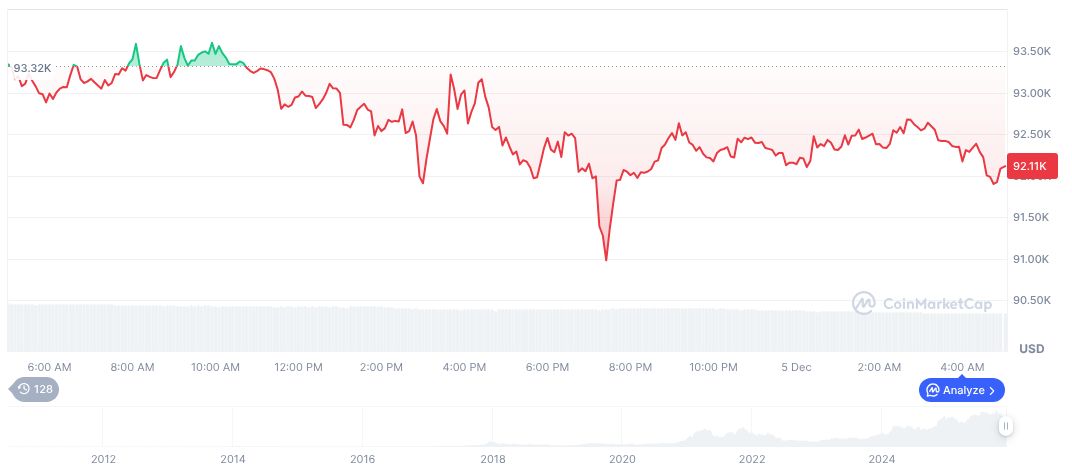
Bitcoin (BTC) is currently trading at $92,053.91, with a market capitalization of $1.84 trillion. The 24-hour trading volume stands at $59.12 billion, indicating a slight decrease. Bitcoin's price has experienced volatility over the past 90 days, with a notable drop of 16.91%.
Research indicates a growing trend of institutional investors accepting Bitcoin as a hedge against inflation. This shift aligns with recent regulatory developments that are facilitating the integration of digital assets into traditional investment portfolios.
The market has shown a significant reaction to Fink's comments, prompting many investors to re-evaluate their positions on Bitcoin in light of his observations.
Historical Context and Market Trends
Bitcoin was established in 2009 as a direct response to the global financial crisis. Its creation aimed to offer a decentralized alternative to conventional currencies.
As Bitcoin continues to capture the attention of institutional investors, its price movements are closely scrutinized, often reflecting broader market sentiments and economic conditions.
Industry experts suggest that Bitcoin's inherent volatility presents both potential risks and opportunities for investors. They emphasize the critical importance of adopting strategic investment approaches within this dynamic market landscape.