
Navigating Crypto News

CoinFeather
Navigating Crypto News

Quick market read from this story
BitGo's CEO asserts that crypto-native firms possess a structural advantage in custody services over traditional banks due to inherent conflicts of interest in legacy institutions.
The company's revenue model, with over 80% derived from stable custody and staking fees rather than volatile trading, positions it favorably for institutional clients seeking predictability.
BitGo's federal banking charter and substantial assets under custody ($104B) and client base (4,900+) underscore its established institutional footprint, differentiating it from nascent crypto custody solutions.
The framing of BitGo as the "AWS of digital assets" suggests a strategy to become foundational infrastructure, potentially leading to strategic acquisitions by traditional finance players seeking to enter the crypto custody space.
Deep Dive
BitGo CEO Mike Belshe asserts that crypto-native firms possess a structural advantage over traditional banks in the digital asset custody market. He argues that traditional financial institutions, such as Morgan Stanley, face inherent conflicts of interest due to operating trading desks alongside custody services. Belshe contends that BitGo, built specifically for custody and staking infrastructure, avoids these tensions, as its business model relies solely on being a neutral and secure custodian.
BitGo's business model is supported by a revenue stream where over 80% is derived from custody and staking fees. This provides stable, recurring income that is less susceptible to the market volatility characteristic of exchange-dependent models. This predictability is a key factor for institutional clients seeking reliable custody solutions.
The company's credibility is bolstered by its federal banking charter, obtained in late 2025 from the Office of the Comptroller of the Currency, allowing it to operate as a National Trust Bank. As of September 30, 2025, BitGo held $104 billion in digital assets under custody, serving over 4,900 institutional clients across more than 50 countries. Its revenue for the first nine months of 2025 reached $10 billion, a significant increase from $1.9 billion in the same period the previous year.
Belshe envisions BitGo as the foundational infrastructure layer for the entire crypto ecosystem, likening it to "the AWS of digital assets." This strategy positions BitGo as an indispensable service provider rather than a competitor to the firms it supports. Recent initiatives, such as providing the backbone for SoFi Bank's stablecoin and tokenizing its own shares on multiple blockchains, demonstrate this commitment to operating at the forefront of institutional crypto infrastructure.
Belshe's arguments come at a time of increasing regulatory clarity and growing institutional interest in digital assets, making the custody layer a critical competitive area. Analysts have identified BitGo as a potential acquisition target for traditional financial institutions, suggesting that rather than outcompeting BitGo, legacy banks may seek to acquire its established infrastructure and client base. Belshe emphasizes that a firm architected around neutral custody, with a federal charter and substantial assets, offers a distinct advantage over banks that have merely added crypto services.
Source, catalyst, and sector overlap from the latest feed.
Iran's crypto economy, valued at $7.8 billion in 2025, is being utilized as a critical tool for sanctions evasion and funding, with IRGC-linked wallets processing over 50% of Q4 inflows. The U.S. Treasury is shifting its strategy from targeting individual wallets to blacklisting entire exchanges, indicating an escalation in efforts to disrupt Iran's crypto-based financial channels. Ordinary Iranians are increasingly relying on Bitcoin and stablecoins to hedge against 40-50% inflation and a collapsing rial, highlighting crypto's role as a survival mechanism amidst economic and geopolitical instability. Iran's strategic use of Bitcoin mining as a form of monetary policy to pay for imports bypasses the dollar-denominated global trade system, presenting a unique challenge to traditional financial sanctions.
Florida's Senate passing stablecoin regulation marks the first state-level framework, potentially setting a precedent for other jurisdictions and influencing national crypto policy discussions. The unanimous approval suggests a bipartisan consensus on the need for stablecoin oversight, which could lead to increased institutional adoption and clearer operational guidelines for issuers. While the bill awaits the Governor's signature, its passage indicates a growing trend of regulatory clarity in the US, which could reduce uncertainty for stablecoin projects operating within Florida.
Significant outflows from spot Bitcoin ETFs on March 6, totaling $348.9 million, indicate a shift towards risk-off sentiment among institutional investors. The broad-based outflows across Bitcoin, Ethereum, Solana, and XRP ETFs, coupled with the Crypto Fear & Greed Index entering 'extreme fear', suggest a potential near-term bearish trend for the broader crypto market. While Bitcoin ETFs saw the largest redemptions, the negative flows into Ethereum, Solana, and XRP ETFs highlight a general weakening of demand across major altcoins as well.
A federal judge has certified a class action lawsuit against Tether and Bitfinex, allowing retail investors to pursue claims of market manipulation from nearly a decade ago. The lawsuit alleges that Tether issued unbacked USDT to artificially inflate Bitcoin and Ethereum prices during the 2017 bull run, a claim previously addressed in settlements with the NYAG and CFTC. With class certification granted, the case now proceeds to the discovery phase, where evidence will be presented, potentially impacting the credibility and future operations of Tether and Bitfinex. This development highlights ongoing legal scrutiny of stablecoin issuers and their market impact, carrying implications for the broader crypto industry's regulatory landscape.
Archax's integration of Cardano (ADA) on its FCA-regulated platform provides institutional-grade custody, removing a key barrier for traditional finance capital deployment into the network. The move strategically positions Cardano as a primary network for Real-World Asset (RWA) tokenization, leveraging its protocol-level token standards for simplified compliance and reduced attack surfaces. Despite recent market fear and ADA trading near $0.27, the integration and growing ecosystem traction (300% TVL growth) suggest potential upside if fundamental adoption continues. Cardano's shift towards an enterprise infrastructure narrative, coupled with its energy-efficient Proof-of-Stake model, aligns with institutional ESG mandates and could attract further commercial development.
New U.S. tax reporting rules for crypto, specifically the 1099-DA form, are causing confusion and administrative burdens due to requirements to report stablecoin transactions and small network fees. Coinbase's tax experts argue that the current tax system is inefficiently focusing on low-value transactions and stablecoin holdings, which do not generate income, thereby cluttering the reporting process. The lack of automatic cost basis transfer for crypto assets, unlike traditional equities, places a significant onus on retail traders to track and report their acquisition costs, leading to potential confusion and errors. While intended to align crypto with traditional finance, the implementation of the 1099-DA form highlights challenges in adapting complex financial regulations to the unique characteristics of digital assets.
Florida's Senate Bill 314, now awaiting Governor DeSantis' signature, establishes a formal regulatory framework for payment stablecoin issuers, aligning state law with federal guidelines. The bill expands Florida's anti-money-laundering laws to encompass stablecoins, requiring issuers to comply with existing money services business regulations and enhancing oversight for digital dollar tokens. By clarifying that certain payment stablecoins will not be classified as securities under state law, the legislation aims to reduce regulatory overlap and provide clearer operational guidelines for the stablecoin market within Florida. The advancement of this stablecoin legislation, alongside a separate proposal for state digital asset investments, signals a broader strategic effort by Florida to integrate and regulate blockchain technology within its economy.
The Trump administration's new cyber strategy frames blockchain security as a critical component of national technology competition, signaling a potential shift in how digital assets are viewed within geopolitical tech races. While the strategy does not introduce specific crypto regulations, its inclusion of blockchain security alongside AI and quantum computing suggests a growing recognition of its importance for economic and technological leadership. This development reinforces the Trump administration's previously stated pro-crypto stance, potentially leading to a more favorable regulatory environment for digital assets in the US if policies are enacted.
White House crypto adviser Patrick Witt's support for the CLARITY Act, specifically rejecting limits on stablecoin rewards, signals a potential shift towards a more favorable regulatory environment for stablecoin issuers and intermediaries. Despite ongoing disputes over stablecoin rewards, market confidence in the CLARITY Act's passage by 2026 remains high, with Polymarket odds at 70%, suggesting traders anticipate a resolution to current legislative hurdles. The core conflict over stablecoin rewards, pitting crypto firms against banking groups concerned about deposit flight, highlights a critical juncture for the bill, where compromise on this issue will likely determine its ultimate passage. The CLARITY Act's progress, bolstered by White House advisory support, presents a potential catalyst for the stablecoin sector, though broader political hurdles and differing Senate member priorities could still impede its enactment.
A class action lawsuit against prediction market Kalshi highlights potential regulatory and disclosure risks inherent in novel financial products. The dispute over the Khamenei market's resolution and payout methodology underscores the importance of clear terms of service and transparent rule application in prediction markets. While Kalshi claims no user lost money and reimbursed losses, the lawsuit indicates ongoing user dissatisfaction and potential for future legal challenges in the prediction market space. The situation may prompt increased scrutiny of how prediction markets handle sensitive or ethically complex event outcomes and their associated disclosures.
The operational complexity of managing DeFi positions across multiple protocols and chains presents a significant challenge for liquid crypto funds, hindering accurate NAV calculation and LP reporting. The article highlights a critical infrastructure gap for institutional DeFi, suggesting that traditional portfolio management systems are inadequate for dynamic, multi-asset DeFi exposures. AI is presented as a necessary solution for automated DeFi position identification and classification, enabling funds to maintain accurate portfolio views amidst rapid protocol evolution. The lack of robust, unified reporting infrastructure for DeFi strategies directly impacts fund credibility with institutional allocators, potentially limiting capital inflow.
Live Feed
Loading the broader stream in the same flow as the homepage feed.

The Crypto Fear and Greed Index has fallen to 18, signaling 'extreme fear' and a significant contraction in investor sentiment. Geopolitical tensions and macroeconomic uncertainty are eroding risk appetite, contributing to the downturn in crypto markets. Altcoins are particularly affected, with 38% near all-time lows and social media mentions at a two-year low, indicating severe distress in the broader altcoin market. The sustained downturn and 'extreme fear' sentiment suggest a potential contrarian buying opportunity for those with a long-term outlook, though near-term downside risk remains elevated.

Geopolitical tensions between the US and Iran are creating significant uncertainty, leading to a notable decline in the crypto market as traders seek safer assets. Despite Iran's assurance not to attack neighboring countries, the demand for 'unconditional surrender' from the US and Iran's refusal to comply prolongs the conflict, pressuring crypto assets. Bitcoin, Ethereum, and XRP have experienced price drops, reflecting the broader market's negative reaction to the escalating geopolitical situation and its impact on risk appetite.

Significant commercial real estate (CRE) debt maturities in 2026, totaling $875 billion, are poised to test regional banks due to higher borrowing costs and potentially lower property valuations. Regional banks hold a substantial portion of CRE debt, making them particularly vulnerable to refinancing stress, which could lead to tighter credit conditions impacting broader markets. While not a direct crypto event, CRE refinancing stress can translate into a macro headwind for Bitcoin by reducing liquidity and risk appetite, potentially pressuring speculative assets. A severe downturn in CRE could eventually bolster Bitcoin's appeal as a non-bank financial asset if it erodes confidence in the traditional banking system and deposit safety.
Solana's historical $4 trillion trading volume underscores its significant role in DeFi, suggesting strong underlying network utility despite recent price consolidation. The $84 support level for Solana is critical, as a hold could signal a stabilization and potential retest of the $90 resistance, driven by buyer absorption of selling pressure. Analysts maintain long-term optimism for Solana, with projections of $500 in the next cycle, highlighting confidence in its scalability and developer ecosystem. While recent price action shows consolidation, the robust historical trading volume and analyst sentiment suggest a potential upward breakout if buying momentum re-emerges.
XRP derivatives volume surged 1,185% on BitMEX, indicating heightened trader interest and potential positioning ahead of market shifts. Despite the derivatives spike, XRP experienced a 2.14% price drop in the last 24 hours, reflecting broader market headwinds from a strengthening US dollar. The recent surge in XRP derivatives activity, coupled with Ripple Prime's integration with Coinbase futures, suggests increased institutional attention on XRP and related derivatives markets. Traders are closely monitoring macroeconomic factors, such as potential Federal Reserve rate cuts influenced by US job market data, which could impact XRP's near-term price action.
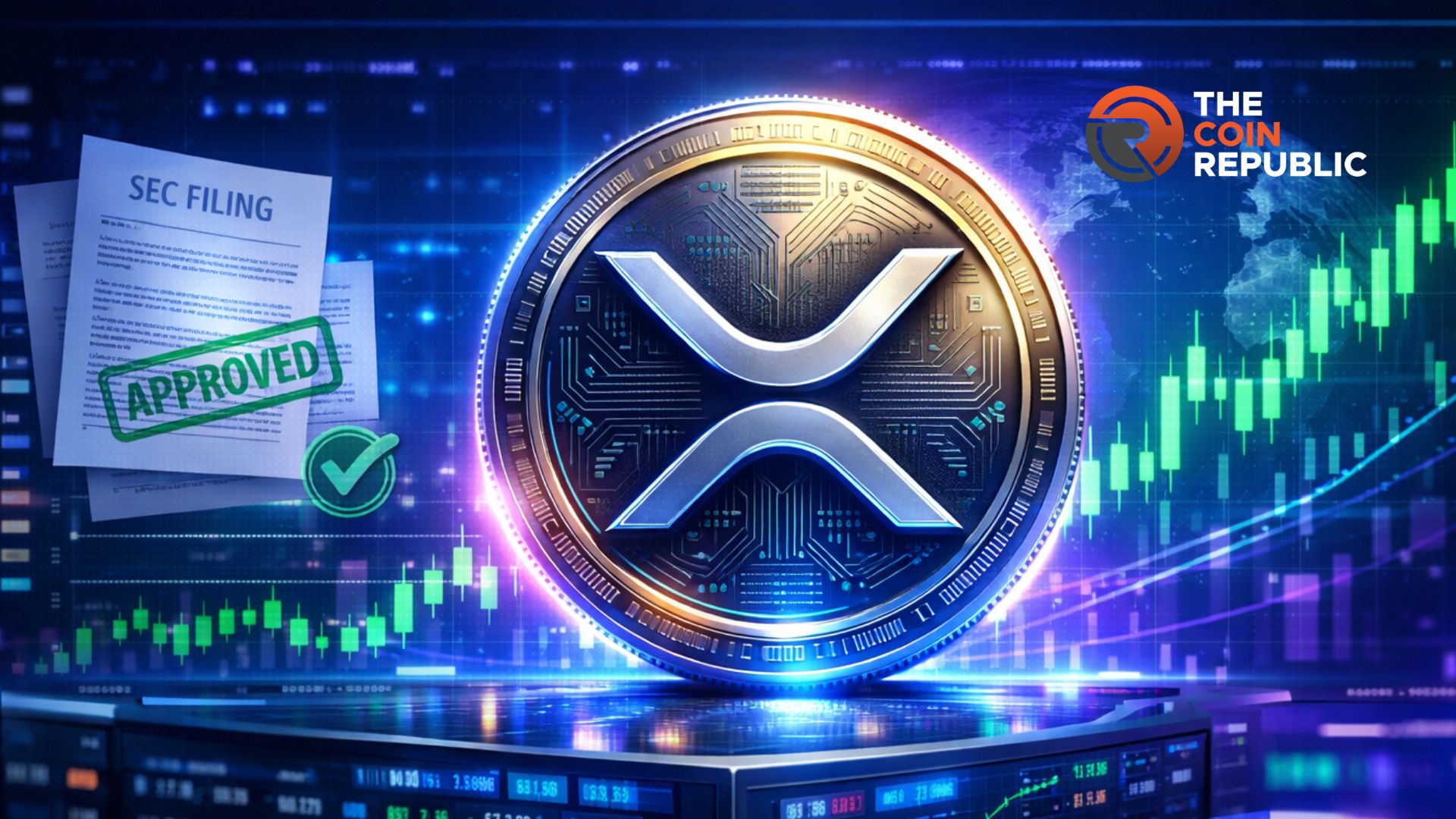
The SEC filing for the Kurv XRP Enhanced Income ETF, setting a March 11, 2026, effective date, signals regulatory progress for structured crypto products. The ETF's strategy of converting XRP volatility into monthly income payouts via derivatives offers indirect exposure, potentially attracting income-focused investors to XRP. This development expands institutional and retail access to XRP through a regulated investment vehicle, merging traditional finance structures with digital asset exposure.
Bill Gates' hypothetical decision to retain his entire Microsoft stake since 1999 would have resulted in a personal fortune dwarfing current billionaires, highlighting the immense wealth generation potential of long-term conviction in foundational tech companies. The article contrasts the potential for extreme personal wealth with the significant philanthropic impact achieved by Gates through strategic stock sales, framing it as a trade-off between personal accumulation and societal contribution. If Gates had held his MSFT shares, his continued influence over Microsoft's strategic direction and leadership decisions would have been substantial, potentially altering corporate governance and investment priorities. The narrative emphasizes that Gates' actual choice to diversify and fund philanthropy represents a conscious decision to forgo maximum personal wealth for broader global impact, offering a counterpoint to the typical 'tech billionaire' narrative.

Headline "outflows" from Bitcoin ETFs can be misleading, as a significant portion may be due to mark-to-market price depreciation rather than actual share redemptions, obscuring true investor behavior. The basis trade, involving holding spot Bitcoin and shorting futures, is a primary driver of ETF flows, meaning selling pressure can stem from trade unwinds due to compressed futures premiums rather than negative sentiment towards Bitcoin itself. Traders should differentiate between USD AUM drops (price impact) and BTC holdings/share count changes (actual investor exits) to accurately assess ETF market dynamics and avoid misinterpreting structural trading activity as sentiment shifts. The stability of the CME Bitcoin futures basis is a critical indicator for the next market phase, as its compression or recovery will dictate the viability of basis trades and influence ETF flow narratives.

Prediction markets are evolving from entertainment to a professional hedging tool, pricing geopolitical and policy risks previously unquantifiable by traditional finance. The shift indicates a growing demand for instruments that can price real-world uncertainty, potentially leading to significant growth beyond sports and election betting. Institutional interest is rising, with Federal Reserve economists recognizing the value of prediction markets for high-frequency expectation data. International adoption is accelerating, particularly in volatile economies, where these markets serve as a necessity for managing currency and policy risks.

Colossus aims to disrupt traditional payment networks like Visa and Mastercard by building a sovereign credit card rail on an Ethereum Layer-2, potentially reducing fees and offering a more decentralized alternative. The startup's strategy to operate without traditional KYC/AML requirements, based on its interpretation of the GENIUS Act, presents a novel approach but may face regulatory scrutiny and challenges in adoption by merchants accustomed to fiat settlement. The project's reliance on stablecoin transfers for transactions, while aiming for on-chain freedom, requires acquirers to bridge to traditional fiat for merchant settlement, highlighting a key integration challenge. Following the collapse of similar ventures like UnCash, Colossus's success hinges on its ability to navigate the complex payment ecosystem and overcome established relationships, despite its ambitious goal of replacing incumbents.
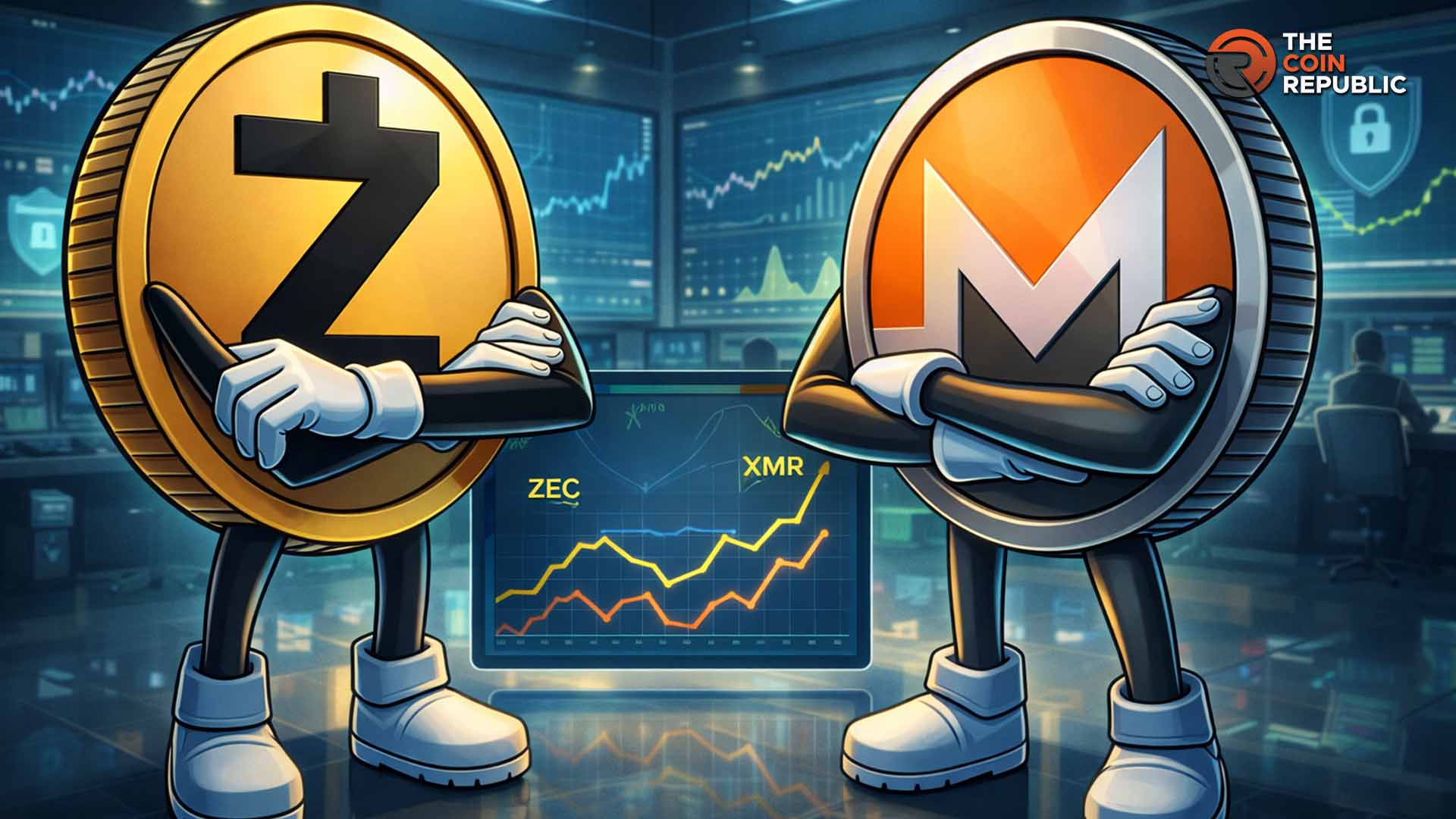
Monero (XMR) is showing stronger recent price momentum compared to Zcash (ZEC), indicating a potential shift in leadership within the privacy coin sector. Despite Zcash (ZEC) losing ground in price action, its leading position in the zero-knowledge proof (ZK) coin category by market cap highlights its technological significance and potential for future recovery. While both Zcash and Monero utilize proof-of-work mining, the profitability difference is marginal, suggesting mining economics are unlikely to be a primary driver for significant price divergence in the short term. The current market sentiment is cautiously optimistic, with a focus on sector-specific performance, making privacy coins like Monero and Zcash areas of interest for traders seeking alternative growth narratives.

Latin America's crypto transaction volume surged 60% to over $730 billion in 2025, indicating a significant shift towards practical utility over speculation. Argentina's crypto adoption is driven by cross-border payments and stablecoin use, with fintech integrations enabling peso payments to Brazilian merchants via stablecoins. Brazil leads the region in transaction size with $318.8 billion, benefiting from institutional trading and increasing regulatory clarity. Peru shows rapid growth with doubled crypto app users, fueled by interoperability between banks and digital wallets for payments.

Block's pragmatic embrace of stablecoins, driven by customer demand and competitive pressure from Stripe and PayPal, signals a strategic pivot beyond its Bitcoin-centric approach. Despite personal reservations, Jack Dorsey's decision to support stablecoins acknowledges their significant market traction and integration into broader payment ecosystems. This development highlights the growing influence of stablecoins in the crypto market, forcing even staunch Bitcoin advocates to adapt their strategies to meet user needs and market trends.
Signal context only. Validate with price action, liquidity, and risk limits before taking a position.
