


Bitcoin’s recent price action highlights the increasing cautiousness among traders as macroeconomic risks and market dynamics weigh heavily on sentiment. After failing to surpass $92,250, Bitcoin experienced a $2,650 decline, driven by a confluence of factors including geopolitical uncertainty, economic data delays, and a weakening housing market, prompting a retreat from bullish positions.
Key Takeaways
- •Economic uncertainty, delayed economic data, and weakness in the housing sector are leading traders to reduce exposure to Bitcoin.
- •Pro traders are paying high premiums to hedge downside risks, while stablecoins in China are being sold at discounts to exit the crypto market.
- •The market’s risk perception is leaning bearish, with Bitcoin’s futures premiums below neutral levels for two weeks.
- •Weak demand for bullish leverage and deteriorating macroeconomic outlooks underscore short-term bearish signals for Bitcoin.
Market Analysis
Bitcoin recently declined from its attempts to breach the $92,250 level, dropping by around $2,650 amid increased risk aversion and broader market weakness. The decline was exacerbated by a forced liquidation of $92 million in bullish futures, indicating lingering bearish sentiment. The futures market remains cautious, with traders requesting a 13% premium to sell downside protection, a hallmark of bearish markets.
The weak demand for bullish leverage is reflected in Bitcoin’s futures premium, which has remained below 5%—a neutral threshold—for the past two weeks. This indicates a subdued appetite for bullish exposure despite Bitcoin’s 28% correction from its October all-time high.
Economic Factors Influencing Bitcoin
Macroeconomic concerns are mounting, with new data delays from the US government and a private report revealing over 71,000 layoffs in November. Meanwhile, in the real estate sector, delistings surged 38% from the previous year, and the median home price dipped slightly, highlighting economic uncertainty that influences investor confidence.
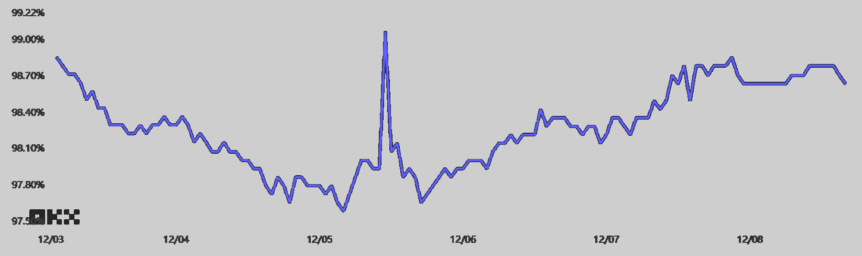
Furthermore, in China, stablecoins like Tether are trading at a discount to their peg, signaling an exit from the crypto market amid heightened risk aversion. This trend underscores mounting cross-border sell-offs and cautious positioning by regional investors, although it does not suggest a breakout below $85,000 in the near term.
Investor Sentiment and Future Outlook
The subdued inflow into US-listed Bitcoin ETFs further reflects cautious investor sentiment. The likelihood of Bitcoin reaching $100,000 depends heavily on improved macroeconomic clarity from the US, potentially taking longer than a single Federal Reserve decision to materialize. As market conditions remain fragile, traders are advised to approach with caution until more definitive economic signals emerge.