
Navigating Crypto News

CoinFeather
Navigating Crypto News
Quick market read from this story
Bitcoin faces continued downside risk as liquidity zones below current price act as potential magnets before any significant rebound.
Repeated failures to break key resistance levels suggest sellers remain in control, reinforcing a broader downtrend structure rather than a sustained recovery.
The current choppy price action and short squeezes followed by downside indicate instability, limiting clear directional moves and delaying a confirmed trend shift.
Analysts suggest that while overhead liquidity exists near $75,000, the immediate focus is on potential downside targets between $66,000 and $69,000 before any upward movement.
Deep Dive
Bitcoin may experience further downside before a significant rebound, according to market analysts who highlight weak market structure and unfinished liquidity below current price levels. The cryptocurrency appears stuck between lower support targets and repeated resistance failures, with no clear indication of a lasting trend reversal.
Trader Ted Pillows suggests that Bitcoin could revisit lower liquidity levels before attempting another upward move. Pillows noted that downside liquidity has not yet been fully cleared, and liquidity clusters are building above the $75,000 level. This setup implies a potential short-term dip followed by a later upturn.
Analysis of Bitcoin's liquidity heatmap shows significant concentrations below the current price, particularly in the $66,000 to $69,000 range. Simultaneously, another cluster is forming near and above $75,000. This suggests that price could react at these two active zones. Downside liquidity often acts as a magnet prior to a reversal, indicating that Bitcoin might first tap the lower area if selling pressure persists. Subsequently, if buyers re-enter, the price could target the upper liquidity cluster.
The current chart analysis does not provide specific timing but highlights where liquidation interest is accumulating and potential price movements. The primary observation is that Bitcoin remains positioned between substantial liquidity below and developing liquidity overhead.
Daan Crypto Trades points out that Bitcoin continues to face rejection at key resistance levels, reinforcing a broader downtrend structure. Repeated failures to break out of established ranges suggest that a sustained relief bounce is unlikely, as sellers remain active at resistance points.
Daan observed that recent price movements have largely been driven by short squeezes followed by continued downward pressure. These events cause temporary upward fluctuations but lack staying power, with prices returning lower after liquidity above is tapped. The price action has remained choppy across lower timeframes for approximately six weeks, limiting clear directional moves and indicating an unstable market without a confirmed trend shift.
Source, catalyst, and sector overlap from the latest feed.
XRP whales are accumulating over 200 million tokens, signaling strong conviction and a potential shift in market structure towards bullish sentiment. The $1.40 support level, reinforced by derivatives market positioning, is critical for maintaining XRP's current structure and preventing a bearish breakdown. Rising exchange volume without a sharp price increase suggests steady, institutional-style accumulation, potentially setting the stage for a breakout above $1.60. XRP reclaiming the fourth market cap position from BNB indicates growing conviction and a strengthening fundamental position, independent of speculative hype.
Coinbase's expansion into stock perpetual futures with 24/7 trading offers global users leveraged access to US equities, potentially increasing trading volume and platform utility beyond traditional crypto offerings. The integration of traditional equities into a crypto-native derivatives structure, settling in USDC and utilizing cross-margining, signals a strategic move towards an 'everything exchange' and could attract new user segments. While offering up to 20x leverage on ETFs and 10x on single stocks, the product's availability outside the US highlights regulatory constraints and presents both increased opportunity and risk for traders.
Significant outflows of 84.014 billion SHIB from exchanges suggest a strong accumulation trend, indicating reduced selling pressure and potential holder confidence despite recent price volatility. The observed accumulation, coupled with a recent price bounce following a three-day decline, points to a potential consolidation phase for SHIB, favoring long-term holders over short-term traders. While outflows reduce immediate supply, the price action remains near a key resistance zone, suggesting that a breakout is needed to confirm further upside momentum.
MRPL shares are experiencing significant upward momentum, driven by the rerouting of a Russian oil tanker carrying Urals crude to India's Mangalore port. The diversion of the Aqua Titan, a sanctioned vessel, to India after initially being bound for China presents a complex geopolitical and trade dynamic, potentially impacting future energy supply routes and pricing. While the article focuses on MRPL's stock performance, the underlying event involves sanctioned oil shipments, which could attract regulatory scrutiny or influence broader market sentiment regarding energy trade with Russia.
Ethereum has rebounded from the $2,100 support level, with technical analysis suggesting a potential move towards the $2,640 CME gap if bulls can reclaim nearby resistance. The price action indicates ETH is at a short-term inflection point, where reclaiming resistance could signal a continuation move, while failure to do so may lead to a return to lower consolidation ranges. Traders should monitor ETH's ability to break above key Fibonacci retracement levels and consolidation resistance as the primary determinant for near-term upside potential.
Bitcoin's weekly RSI is approaching a critical level that historically signals potential bear market bottoms, suggesting a near-term inflection point for price action. While a bullish divergence on the weekly RSI is a key indicator for potential rebounds, traders are advised to remain cautious due to the recent all-time highs and the possibility of a prolonged bear market cycle. The analysis highlights that a higher low on the weekly RSI, even with price making lower lows, could indicate the bottom is near or already in, warranting increased market attention.
A long-dormant Bitcoin whale wallet holding approximately $147 million has moved a small fraction, signaling potential liquidity events or key recovery after 13 years. The minimal transfer of $56 from a Satoshi-era wallet, while not immediately indicative of a sell-off, prompts market observation for further movements that could impact Bitcoin supply dynamics. The event highlights the significant unrealized gains of early Bitcoin adopters and raises questions about whether this represents a 'diamond hands' holder finally diversifying or a recovered private key test transaction.
Stablecoin issuers and fintechs are actively building dedicated payment blockchains to control settlement infrastructure, aiming to capture value currently paid as fees to general-purpose networks like Ethereum. The strategic importance of owning payment rails is highlighted, as companies seek to replicate the success of Visa and Mastercard by controlling the transaction pipes rather than just issuing currency. This trend indicates a structural shift towards specialized payment networks within crypto, potentially creating new revenue layers through compliance, FX conversion, and wallet integrations. Companies integrating AI with settlement rails are positioned to capture a disproportionate share of network value, suggesting a future convergence of AI and payment infrastructure.
Evernorth's significant unrealized losses on its XRP holdings, coupled with its NASDAQ listing aspirations, present a high-stakes scenario that could impact XRP's price if forced selling occurs. The substantial withdrawal of 199 billion SHIB from exchanges, alongside perceived regulatory clarity, suggests a potential shift towards long-term accumulation, possibly signaling a price rally towards $0.00001. Coinbase's expansion into 24/7 traditional stock perpetuals via its Bermuda arm directly challenges existing players like Hyperliquid, indicating a growing trend of crypto platforms integrating traditional finance assets. Bitcoin's resilience above $70,000, alongside the market's increasing focus on RWAs and DeFi integration, points to a maturing crypto market driven by infrastructure development rather than speculative rallies.
Live Feed
Loading the broader stream in the same flow as the homepage feed.

Kalshi's successful $1 billion funding round at a $22 billion valuation, doubling its previous valuation, signals strong investor confidence in the prediction market despite regulatory headwinds. The significant increase in trading volume, exceeding $10 billion in February, indicates robust user adoption and market growth for Kalshi, potentially setting a precedent for other prediction market platforms. Despite strong investor interest and growth, Kalshi faces ongoing regulatory challenges with state-level actions and legal battles, creating a complex operating environment that traders should monitor. The platform's ability to attract substantial funding and grow user activity while navigating regulatory scrutiny suggests a resilient business model, though future expansion may be state-dependent.
Altcoin trading volumes have plummeted by up to 85% on major exchanges like Binance, indicating a significant loss of investor interest and capital flight from the broader altcoin market. Tighter monetary conditions and macroeconomic uncertainty are forcing traders to remain risk-averse, favoring Bitcoin's perceived safety and clearer narrative over speculative altcoin plays. A broad 'alt season' akin to 2021 is deemed structurally unlikely, with any capital rotation expected to be narrow and focused on specific, thesis-driven themes like RWA or infrastructure. A substantial shift into altcoins would likely require Bitcoin to break into the $120,000-$130,000 range, triggering a 'wealth effect' that encourages rotation into higher-beta assets.

The CoinDesk 20 Index saw a modest gain of 0.2%, indicating a generally stable market environment with mixed performance among its constituents. Aptos (APT) and Bitcoin Cash (BCH) emerged as top performers within the CoinDesk 20, showing relative strength compared to the broader index. With 14 out of 20 assets trading higher, the index's breadth suggests a positive undertone, though specific asset performance varies significantly.

A significant 370% surge in the Shiba Inu burn rate, removing over 4.2 million SHIB, theoretically supports price appreciation by reducing supply. The increased burn rate coincided with SHIB breaking a key resistance level around $0.000006, suggesting potential for further upward price movement if support holds. While the burn mechanism is a bullish signal for SHIB's long-term scarcity, the article notes frequent large burn events and a recent drop in trading volume, warranting cautious observation.

Morgan Stanley's amended S-1 filing for its Bitcoin ETF (MSBT) confirms operational details like the ticker, listing exchange (NYSE Arca), and initial seed funding, signaling a significant step towards institutional adoption. The involvement of established custodians like Coinbase Custody and BNY Mellon, coupled with Morgan Stanley's vast wealth management network, positions the MSBT ETF to attract substantial institutional capital, potentially influencing Bitcoin's price stability. Despite the lack of disclosed management fees or expense ratios, the filing's focus on institutional-grade security and potential fee-waiver strategies suggests a competitive approach to capturing market share in the growing spot Bitcoin ETF landscape. The amended filing brings the MSBT ETF closer to SEC approval, with market participants anticipating a decision within the next fiscal quarter, which could further legitimize Bitcoin as a core portfolio asset.

Coinbase's expansion into stock perpetual futures for non-U.S. customers, offering leveraged exposure to major tech stocks and ETFs, signals a strategic move to broaden its derivatives market and capture demand for 24/7 trading of traditional assets. The introduction of these contracts, cash-settled in USDC and utilizing Coinbase's existing risk engine, enhances its 'Everything Exchange' strategy and could attract new user segments seeking integrated crypto and equity derivative trading. This development positions Coinbase to compete more directly with decentralized platforms offering similar products, potentially increasing trading volume and revenue streams, while also highlighting the growing convergence between crypto and traditional finance markets.
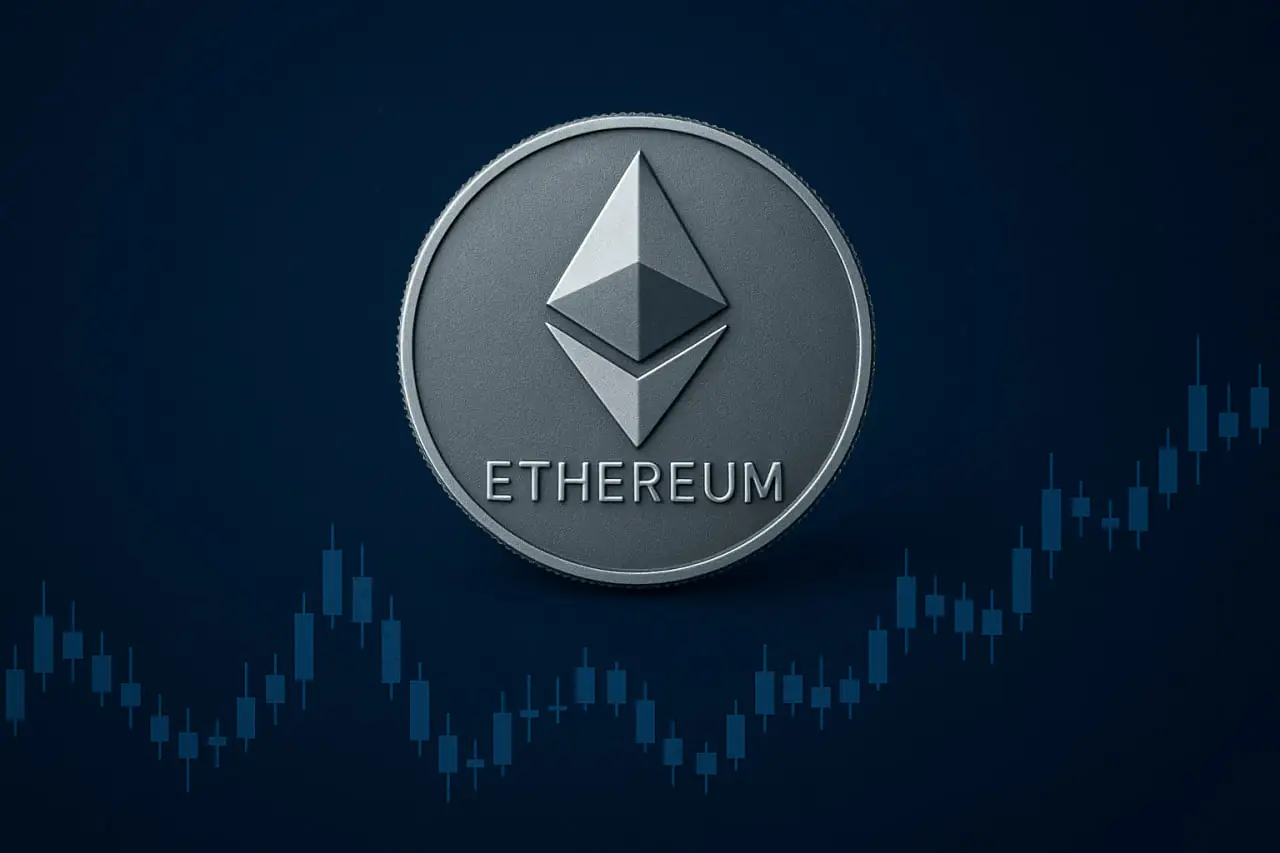
Ethereum faces a critical juncture with a bearish technical pattern mirroring a past 40% decline, placing the $2,000 support level under intense scrutiny for short-term traders. The upcoming Glamsterdam upgrade in H1 2026 promises a significant scalability boost with 10,000 TPS and reduced gas fees, potentially altering Ethereum's fundamental value proposition if delivered on schedule. Institutional adoption is accelerating with BlackRock's ETHB ETF attracting substantial AUM and BitMine aggressively accumulating ETH, signaling a growing demand for yield-bearing ETH assets despite short-term price risks.

Geopolitical events are driving demand for 24/7 trading on DEXs like Hyperliquid, highlighting a structural gap in traditional finance markets. Hyperliquid's CL-USDC perpetual saw significant volume ($1.7B peak daily) during the Iran conflict, demonstrating the platform's ability to capture volatility-driven flows. The trend of traditional asset trading on DEXs is accelerating, potentially drawing more institutional interest and market share from centralized exchanges. Hyperliquid's HYPE token has outperformed the broader crypto market year-to-date, suggesting positive sentiment driven by platform growth and utility.

Crypto markets showed resilience, rebounding as geopolitical tensions eased with potential de-escalation in the Middle East, suggesting a short-term risk-on sentiment return. The mention of Hyperliquid by JPMorgan highlights its growing appeal as a platform for accessing macro products like oil futures, indicating a potential mainstream adoption pathway for crypto infrastructure. Crypto.com's significant workforce reduction and pivot towards AI integration signals a strategic shift within major exchanges, potentially impacting future product development and operational efficiency. The strong performance and significant funding rounds for prediction markets like Polymarket and Kalshi underscore a growing institutional and mainstream interest in decentralized prediction platforms.
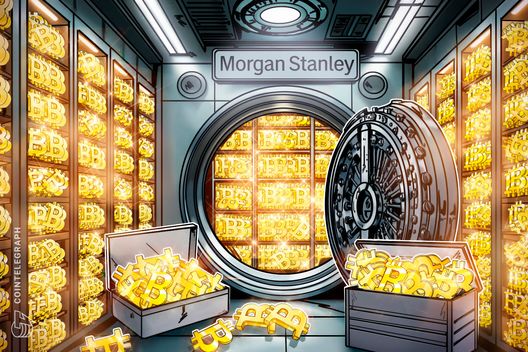
Morgan Stanley's amended S-1 filing for its MSBT spot Bitcoin ETF, detailing seed capital and listing plans, signals a significant step towards the product's launch and direct capture of management fees. The involvement of major authorized participants like Jane Street and Virtu Americas suggests robust market-making infrastructure for the MSBT ETF, aiming to keep its price closely aligned with Bitcoin's spot price. This move by Morgan Stanley, alongside similar actions from Bank of America and Vanguard, indicates a broader institutional trend of increasing accessibility to crypto products, potentially driving further adoption and capital inflows.

The backlash to Vanity Fair's crypto feature highlights a persistent disconnect between mainstream media perception and the industry's evolving institutional integration, particularly concerning Bitcoin's role. Despite seeking mainstream legitimacy, the crypto industry's reaction to the Vanity Fair article reveals a deep-seated insecurity and a desire for cultural validation, contrasting with its growing political influence and capital allocation towards Bitcoin. The article suggests that Bitcoin's increasing integration with traditional finance via ETFs and corporate treasuries positions it to diverge from cultural narratives, potentially benefiting from regulatory clarity and institutional capital flows. The contrasting narratives of political power and reputational insecurity suggest a bifurcation within crypto, where Bitcoin may increasingly align with traditional finance while other segments grapple with cultural perception.
Signal context only. Validate with price action, liquidity, and risk limits before taking a position.
