


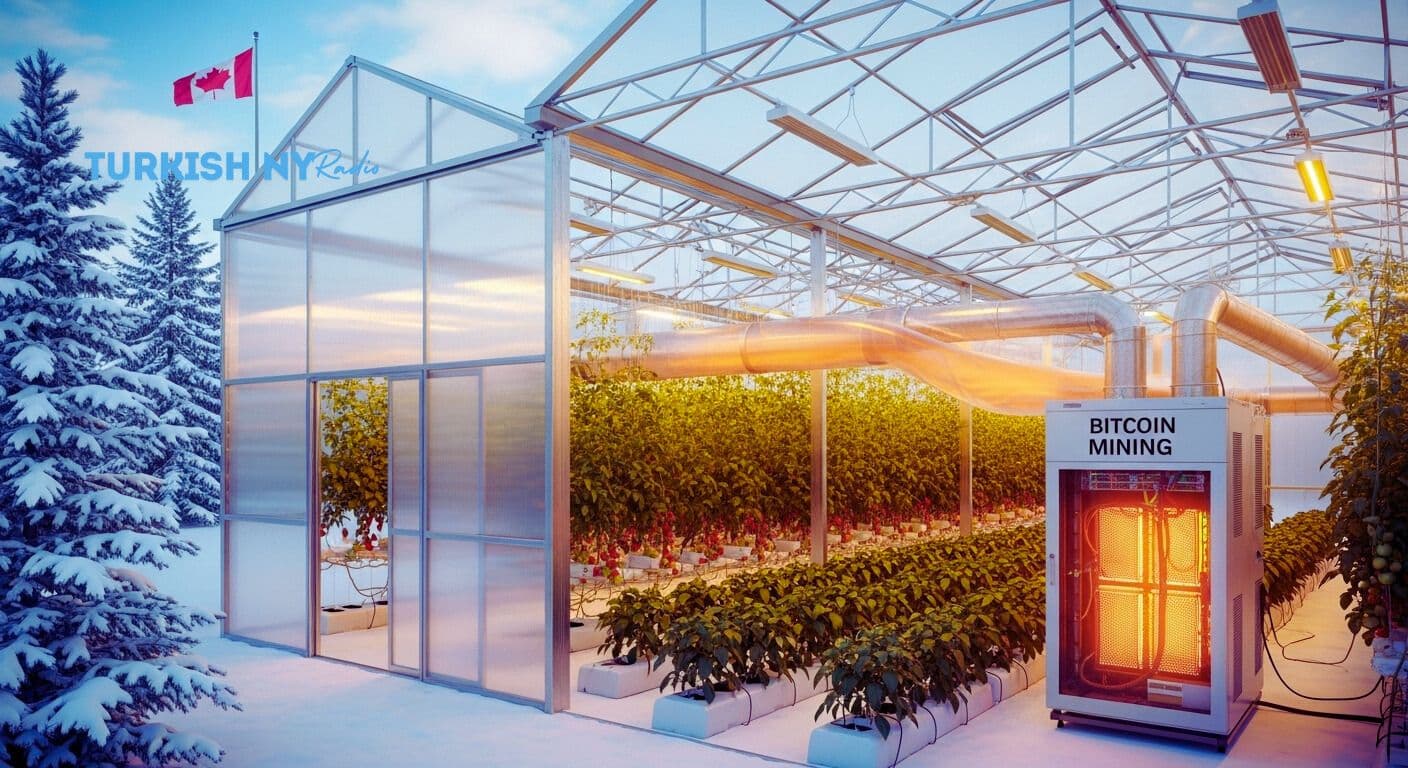
Bitcoin mining generates significant heat as a byproduct of its operations. A pilot project in Canada's Manitoba province is exploring whether this heat can be repurposed to support agricultural operations, specifically greenhouses that require consistent heating throughout the winter months. The initiative aims to evaluate if this approach can lead to reduced energy costs and improved overall efficiency for both mining and agricultural sectors.
Manitoba Pilot Project Integrates Bitcoin Mining Heat with Greenhouse Operations
The pilot project in Manitoba is a collaboration between Bitcoin mining hardware manufacturer Canaan and sustainability-focused firm Bitforest Investment. Operating with approximately 3 megawatts of mining capacity, this initiative is structured as a 24-month trial with a primary focus on data collection.
Instead of using traditional air-cooled machines, the setup employs liquid-cooled Avalon mining units. Around 360 miners are connected to a closed-loop heat exchange system. This system transfers thermal energy from the miners into the greenhouse's existing water-based heating network.
Crucially, the heat generated by Bitcoin mining does not entirely replace the greenhouse's conventional heating system. Instead, it serves to preheat water before it reaches the standard boilers. This supplementary heating reduces the demand for fuel during colder periods, thereby preserving operational reliability for the growers.

Synergy Between Greenhouses and Bitcoin Mining
Greenhouses situated in northern climates face the persistent challenge of maintaining stable internal temperatures against freezing external conditions. Crops, such as tomatoes, are particularly sensitive to temperature fluctuations, making uninterrupted heating essential for their growth and survival.
Bitcoin mining, conversely, generates a continuous and predictable stream of heat as long as its machines remain operational. When this heat is captured through liquid cooling systems, it can be delivered at temperatures suitable for industrial reuse, moving beyond simple space heating applications.
Research from the International Energy Agency (IEA) indicates that liquid-cooled systems are more efficient at heat recovery compared to air-based designs. This technical compatibility is a key reason why Bitcoin mining heat greenhouses are being seriously explored, especially in colder regions.
Impact on Energy Costs and Efficiency
Heating represents one of the most significant expenses for greenhouse operators. Even minor reductions in fossil fuel consumption can contribute to greater cost stability and lower the overall emissions intensity of agricultural operations.
For Bitcoin mining operators, while heat reuse does not decrease electricity consumption, it enhances the utilization of that energy. The IEA's Energy Efficiency 2023 report highlights that waste-heat recovery can improve overall system efficiency by 10% to 30% in suitable industrial contexts.
As of now, definitive results from the Manitoba pilot project are still pending. However, expectations include reduced boiler runtime, lower fuel expenses for greenhouses, and improved energy efficiency, contingent upon the electricity inputs being derived from low-carbon sources.
Integrating Mining into Local Infrastructure
The Manitoba project is part of a broader trend. Across Europe, waste heat from conventional data centers is already being utilized to support district heating networks. In countries like Finland and Sweden, entire residential areas are partially warmed using recovered server heat.
Bitcoin mining presents distinct challenges due to its higher power density. However, it also offers concentrated heat output that can be captured more effectively when systems are designed from the outset for reuse.
This evolving approach signifies a wider industry effort to integrate mining operations into local energy systems, moving away from isolated facility models.
Limitations of the Approach
Despite its potential, the concept of Bitcoin mining heat greenhouses is not a universally applicable solution. Liquid-cooled systems necessitate higher upfront investment. Furthermore, heat must be utilized in close proximity to its source to minimize thermal losses during transport.
Agricultural operations will continue to require backup heating systems to ensure consistent temperature control. The environmental benefits derived from this model are also heavily dependent on the availability of clean electricity sources for the mining operations.
These constraints suggest that this model is best suited for specific geographic regions and particular use cases where these conditions can be met.
Implications for the Bitcoin Energy Discussion
The discourse surrounding Bitcoin's energy consumption is gradually shifting from broad electricity figures to more nuanced discussions about efficiency and integration. Projects like the Manitoba greenhouse pilot demonstrate that mining infrastructure can potentially support real-world needs when designed thoughtfully.
Should long-term data confirm cost savings and operational reliability, Bitcoin mining heat greenhouses could emerge as a viable option for agriculture in cold climates. This could, in turn, reshape how Bitcoin mining is integrated into regional energy planning and infrastructure.
Summary
A pilot project in Manitoba is currently testing the feasibility of reusing heat generated by Bitcoin mining operations to support greenhouse farming.
Rather than allowing the heat produced by mining servers to be wasted, the project redirects this thermal energy to help warm greenhouses during the colder months.
By employing liquid-cooled systems, the initiative aims to reduce the reliance on fossil fuels and enhance overall energy efficiency. The outcomes of this project could influence the development of similar initiatives in other cold regions.
Glossary of Key Terms
Bitcoin Mining
Bitcoin mining is the process where powerful computers perform complex calculations to validate transactions and secure the Bitcoin network.
Bitcoin Mining Heat Greenhouses
This refers to the practice of capturing and reusing the heat emitted by Bitcoin mining machines to warm greenhouses.
Waste Heat
Waste heat is the excess thermal energy produced by machinery during operation that is not part of its primary function.
Liquid Cooling
Liquid cooling is a method that uses a fluid to absorb and dissipate heat from electronic components, offering efficient temperature management.
Greenhouse Heating System
A greenhouse heating system is designed to maintain optimal temperatures within a greenhouse, enabling plant cultivation even in adverse weather conditions.
Energy Efficiency
Energy efficiency involves using less energy to perform the same task or produce the same result, minimizing waste.
Pilot Project
A pilot project is a small-scale preliminary study conducted to evaluate the feasibility and potential of a larger project.
Low-Carbon Electricity
Low-carbon electricity is generated from sources that produce minimal greenhouse gas emissions, such as renewable energy or nuclear power.
FAQs About Bitcoin Mining Heat Greenhouses
What is being tested in Manitoba?
The project is testing whether heat generated by Bitcoin mining can be utilized to warm greenhouses, thereby reducing fuel consumption and supporting crop growth during Manitoba's extended cold winters.
Does this involve pricing or payments?
No. This is a pilot project focused on reducing heating expenses for greenhouses. It does not involve the sale of heat or charges for mining-related services.
What are the main benefits of this setup?
Mining machines produce a consistent heat output that can supplement greenhouse heating. This helps farmers reduce fuel usage, manage energy costs more effectively, and maintain stable growing conditions for their crops.
Is this approach reliable and safe?
Yes. Greenhouses involved in the project continue to utilize backup heating systems. The pilot is currently assessing the long-term reliability of the integrated system before considering any potential expansion.