


In Brief
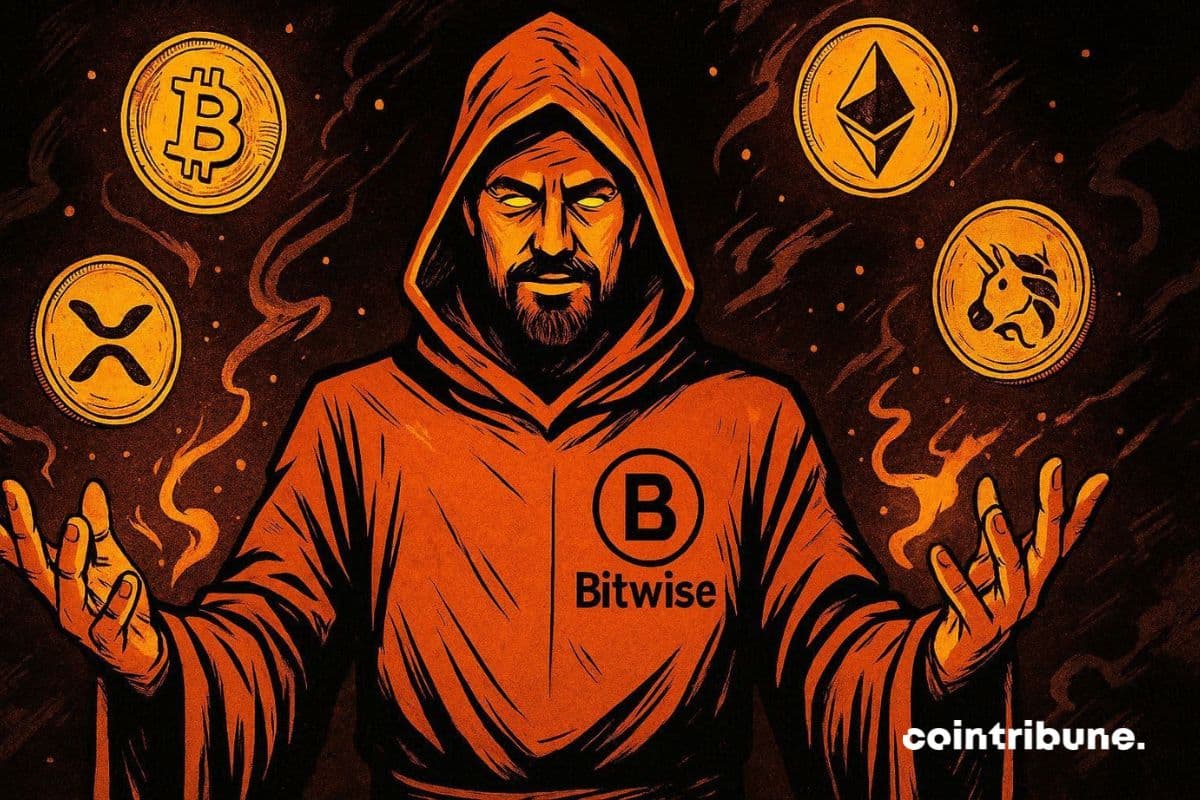
- •Bitwise has identified Bitcoin, Ethereum, XRP, and Uniswap as key assets for 2026, citing technological advancements and increasing institutional adoption.
- •Projections for December 2025 suggest potential price rebounds: BTC at $100,000, ETH at $4,500, XRP at $3.25, and UNI at $12.
- •Recommended investment strategies include balanced asset allocation, Dollar-Cost Averaging (DCA), and continuous monitoring of regulatory and technological developments.
The Bullish Vision of Bitwise: BTC, ETH, XRP and UNI in the Front Line
Bitwise, led by Matt Hougan, maintains a strongly optimistic outlook for the cryptocurrency market in 2026, focusing its strategy on four prominent assets.
Bitcoin (BTC): The Essential Store of Value
Bitcoin continues to be the foundational asset in Bitwise’s investment strategy, with its adoption by institutions being further solidified by the introduction of ETFs. Despite a recent dip below $82,000, analysts are anticipating a recovery by December, potentially driven by a Federal Reserve interest rate cut and increased demand from regulated investment funds. Matt Hougan highlights Bitcoin's enduring status as a safe-haven asset, commanding consistent confidence even amidst market volatility.
Ethereum (ETH): The Future of Layer 2 Scaling
Ethereum is on the cusp of its "Fusaka" upgrade, scheduled for December 2025. This significant update is set to introduce minimum fees for data posted on Layer 2 networks. Bitwise estimates that this innovation could lead to a substantial increase in blockchain revenues, potentially multiplying them by five to ten times. The firm views this upgrade as a critical catalyst for ETH's value, enhancing its utility and appeal to institutional investors.
XRP: A Bet on Regulatory Clarity and Technological Advancement
XRP is exploring the potential of staking and is benefiting from a more defined regulatory landscape, particularly following the resolution of key lawsuits with the SEC. Bitwise regards XRP as an undervalued asset with significant potential for a rebound, especially as cross-border payment solutions gain traction and regulatory clarity in the United States becomes more established.
Uniswap (UNI): The "Fee Switch" as a Key Catalyst
Uniswap is poised to potentially activate its "fee switch" mechanism by the end of 2025. This feature would enable the redistribution of 16% of trading fees to UNI token holders. Coupled with the growing trading volume on the Arbitrum network, this move could significantly bolster Uniswap's position as a leader in the decentralized finance (DeFi) sector. Matt Hougan suggests that this innovation could transform UNI into an asset capable of generating passive income, thereby attracting a broader range of institutional investors.
December: A Pivotal Month for the Crypto Market
Historically, December has been a month characterized by volatility for Bitcoin and the broader cryptocurrency market. Recent large-scale liquidations have created conditions conducive to a technical recovery, particularly if the Federal Reserve implements interest rate cuts. The following price projections are anticipated for December 2025:
- •Bitcoin (BTC): $96,000 – $100,000 (driven by post-liquidation recovery and anticipation of a Fed pivot).
- •Ethereum (ETH): $3,980 – $4,500 (influenced by the "Fusaka" upgrade and sustained institutional demand).
- •XRP: $2.02 – $3.25 (supported by speculation regarding ETFs and staking capabilities).
- •Uniswap (UNI): $10.66 – $12.11 (boosted by the activation of the "fee switch" and increasing DeFi trading volumes).
While Bitwise maintains a bullish outlook, several macroeconomic factors require careful observation, most notably the Federal Reserve's interest rate policies. If the Fed maintains its current stance, it could prolong downward pressure on the crypto market. Furthermore, the flow of capital into Bitcoin and Ethereum ETFs will serve as crucial indicators, as will the evolving trade relations between the United States and China.
Crypto: How to Position Yourself on BTC, ETH, XRP and UNI?
For retail investors, a balanced allocation strategy is recommended. This involves allocating 50-60% to Bitcoin for its stability, with an additional 10-15% dedicated to ETH, XRP, and UNI to capitalize on their individual growth catalysts. Employing a Dollar-Cost Averaging (DCA) approach can help mitigate risks, and market corrections present opportune moments for acquiring assets, a strategy exemplified by Hunter Horsley.
It is important to acknowledge that volatility remains a significant factor, particularly for altcoins. To balance a portfolio, diversification into traditional assets such as gold and stocks is advisable. Investors should also remain vigilant for the potential of cascading liquidations, a phenomenon often observed during periods of macroeconomic stress.
Bitwise's strategic focus on Bitcoin, Ethereum, XRP, and Uniswap for 2026 positions them as potential market leaders, driven by ongoing technological innovations and increasing institutional adoption. The question remains for investors: which strategies will you implement to benefit from these developments?