
Navigating Crypto News

CoinFeather
Navigating Crypto News

Quick market read from this story
A rare 99th percentile bid-side imbalance near $65,000 suggests strong buying pressure, potentially confirming a short-term bottom for Bitcoin.
The presence of over $1.6 billion in short liquidations near $71,000 creates a potential catalyst for a relief rally if Bitcoin can maintain support above $66,700.
While technical indicators suggest a bullish shift, historical Monday patterns indicate potential for early highs followed by selling pressure, creating a mixed short-term outlook.
The confluence of a strong bid-ask imbalance and a bullish break of structure presents a 'rare' trading setup, implying a higher probability of upward price movement towards the $71,000 liquidation level.
Deep Dive
Bitcoin (BTC) data revealed a rare bid-side imbalance below $65,000 on Sunday, indicating strong buying pressure across multiple depth levels and suggesting a potential short-term bottom. With over $1.6 billion in short leveraged positions at risk of liquidation near $71,000, the market is watching if BTC can hold above $66,700 to sustain a relief rally.
Data from Hyblock captured a significant bid-side skew near $65,000 on Sunday, ranking in the 99th percentile for orderbook depth. This imbalance, where bids outweighed asks across key zones, demonstrated strong demand absorption. Bitcoin subsequently rebounded towards the $67,000–$68,000 range, a pattern consistent with previous instances where selling pressure quickly faded after similar extreme readings. This suggests localized exhaustion of downside momentum, supported by buyers stepping in at clustered liquidity zones.
Technically, a four-hour bullish break of structure supports a potential trend shift. However, maintaining the price above $66,700 by the daily close on Monday is crucial for the setup to remain intact. The cumulative short liquidation leverage stacked near $71,000, estimated at over $1.6 billion, presents a visible upside target for a possible relief move.
A bullish positioning leading into April 1st introduces a time-based factor. Crypto trader LP noted that the first day of the month has acted as a local low in 67% of observed cases over the past nine months. Downside approaches to this pivot increase the likelihood of a bottom formation, aligning with the current market setup.
Conversely, recurring weekly behavior presents resistance. Crypto analyst KillaXBT highlighted that approximately 90% of trading on Mondays has printed early highs followed by selling pressure. Historical data shows that 20 out of the last 24 Mondays resulted in at least a 3% downside move within the day.
These signals focus attention on early-week price action. Bitcoin is currently navigating between a favorable April 1st setup and a common Monday weakness pattern, with $71,000 identified as the nearest significant liquidity level.
Source, catalyst, and sector overlap from the latest feed.
Historical data suggests that WTI crude oil prices exceeding $105 have preceded significant Bitcoin corrections, with past instances showing 14% to 27% drawdowns within weeks. While a correlation between $105 oil prices and Bitcoin downturns is observed in limited historical cases, the analysis indicates that other major events like Mt. Gox and Terra-Luna collapses were more likely drivers of prolonged bear markets. The current surge in oil prices to $105 presents a potential bearish signal for Bitcoin, but the limited number of occurrences and the influence of other market-moving events suggest caution against a direct causal link for immediate price action.
The proposed 'Mined in America Act' aims to reduce US reliance on Chinese-manufactured mining hardware by incentivizing domestic production and creating a 'Mined in America' certification. This legislative effort could foster a more self-sufficient US Bitcoin mining ecosystem, potentially impacting hardware supply chains and the geographical distribution of hashrate. Codifying a Strategic Bitcoin Reserve, as proposed in the bill, suggests a potential future government role in Bitcoin accumulation or management, though details remain to be seen.
Veteran trader Peter Brandt and Polymarket traders express a bearish outlook, with only a 15% chance of Bitcoin reclaiming $120,000 in 2026, suggesting a potential delay in new all-time highs until Q2 2027. Despite current price drops and a cautious sentiment indicated by the Crypto Fear & Greed Index, some analysts like Tom Lee maintain a bullish stance expecting new all-time highs within the year, creating a divergence in market expectations. The recent outflows from spot Bitcoin ETFs, coupled with geopolitical tensions, contribute to a cautious market sentiment, potentially signaling a period of consolidation or further downside before a recovery.
Bitcoin faces significant selling pressure near $69,000, with potential downside targets at $60,000-$62,500 if key support breaks. Analysts suggest BTC could bottom between $46,000 and $54,000 based on on-chain models, with recovery timelines extending to 2027 if significant drawdowns occur. Major altcoins like ETH, BNB, XRP, SOL, DOGE, and ADA are also showing bearish technicals, indicating a broad market weakness that could lead to further price declines. The S&P 500 and DXY are exhibiting mixed signals, with the SPX facing resistance and the DXY showing some positive sentiment, which could influence crypto market sentiment.
The NFL's request to prediction markets, supported by the CFTC's deference, signals increased regulatory scrutiny on event contracts that could be susceptible to manipulation. This development indicates a potential shift in how prediction markets operate, particularly concerning event contracts tied to real-world, non-financial outcomes. Traders should monitor how prediction market platforms adapt to these regulatory pressures, as it could impact the availability and nature of future event contracts.
American Bitcoin's significant BTC treasury growth to over 7,000 BTC positions it as the 16th-largest public Bitcoin holder, signaling strong conviction in BTC accumulation despite broader market consolidation. Despite a substantial increase in Bitcoin holdings and an unrealized profit of over $15,000 per BTC, American Bitcoin's stock (ABTC) has seen an 8.14% drop and is down nearly 88% from its IPO price, indicating a disconnect between on-chain treasury performance and public market valuation. The company's dual strategy of mining and disciplined buying, coupled with a low average cost basis of $51,428, suggests a focus on long-term profitability, contrasting with other miners who are selling BTC to fund different ventures.
HyperLiquid (HYPE) has printed a golden cross, indicating a potential early-stage uptrend and a shift from distribution to accumulation, suggesting a bullish outlook for the asset. XRP shows signs of stabilization with the formation of higher lows, suggesting that the worst of the decline may be over and a potential base formation is underway, despite still trading below key moving averages. Bitcoin's (BTC) decreasing volume during its downtrend and recent short liquidations suggest seller fatigue and a potential exhaustion of bearish momentum, paving the way for a recovery phase. While technical indicators suggest potential uptrends for HYPE, XRP, and BTC, the article emphasizes that these are early signs and periods of consolidation or slight declines may precede further upward movement.
MicroStrategy's continued Bitcoin accumulation strategy, supported by new funding programs, positions MSTR stock for potential gains if Bitcoin rebounds in April. Bitmine's significant Ethereum purchases and ETH staking activities suggest confidence in ETH's trajectory, potentially driving BMNR stock higher. Gemini's volatile post-IPO performance and bankruptcy projections highlight significant downside risk, despite potential short-term benefits from a recovering crypto market. The article provides an analytical overview of three crypto-related stocks (MSTR, BMNR, GEMI), linking their performance to underlying crypto asset movements and corporate strategies, suggesting a watchlist approach for traders.
Live Feed
Loading the broader stream in the same flow as the homepage feed.

The delay of the Naver Financial and Dunamu share swap deal to Q3 2026, driven by pending regulatory reviews and the upcoming Digital Asset Basic Act, signals ongoing uncertainty in South Korea's crypto regulatory landscape. Dunamu's reported decline in revenue and profits highlights the broader market slowdown's impact on crypto exchanges, potentially influencing future strategic partnerships and valuations. The extended timeline for the Naver-Dunamu deal suggests a cautious approach by both firms to ensure compliance with evolving South Korean regulations, prioritizing regulatory alignment over immediate integration.
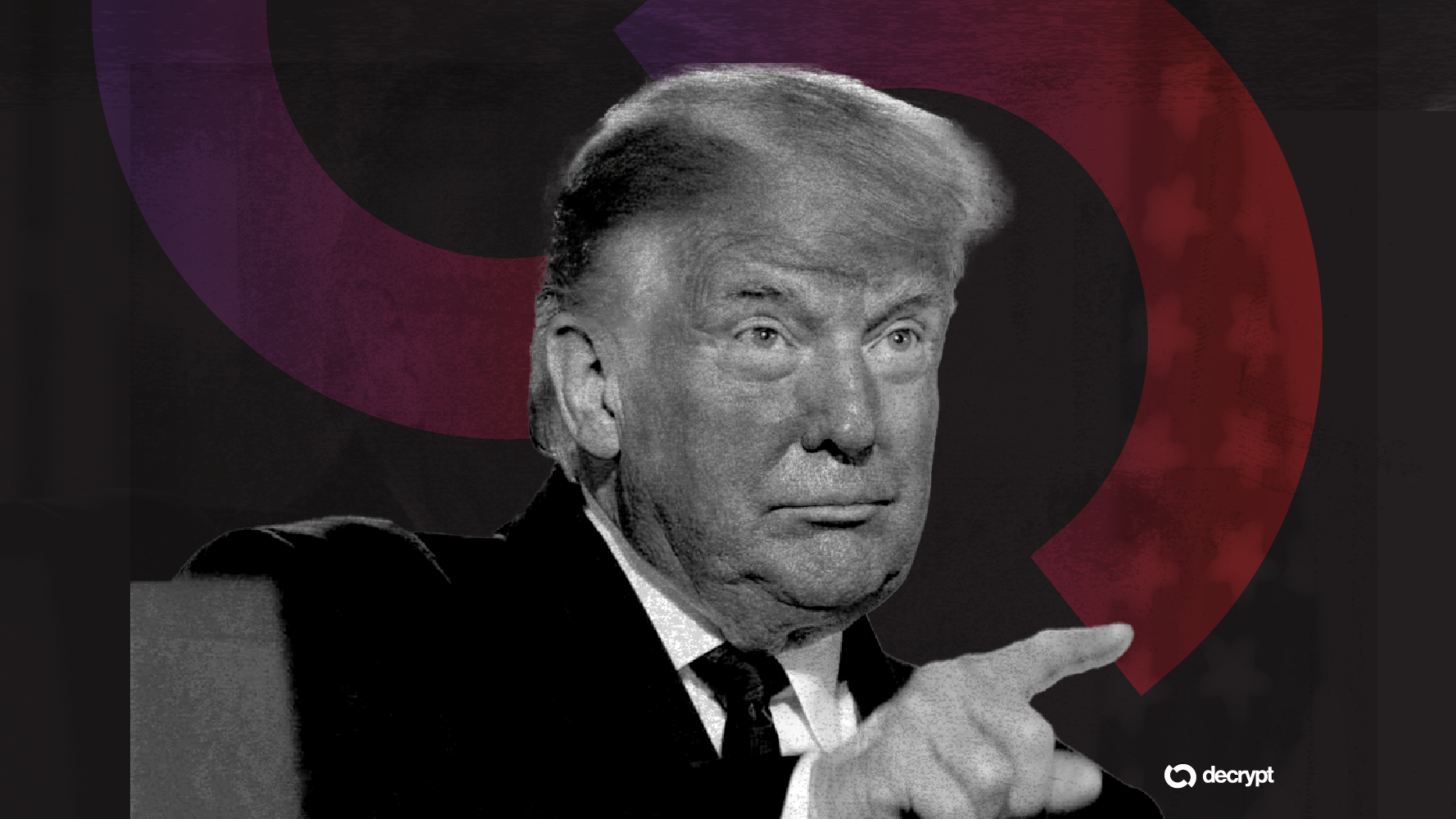
Senator Blumenthal's inquiry into potential preferential SEC treatment for Trump-linked crypto businesses introduces regulatory uncertainty, potentially impacting market sentiment towards affected projects. The focus on the dismissal of charges against Justin Sun and his involvement with Trump-related ventures like $TRUMP and WLFI highlights a potential political influence on enforcement, which could lead to increased scrutiny or policy shifts. The senator's request for records by April 13th creates a near-term catalyst for potential disclosures or further investigations that could influence trading decisions.

A proposed U.S. Department of Labor rule could allow trillions in 401(k) assets to be invested in cryptocurrencies, potentially driving significant new capital into the digital asset market. This regulatory shift, stemming from a presidential executive order, aims to broaden retirement portfolio diversification beyond traditional stocks and bonds, reflecting evolving investment landscapes. While proponents see enhanced diversification, critics like Senator Elizabeth Warren express concerns about increased risk exposure for workers, highlighting a potential conflict between market access and investor protection. The potential for even a small allocation from large 401(k) plans to digital assets could represent millions of dollars, signaling a substantial opportunity for crypto funds and tokens if the rule is adopted.

Hyperliquid's strategic infrastructure deployment in Tokyo provides a significant latency advantage for local traders, potentially impacting order execution and pricing competitiveness. The development highlights a growing 'latency arms race' within decentralized finance, where even fully decentralized platforms must optimize physical infrastructure for performance. While decentralization is a core tenet, this news underscores that geographical proximity to infrastructure can still create a material trading edge, challenging the notion of a perfectly level playing field. The clustering of crypto infrastructure in AWS Tokyo, driven by proximity to trading activity and regulatory clarity, positions the city as a key hub for digital asset operations in Asia.

U.S. lawmakers are urging federal regulators to issue guidance clarifying that insider trading laws apply to prediction markets, potentially impacting platforms like Polymarket and Kalshi. The request stems from concerns over potential insider trading on prediction markets related to government and military actions, suggesting a heightened regulatory scrutiny on these platforms. This development highlights the increasing overlap between traditional financial regulations and emerging digital asset markets, particularly concerning derivatives and information asymmetry.
Bitcoin is consolidating below $68,000, with recent price action and on-chain indicators suggesting increased whale offloading and potential bearish momentum. Geopolitical and economic uncertainties, coupled with outflows from US spot Bitcoin ETFs, are contributing to a cautious market sentiment for BTC. Technical analysis indicates a descending triangle pattern and a bearish moving average crossover, projecting potential downside risk towards $50,000, though some analysts see this as a precursor to a major bull market. Despite bearish signals, the article suggests that a potential bottoming in the $40K-$30K range could precede a significant bull market, implying a longer-term bullish outlook after a potential correction.

Microsoft's integration of GPT and Claude in Copilot Researcher, via 'Critique' and 'Council' modes, demonstrates a significant advancement in AI research capabilities by leveraging multi-model collaboration to improve accuracy and reduce hallucinations. The development highlights a shift from single-model dominance to multi-model orchestration, suggesting that the value in AI may increasingly lie in how different models are combined and managed, rather than the performance of any single model. By outperforming existing AI research tools on the DRACO benchmark, Microsoft's approach signals a potential new standard for AI-driven research and analysis, impacting the competitive landscape among major AI developers.
The introduction of the 'Mined in America' Act signals a potential shift towards greater U.S. government support for domestic Bitcoin mining operations, aiming to reduce reliance on foreign-manufactured hardware. This legislation could incentivize U.S. manufacturers to develop crypto mining equipment domestically, potentially impacting supply chains and the cost of mining hardware. The bill's inclusion of a voluntary certification program and potential access to federal programs suggests a move to integrate Bitcoin mining more formally into the U.S. economy, with implications for job creation and energy policy. By seeking to enshrine a 'Strategic Bitcoin Reserve' into law, the act reflects a growing political interest in Bitcoin as a strategic asset, though specific funding mechanisms remain undefined.

The convergence of institutional finance, AI agents, and blockchain infrastructure at Consensus Miami signals a maturing market where traditional players are actively integrating digital assets, suggesting a potential for increased capital flow and adoption. The explicit mention of regulatory clarity from the SEC and potential frameworks in Washington indicates a shift towards a more defined legal landscape, which could reduce uncertainty and encourage further institutional participation. The focus on 'agentic commerce' and AI agents executing trades highlights a significant technological evolution, positioning blockchain not just as a speculative asset class but as foundational infrastructure for future automated economies. Despite current market lows, the author's strong conviction in Consensus as a 'genuine inflection point' driven by tangible integrations like Mastercard's acquisition of BVNK suggests underlying strength and development that may precede a market upswing.
Despite a recent 4.7% surge and a golden cross formation on the hourly chart, Shiba Inu has pulled back 2.18%, indicating that short-term selling pressure has returned and the bullish technical signal may be unreliable. Significant exchange outflows of over 30 billion SHIB tokens suggest underlying accumulation and demand, implying that long-term holders may be viewing the current price weakness as a buying opportunity. The formation of a golden cross, while typically bullish, carries a higher risk of false signals on shorter timeframes, especially given SHIB's history of rapid reversals after similar patterns.
The launch of the Blockchain Leadership Fund, backed by major players like Chainlink Labs and Anchorage Digital, signifies increased institutional engagement in shaping crypto policy through political action. As a hybrid PAC, the BLF's ability to make direct contributions and independent expenditures provides a flexible tool for influencing both candidates and public perception ahead of the 2026 midterms. The entry of BLF into the crypto lobbying space, alongside the well-funded Fairshake PAC, intensifies competition for influence and suggests a growing strategic investment in the political landscape by the digital asset industry. The focus on policy development and the explicit mention of influencing rules of the road indicate a proactive approach by industry leaders to secure favorable regulatory environments for digital assets.
Signal context only. Validate with price action, liquidity, and risk limits before taking a position.
