



Key Information Regarding Delisting
Binance has announced the delisting of Flamingo (FLM), Kadena (KDA), and Perpetual Protocol (PERP) from its platform. This significant change will take effect on November 12, 2025, impacting users globally who trade these cryptocurrencies.
The primary driver for the delisting of Kadena is its impending shutdown, which directly influences market dynamics and liquidity for related trading pairs. Users are strongly advised to manage their assets promptly to mitigate potential losses.
Delisting of FLM, KDA, and PERP: Impacts and Reactions
Users holding assets related to Flamingo, Kadena, and Perpetual Protocol are urged to manage or withdraw them before the specified date to avoid potential losses. Binance’s decision aligns with its established delisting guidelines and updates concerning cryptocurrencies.
The official statement from the Kadena Foundation regarding the project's cessation is as follows:
"The Kadena organization will immediately cease all commercial activities and active maintenance of the Kadena blockchain."
Community reactions to the delisting have been swift, with users expressing concerns on social media platforms regarding asset management and withdrawal processes. The sudden operational collapse of Kadena has significantly impacted market sentiment.
Market Dynamics and Price Analysis
The shutdown of Kadena is reminiscent of past instances, such as the delisting of SushiSwap, which typically leads to sharp price declines and evaporation of liquidity.
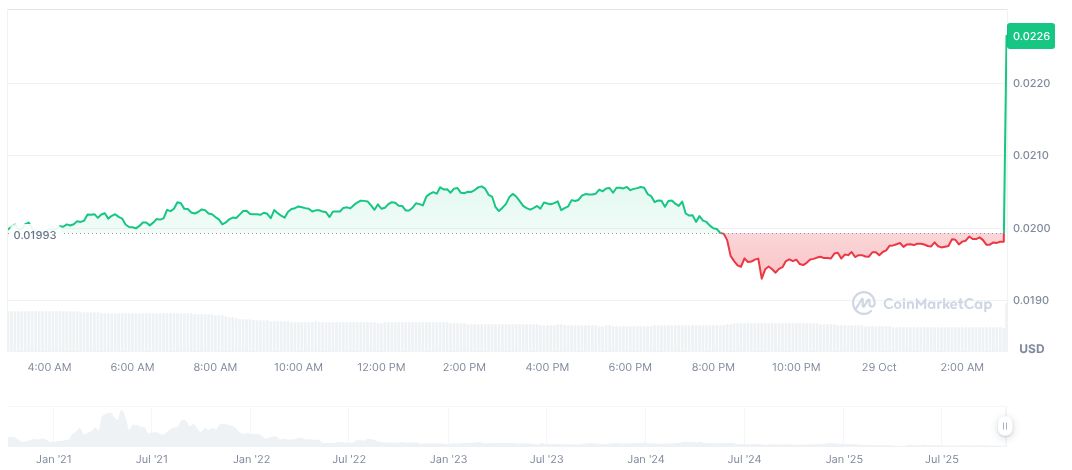
Recent data indicates that Flamingo (FLM) has a current price of $0.03, with a market capitalization of $15.71 million and a circulating supply of 559,162,983 FLM. In the past 24 hours, trading volume surged by 752.32%, while the price increased by 40.06%, reflecting a substantial market reaction to recent events.
The delisting of these assets is expected to significantly alter liquidity dynamics. Historical patterns suggest that diminished interest in such projects can lead to a reduction in market depth and available liquidity for the corresponding trading pairs, often exacerbated by regulatory and technological challenges.