


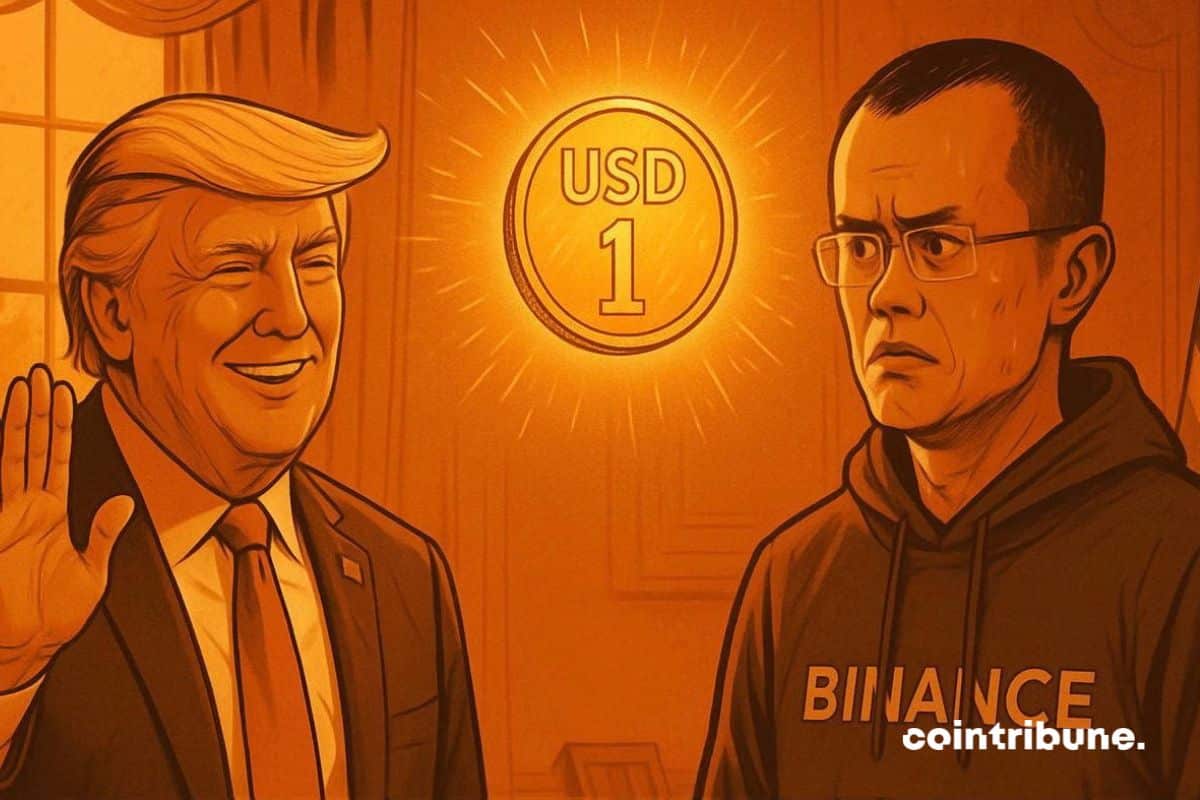
Binance: Richard Teng Rejects Accusations of Promoting the USD1 Stablecoin
Richard Teng, CEO of Binance, has categorically denied any involvement by Binance in promoting the USD1 stablecoin. This stablecoin was created by World Liberty Financial, a company associated with the Trump family. According to Teng, the decision by MGX, a fund from Abu Dhabi, to use this stablecoin for a $2 billion investment was independent of Binance. He emphasized that other platforms had already listed USD1 before Binance, thereby rejecting allegations of collusion.
These statements emerge as media and legislators, such as Senator Richard Blumenthal, have suggested a possible conflict of interest. Teng reiterated that Binance is committed to regulatory compliance and transparency. This stance is being taken in a context where the exchange is endeavoring to distance itself from past controversies, particularly following the conviction of Changpeng Zhao (CZ) for non-compliance with anti-money laundering rules.
For observers, these denials by Richard Teng regarding Trump’s USD1 stablecoin are intended to preserve Binance’s reputation, which has already been impacted by U.S. sanctions and legal investigations. However, it remains to be seen if these denials will be sufficient to reassure crypto investors.
Trump and His Selective Pardons: Why CZ and Not Sam Bankman-Fried?
Donald Trump granted a pardon to Changpeng Zhao (CZ), the former CEO of Binance, after CZ had served only four months in prison. In contrast, Trump appears reluctant to extend similar clemency to Sam Bankman-Fried, the founder of FTX, who was sentenced to 25 years for fraud. This disparity in treatment raises significant questions.
Some interpret this as a political strategy, suggesting that CZ, despite his controversies, represents a segment of the crypto sector that Trump wishes to engage. Conversely, Sam Bankman-Fried is seen as a symbol of the excesses within decentralized finance and potentially represents a greater electoral risk. Critics, including Senator Elizabeth Warren, have denounced decisions that they believe are motivated by personal interests, pointing to alleged ties between the Trump family and World Liberty Financial.
This selective application of presidential pardons could potentially reinforce a sense of distrust towards a system perceived as unfair, where personal alliances might appear to outweigh considerations of justice.
Bitcoin: The Barometer of Political and Regulatory Turbulence
Announcements of presidential pardons, such as the one for Changpeng Zhao, often have an immediate and noticeable impact on the cryptocurrency market. Bitcoin, in particular, demonstrates sensitivity to political signals, exhibiting fluctuations between gains and increased volatility depending on decisions originating from Washington. Experts have observed that each intervention by Trump or regulatory bodies can influence investor confidence.
The USD1 stablecoin, despite its relatively marginal presence, serves as an illustration of how digital assets are increasingly becoming geopolitical instruments. For market participants and traders, these dynamics serve as a reminder that the cryptocurrency market remains closely intertwined with political decisions, extending far beyond purely technological fundamentals.
The situation involving Binance and the Trump-linked stablecoin highlights the intricate connections between the cryptocurrency space, political power, and regulatory frameworks. While Richard Teng is actively working to clarify Binance’s position, Donald Trump’s selective use of presidential pardons introduces ethical considerations. Bitcoin continues to function as a key indicator of these ongoing turbulences. One certainty is that the intersection of politics and cryptocurrency will remain a subject of significant debate. The question arises: should we anticipate an increasing instrumentalization of digital assets for political purposes?