


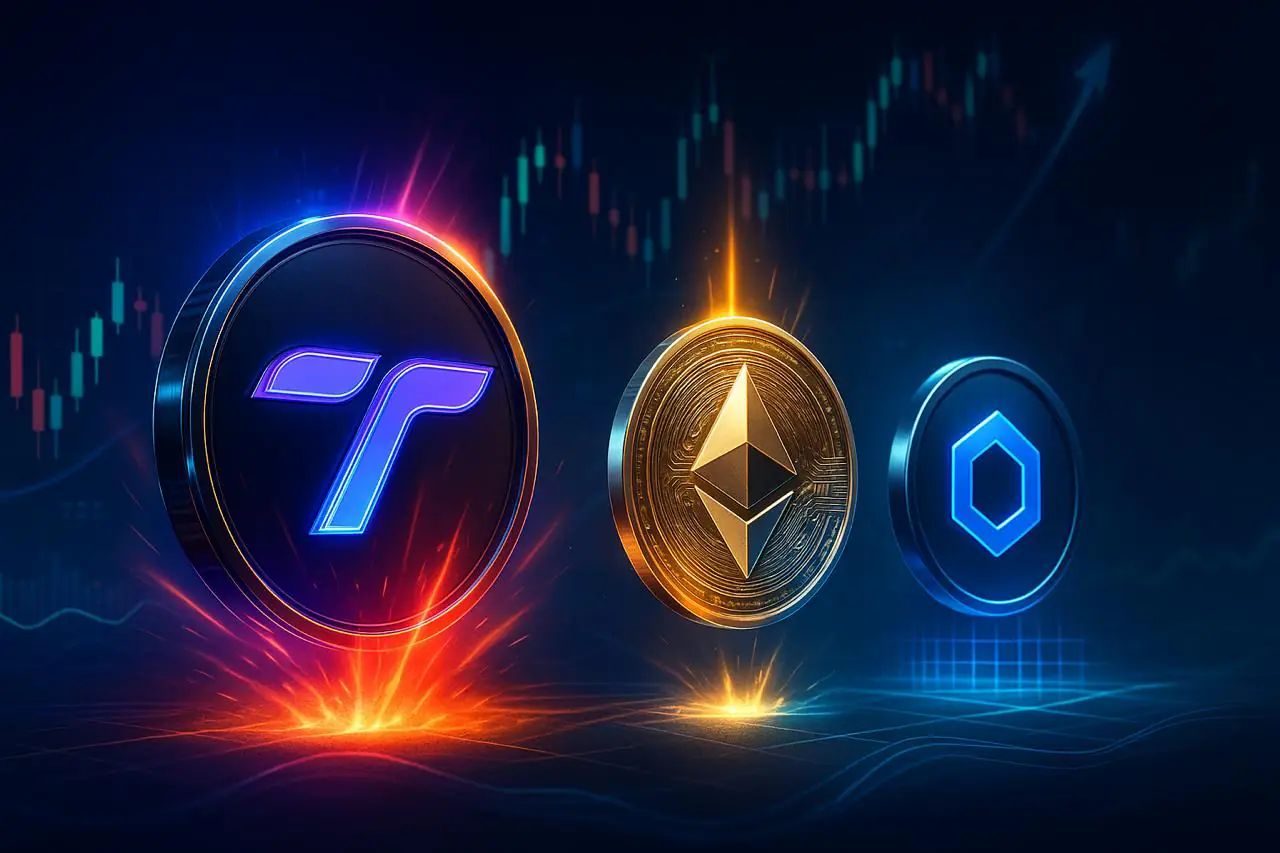
The cryptocurrency market is at a pivotal moment, marked by increasing institutional interest and the emergence of new Web3 models attracting significant capital. Investors are currently observing three prominent narratives developing simultaneously. BlackRock has initiated the process to create a Staked Ethereum ETF, while Chainlink is regaining attention following a well-regarded analyst's outline of substantial long-term price targets. Tapzi is also gaining traction as a notable altcoin, featuring a skill-based gaming model designed for genuine user engagement.
Each of these trends indicates a change in how investors approach digital assets. Furthermore, retail traders are now seeking clearer value propositions, enhanced utility, and sustainable long-term economic models. This evolving pattern is reshaping market expectations as the next phase of digital asset adoption begins.
Consequently, new opportunities are arising across various sectors, including staking income, on-chain data services, and Web3 gaming. The critical question now is which assets are best positioned to benefit from this growing momentum. A closer examination of Ethereum, Chainlink, and Tapzi is necessary as investor appetite for promising cryptocurrencies expands.
Tapzi Introduces Skill-Based Web3 Gaming
Tapzi is continuing to capture attention by positioning itself within the rapidly expanding Web3 gaming market. The global gaming industry is projected to reach a value exceeding $400 billion by 2028.
Mobile gaming, in particular, is a dominant force in this growth due to its accessibility and extensive user base. Web3 gaming is experiencing even faster expansion as players seek genuine rewards and transparent operational mechanics. However, many existing GameFi projects still rely on luck-based systems, inflationary tokenomics, and automated bots. These factors contribute to unstable models that are vulnerable to selling pressure.
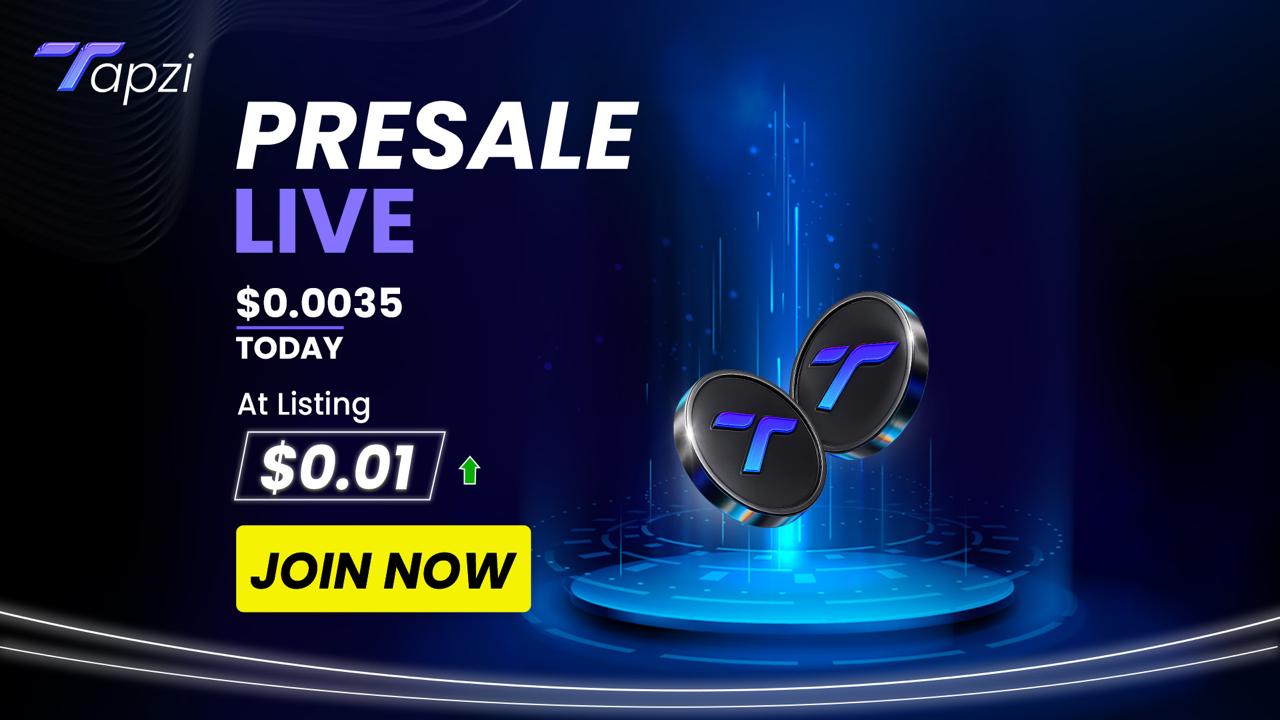
Tapzi adopts a different approach. The platform employs a Skill-to-Earn system, rewarding player performance rather than chance. Players stake $TAPZI tokens to participate in competitive Player-vs-Player (PvP) games such as Chess, Rock-Paper-Scissors, and Tic Tac Toe.
Winners receive their prize pool directly from their opponents. This system is designed to avoid the issuance of new tokens, the presence of bots, and random reward distribution. As a result, Tapzi aims to foster a fair and transparent economic environment.
The total token supply is fixed at 5 billion. Presale participants will receive 25% of their allocation at Token Generation Event (TGE), with the remaining amount unlocking over three months. This distribution structure is intended to prevent uncontrolled token inflation.
Additionally, Tapzi facilitates easy onboarding through mobile and web access, featuring gasless gameplay. A Free Mode allows new users to experience the games before staking any tokens. The platform also provides tools for developers to publish their games.
The presale price is set at $0.0035, with a planned launch price of $0.01. The projected initial market capitalization is $20 million, with a fully diluted valuation (FDV) targeting $50 million. The project allocates 20% to the presale, 20% to liquidity, and 15% to the treasury. Team tokens are subject to a six-month cliff before unlocking. These measures demonstrate clear controls designed to support the long-term growth of this promising altcoin.
Market Shift Towards Skill-Based Web3 Models
A significant indicator is emerging within the market, showing a preference for top altcoin investments that avoid artificial inflation and deliver genuine engagement. This shift aligns with the growing popularity of competitive mobile games, with Tapzi adding the benefit of blockchain transparency.
The model is well-positioned to benefit from global adoption trends, particularly targeting regions with strong mobile gaming demand such as Brazil, India, Turkey, and Southeast Asia. As Web3 gaming continues to evolve, Tapzi has the potential to attract a broad demographic, possibly becoming a leading gaming cryptocurrency in the market.
Ethereum Gains Momentum with BlackRock Filing for Staked ETH ETF
Ethereum is currently trading around $3,130.10, experiencing a slight decrease of 0.4% in the last 24 hours but showing a weekly gain of 10.8%. This renewed strength follows BlackRock's filing for a Staked Ethereum ETF, named ETHB. This proposal aims to provide investors with exposure to Ethereum while enabling them to earn staking rewards.
Coinbase Custody and Anchorage Digital are slated to manage the underlying ETH. The ETF intends to stake between 70% and 90% of its assets. This development signifies substantial institutional interest and offers a pathway for traditional investors to access Ethereum's yield without the complexities of managing nodes or wallets.
The filing also acknowledges potential risk factors, including validator performance and withdrawal delays. Nevertheless, this move represents a significant milestone, indicating that major financial institutions view Ethereum as a long-term asset with increasing relevance.
The staking model further enhances Ethereum's economic security. As more ETH is deposited into staking pools, the supply available on exchanges decreases, which can help stabilize the price during volatile periods. Additionally, ongoing institutional accumulation, such as continuous ETH purchases by Bitmine, contributes to broader market confidence.
Chainlink's Technical Outlook Strengthens Following New Analysis
Chainlink is trading at $13.79, down 1% over the past 24 hours, but up 12.8% over the last seven days. Analyst CryptoPatel has released a bullish report on the asset, identifying a strong accumulation zone between $10 and $14. He highlighted $9.80 as a critical support level, which long-term investors may closely monitor.

Patel has also projected ambitious upside targets at $30 and $50, suggesting that a move toward $150 could be possible during a full altcoin season. The magnitude of this potential breakout is contingent on market timing and liquidity rotation.
Furthermore, Chainlink benefits from the rapid growth in real-world asset (RWA) tokenization. Every expansion of RWA infrastructure increases the demand for secure data feeds, thereby strengthening LINK's relevance among both institutions and decentralized finance (DeFi) platforms. The past week has confirmed this momentum, with growing demand for oracle services supporting Chainlink's long-term investment case. Traders view LINK as a strong altcoin performer once market confidence is restored.
Conclusion: Promising Altcoins for Investment
Ethereum, Chainlink, and Tapzi represent three distinct yet complementary market narratives for investors seeking promising altcoins. Ethereum is gaining institutional validation through BlackRock's new ETF filing, while Chainlink is attracting traders anticipating long-term price appreciation.
Tapzi is building a Web3 gaming ecosystem centered on skill and fairness, and is currently experiencing popularity with its presale. Each of these altcoins addresses a different market trend, collectively reflecting the broader shift toward utility, transparency, and sustainability in the cryptocurrency space. Investors are closely watching these developments as new capital enters the crypto market, preparing for the next wave of growth.