


Key Developments
Balancer, a prominent decentralized finance protocol on the Ethereum network, has transferred over $70 million in assets to a new address. This significant movement of funds has raised serious concerns and speculation about a potential exploit within the protocol.
Following this asset transfer, Balancer has experienced a notable decline in its Total Value Locked (TVL). Additionally, its native token, BAL, has seen a substantial drop in price, reflecting market apprehension.
Speculated Exploitation Risk
The transfer, encompassing substantial amounts of Wrapped ETH and Staked ETH derivatives, occurred without an immediate official explanation from Balancer. This lack of transparency has fueled widespread speculation that the protocol may have been subjected to an exploit.
The financial repercussions of this event are evident in the reduced locked values within the Balancer ecosystem. The price of the Balancer (BAL) token has also been negatively impacted. While discussions regarding treasury protection continue, there has been no definitive reaction from institutional investors or major exchanges.
Moderators within the Balancer community channels have issued advisories to users, urging them to refrain from interacting with any suspicious contracts until more clarity is provided regarding the incident.
Historical Context and Market Data
It is noteworthy that past incidents, such as the $500,000 exploit experienced by Balancer in 2020, led to significant overhauls in its governance structures. However, the current suspected breach appears to be of a considerably larger scale.
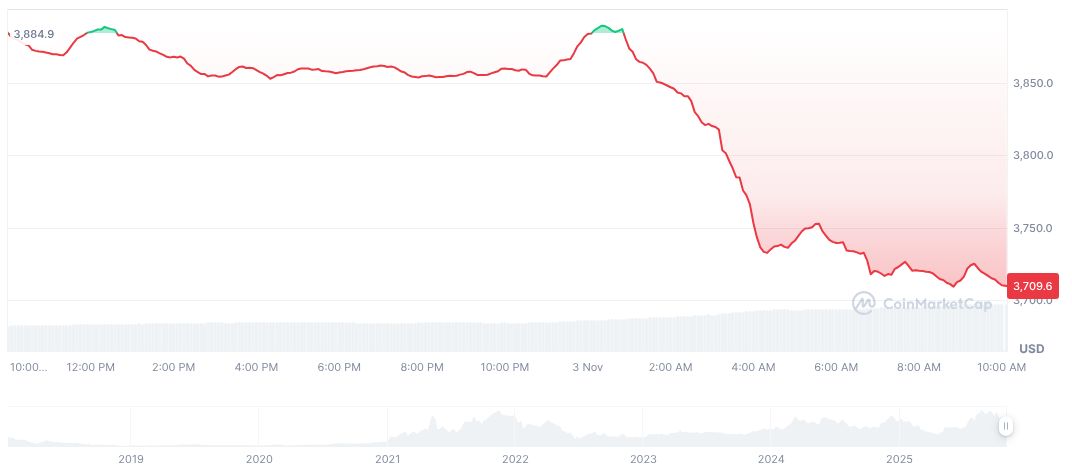
According to available market data, Wrapped ETH (WETH) is currently trading at approximately $3,676.97, with a market capitalization of $12.41 billion. Over the preceding 90-day period, WETH has shown modest growth of 2.25%. However, recent 24-hour data indicates a decline of 4.73%, with a trading volume of $1.93 billion.
Analysis from the Coincu research team suggests that the substantial magnitude of this transaction could attract regulatory scrutiny. Historical patterns indicate that significant security events often lead to enhancements in security measures following governance deliberations, provided that adverse market adjustments do not intervene.