


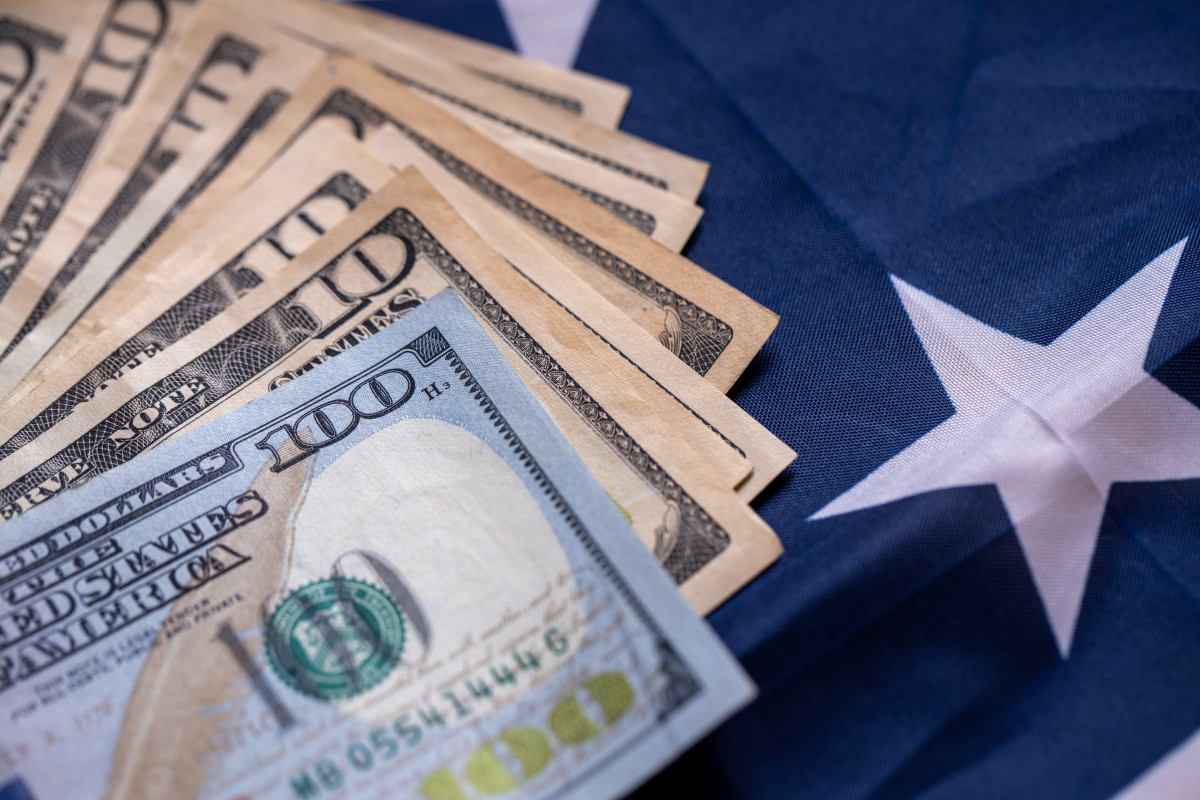
The United States dollar is anticipated to face another year of challenges. According to George Saravelos, Deutsche Bank's global head of foreign exchange research, the dollar is likely to extend its slump from 2025 into 2026, albeit at a slower pace. This forecast is influenced by shifting global economic conditions and the Federal Reserve's ongoing monetary policy, which continues to impact yields.
Shifting Global Economic Landscape and Dollar's Role
During a discussion with Bloomberg, Saravelos explained that the dollar's previous strength was largely attributed to its status as the world's highest-yielding developed market currency. This position has diminished due to the Federal Reserve's aggressive rate-cutting cycle. Saravelos noted that the full-year drop in the dollar in 2025 was the second largest on record since the Bretton Woods era began, indicating a significant shift in foreign exchange markets. He expressed that it would be "very difficult to repeat that type of move in '26."
The full year drop in the dollar in ’25 was the second biggest drop on record since [the] free floating exchange rate started after Bretton Woods. So it was a very big year for foreign exchange. I would argue it’s going to be very difficult to repeat that type of move in ’26.
With other central banks, including those in Australia and Norway, now offering higher yields, Saravelos stated that this development removes "a big tailwind for the dollar." He further elaborated that global growth has become more balanced after years of U.S. dominance, with Europe and Japan increasing their fiscal stimulus measures.
So overall, a solid global growth outlook. But with growth convergence and the dollar being less of a high yield plus a very large external deficit that’s very reliant on inflows. That’s pretty much the mix that I think should allow the dollar to continue to weaken, but at a much slower pace than we saw last year.
Financial Advisors Increase Crypto Allocations Amid Dollar Weakness
Saravelos's outlook on the dollar coincides with a notable trend among financial advisors who are increasingly pivoting towards digital assets. A recent report, the "Bitwise/VettaFi 2026 Benchmark Survey of Financial Advisor Attitudes Toward Crypto Assets," released on January 13, indicates record levels of cryptocurrency adoption among financial professionals.
According to the survey, approximately one-third (32%) of advisors allocated client funds to cryptocurrency in 2025, an increase from 22% in the previous year. The survey identified "growing regulatory progress, institutional demand and new all-time highs for Bitcoin (BTC)" as key factors driving this trend.
Further findings highlight the accelerating integration of digital assets into traditional finance. Personal ownership of crypto among advisors has risen, with 56% holding digital assets, the highest level since the survey's inception in 2018. Additionally, about 64% of client portfolios that include crypto exposure now hold more than 2% in digital assets, up from 51% in 2024. The capability of advisors to purchase crypto directly for clients has also significantly increased, with 42% now able to do so, compared to just 19% in 2023.
Stablecoins and tokenization garnered the most attention among advisors, attracting 30% of interest, followed by "digital gold" and crypto-AI investments. Advisors are most frequently funding these crypto allocations by reducing their holdings in equities (43%) or cash (35%). Crypto equity exchange-traded funds (ETFs) remain the preferred entry point, with 42% of advisors favoring diversified index products over single-token funds.
This strategic shift aligns with a growing sentiment that digital assets, particularly Bitcoin (BTC), could serve as a hedge against fiat debasement and potentially benefit from capital rotation away from traditional assets linked to U.S. monetary cycles.