


Key Points
- •Aave proposes to institutionalize a $50 million annual token buyback plan.
- •The plan aims to support AAVE value via strategic purchases.
- •The community is actively discussing potential long-term impacts.
Formalizing AAVE's Buyback Strategy
The Aave community has proposed formalizing AAVE's buyback plan, earmarking a $50 million annual budget. This budget will be strategically executed by Aave DAO and its committees to enhance long-term protocol support.
This initiative signifies a sustained effort within DeFi to bolster tokenholder value. It has the potential to influence market dynamics and set industry benchmarks for governance and treasury management strategies.
Market Impact and Expert Projections
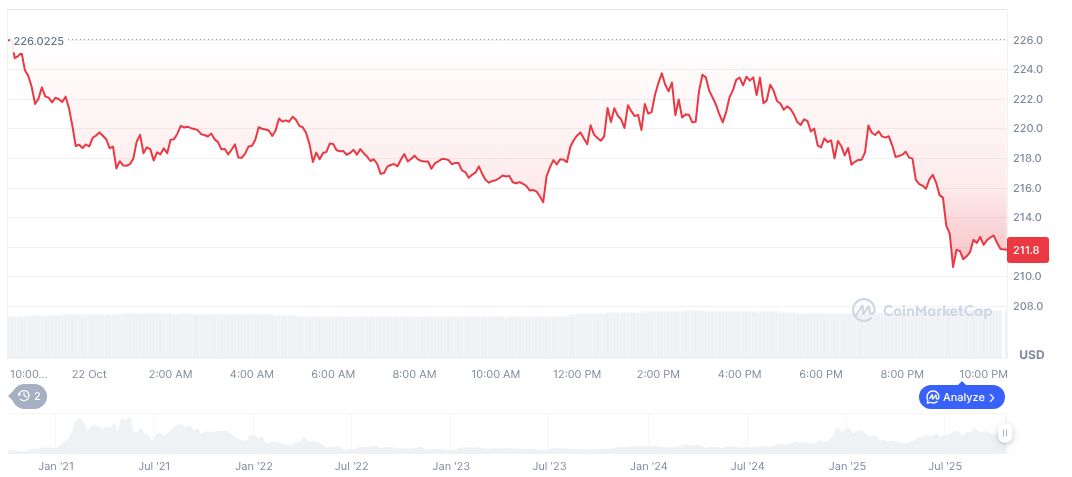
Price data indicates AAVE's current pricing at $211.49 with a market cap of $3.23 billion. Over recent months, its price trend exhibits a decrease, with changes of -5.39% over 24 hours and -21.49% over 30 days. The sentiment around AAVE continues to be mixed, amid the larger frame of a volatile crypto environment.
Research suggests that institutionalized buyback plans could impact DeFi's trajectory, potentially encouraging other protocols to adopt similar strategies. Efficient management of treasury funds aligns protocol dynamics with token success, setting a trend in a sector that increasingly mirrors traditional finance in governance.
"The AFC is responsible for overseeing the flexible deployment of buyback funds, adjusting weekly amounts based on market conditions." - Aave Finance Committee (AFC), Specialized Committee, Aave DAO
Market Data and Future Insights
Did you know? Aave was one of the first DeFi protocols to implement a lending and borrowing system, paving the way for many others in the space.
The move aims to support AAVE's token price and reduce circulation, positioning it to reflect protocol success. The community broadly supports the approach, though some question whether the $50 million funding could be better utilized. Without institutional partners, the plan emphasizes self-sustenance through internal resources and flexible governance.
Discussions on Aave's governance forum and other channels see a mix of optimism and concern. Stakeholders debate the opportunity cost, echoing past buyback initiatives both within Aave and across broader DeFi protocols. While formal statements are not plentiful, community voices favor buybacks as a means to promote long-term holder value.