



Market Volatility and Trader Losses
According to Coinglass data, the cryptocurrency market experienced a $157 million liquidation, primarily affecting long positions, in the past hour across major exchanges like Binance and OKX. This highlights leverage risks during volatile periods, impacting traders and market stability, emphasizing the need for risk management strategies.
Predominantly long positions faced liquidation as the market witnessed a collective $157 million event. The data, sourced from Coinglass, highlights the volatile conditions across major exchanges. Institutional and retail traders are directly involved using high leverage, often leading to significant financial adjustments during rapid price shifts.
The price downturn has reshaped market dynamics, with key changes in funding rates and open interest contraction. This retraction curtails excessive long skews, bringing a corrective influence on both derivatives and spot exchanges.
The community and experts have responded with resonance across social media channels. General sentiment addresses the cautions of derivatives trading amid such liquidation cascades. Noted figures like Arthur Hayes have commented in broader contexts about the reflexive impacts of leverage, though specific statements on this event are absent.
Historical Context, Price Data, and Expert Insights
Liquidation events of this scale often indicate a market preparing to counteract leverage excesses, similar to prior incidents during the May 2021 crash.
According to data from CoinMarketCap, Bitcoin (BTC) is trading at $88,000.46, reflecting a market cap of 1,756,384,625,366.62, with 58.43% market dominance. The 24-hour trading volume stands at 35,234,092,647.34, down 37.30%. Over the last 90 days, BTC price has decreased by 21.63%.
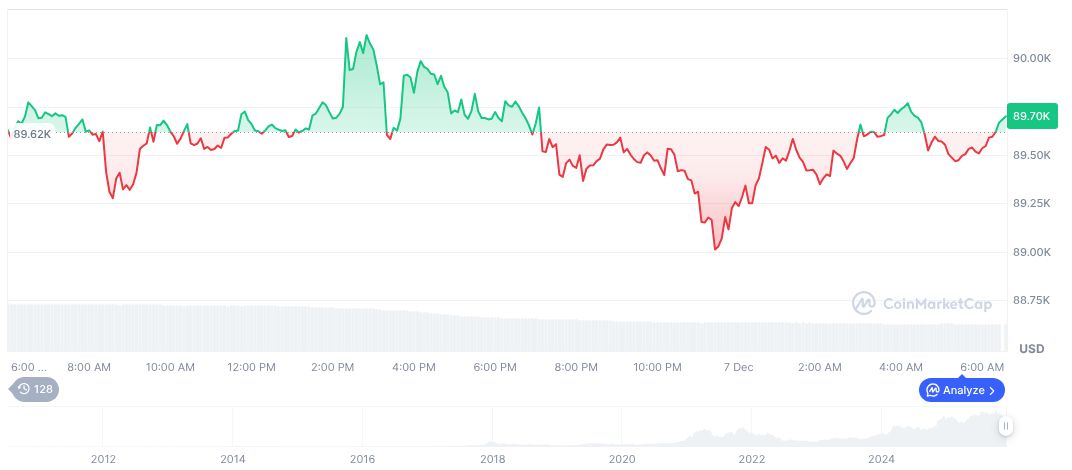
Analyzed by the Coincu research team, the pronounced volatility primarily influences overall market sentiment. Experts note that such swings may prompt regulators to further scrutinize derivatives markets, potentially steering technological advancements to prioritize risk management solutions.